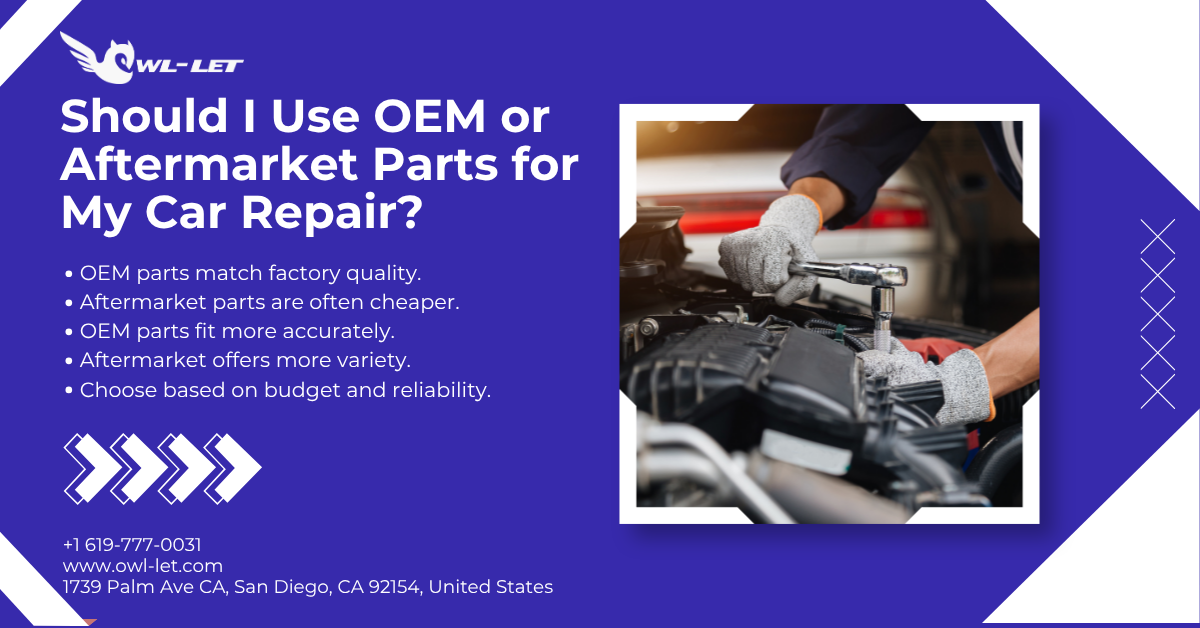
The choice between OEM and aftermarket parts depends on your priority: OEM (Original Equipment Manufacturer) parts guarantee a perfect fit and maintain your warranty, while aftermarket parts offer a wider variety and often a lower price point, sometimes even exceeding original performance specifications.
Why is the Choice Between OEM and Aftermarket Parts Critical in 2026?
Modern vehicles are integrated ecosystems of sensors and calibrated hardware. Choosing the right component isn't just about the physical shape; it’s about how that part communicates with your car’s Advanced Driver Assistance Systems (ADAS). Determining whether you should use OEM or aftermarket parts for your car repair is a decision that impacts your vehicle's safety, resale value, and performance longevity.
At Owl-let, we’ve seen how a sub-par sensor can trigger a cascade of "Check Engine" lights, proving that saving a few dollars today can cost hundreds tomorrow.
What are OEM Parts?
OEM stands for Original Equipment Manufacturer. These parts are made by the same company that built the parts your car came with from the factory. They are essentially carbon copies of the original components.
-
Pros: You get the peace of mind that the part is designed specifically for your VIN. There is no guesswork involved in selection.
-
Cons: They are sold primarily through dealerships, which adds a significant markup to the price.
What are Aftermarket Parts?
An aftermarket part is any part for a vehicle that is not sourced from the car's manufacturer. Companies buy the rights to manufacture these parts, or they reverse-engineer them.
-
Pros: In some cases, aftermarket companies identify a flaw in the original design and create a "problem-solver" part that is actually better than the OEM version.
-
Cons: The sheer volume of choices can be overwhelming. For every high-quality aftermarket brand, there are dozens of low-grade imitations.
Does Using Aftermarket Parts Void My Car Warranty?
One of the most frequent "People Also Ask" questions is about warranty protection. Under the Magnuson-Moss Warranty Act, a dealer cannot void your entire warranty just because you used an aftermarket part. However, if the aftermarket part causes a failure in another component, that specific repair will not be covered.
Which Parts Should Always Be OEM?
While you can save money on "cosmetic" or "simple" components, certain systems should almost always stay within the OEM ecosystem:
-
Electronic Sensors (MAF, O2, ADAS): Modern computers are very sensitive to voltage variances found in cheap aftermarket sensors.
-
Collision Parts: Hoods, fenders, and bumpers from aftermarket sources may not have the same "crumple zones" as the originals.
-
Complex Engine Internals: Timing belts and head gaskets are worth the OEM premium.
When is Aftermarket a Better Choice?
Aftermarket isn't always the "budget" choice; sometimes it's the "performance" choice.
-
Brake Pads: Companies like Brembo or Akebono often provide better stopping power and less dust than factory pads.
-
Suspension: If you want a smoother ride or better handling, aftermarket struts are often superior.
-
Filters: High-efficiency air and oil filters from reputable third-party brands often exceed OEM filtration microns.
How Do I Ensure Quality When Buying Aftermarket?
If you decide to go the aftermarket route, look for CAPA (Certified Automotive Parts Association) certification for body parts or stick to "Name Brand" mechanical manufacturers. Avoiding "unbranded" parts from massive online marketplaces is the best way to maintain topical authority over your car’s health.
Conclusion: Balancing Quality and Cost
Ultimately, the decision of should I use OEM or aftermarket parts for my car repair comes down to the specific part and your long-term goals for the vehicle. If you are leasing or plan to sell soon, OEM helps maintain value. If you are looking to improve performance or save on an older vehicle, aftermarket is a viable path.
Navigating these choices can be stressful, which is why Owl-let simplifies the process for you. With our , starting at just $24.99 monthly, you gain access to expert guidance and discounted high-quality parts. We take the guesswork out of maintenance so you can drive with confidence. Join the Owl-let family today and let us handle the technical details.
Comments 0
No comments yet
Be the first!