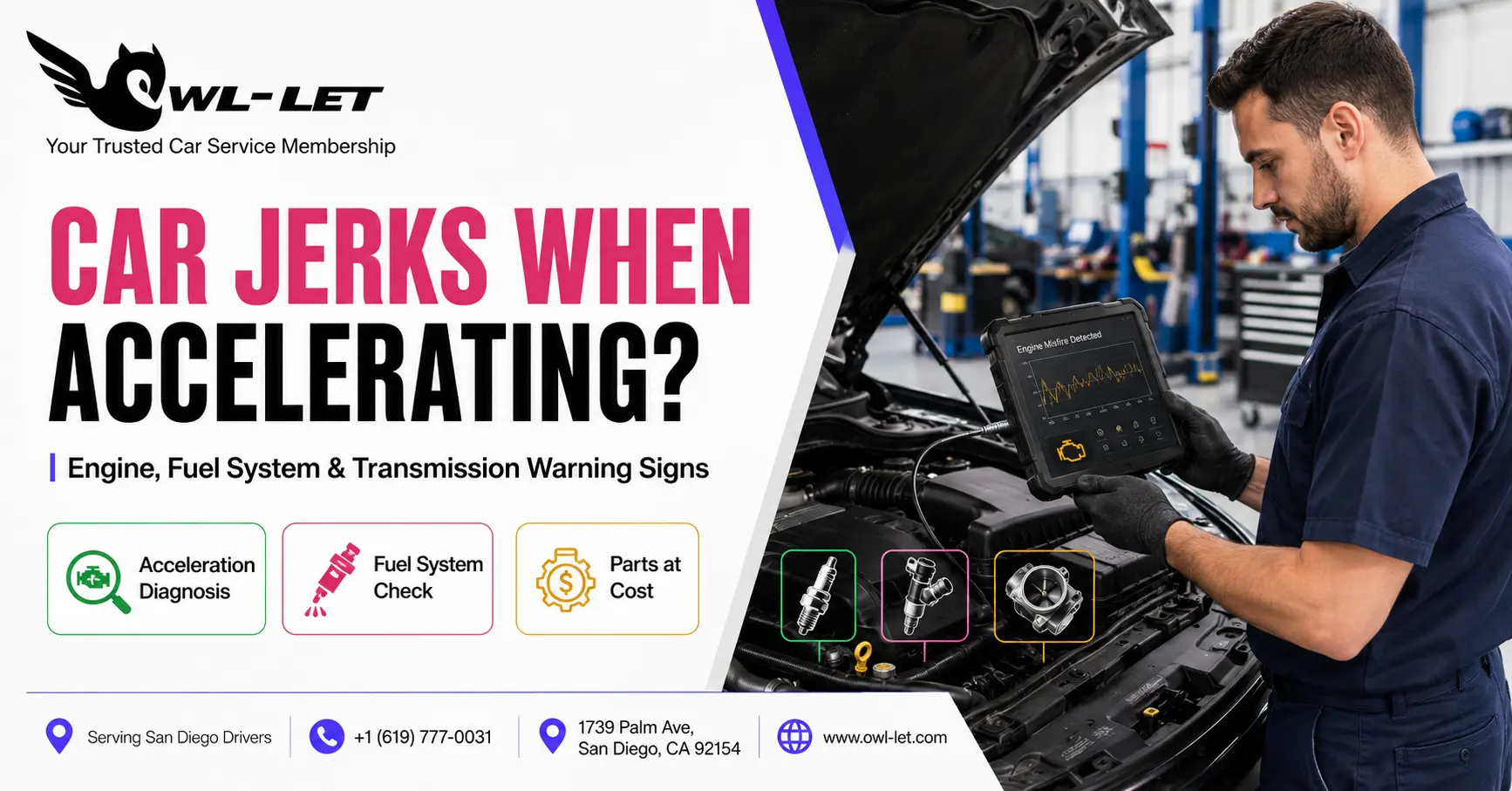
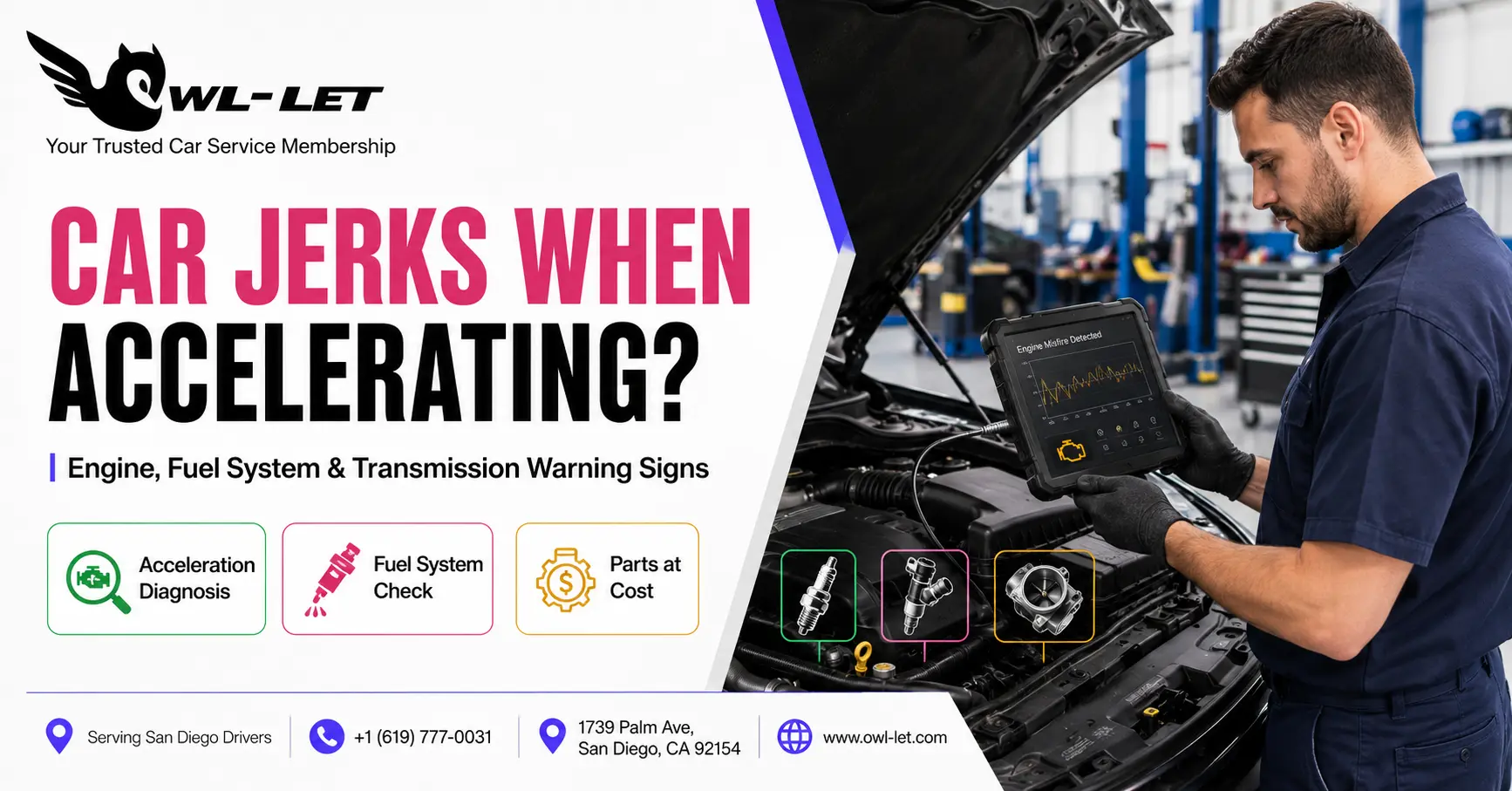
Why Does My Car Jerk When Accelerating?
If your car jerks, hesitates, shakes, or loses power when accelerating, something is not working smoothly.
The issue may come from the engine, fuel system, ignition system, transmission, air intake, sensors, or even old maintenance parts. Some causes are simple, but others can become expensive if ignored.
For San Diego drivers dealing with freeway merging, traffic, hills, and daily commuting, acceleration problems should be checked early.
Common Reasons a Car Jerks When Accelerating
Worn Spark Plugs
Spark plugs help ignite the fuel and air mixture inside the engine.
When spark plugs are worn or dirty, the engine may misfire. This can cause jerking, rough idle, hesitation, poor fuel economy, or a check engine light.
Bad Ignition Coils
Ignition coils send power to the spark plugs.
A failing coil can cause one cylinder to misfire, especially under acceleration. You may feel shaking, jerking, or power loss when pressing the gas pedal.
Dirty Fuel Injectors
Fuel injectors deliver fuel into the engine.
If an injector is clogged or not spraying correctly, the engine may hesitate, stumble, or jerk when more power is needed.
Fuel Pump or Fuel Pressure Problem
A weak fuel pump may not deliver enough fuel during acceleration.
Signs may include hard starting, power loss, stalling, hesitation, or jerking at higher speeds.
Dirty Air Filter or Intake Problem
The engine needs clean airflow to run correctly.
A dirty air filter, vacuum leak, throttle body buildup, or sensor issue can affect acceleration and fuel mixture.
Transmission Problems
Not all jerking comes from the engine.
If the vehicle jerks during gear changes, shifts hard, or delays before accelerating, the transmission may need inspection.
Possible causes include low fluid, old fluid, sensor issues, solenoid problems, or internal wear.
Is It Safe to Drive?
It depends on the severity.
Schedule service soon if the jerking happens repeatedly or gets worse.
Stop driving and get help if:
-
The check engine light is flashing
-
The car loses power suddenly
-
The vehicle stalls
-
The transmission slips
-
You smell fuel or burning
-
The engine shakes badly
-
The vehicle feels unsafe
A flashing check engine light can mean an active misfire that may damage other components.
Why Diagnostics Matter
Jerking during acceleration can have many causes. Guessing can lead to replacing the wrong parts.
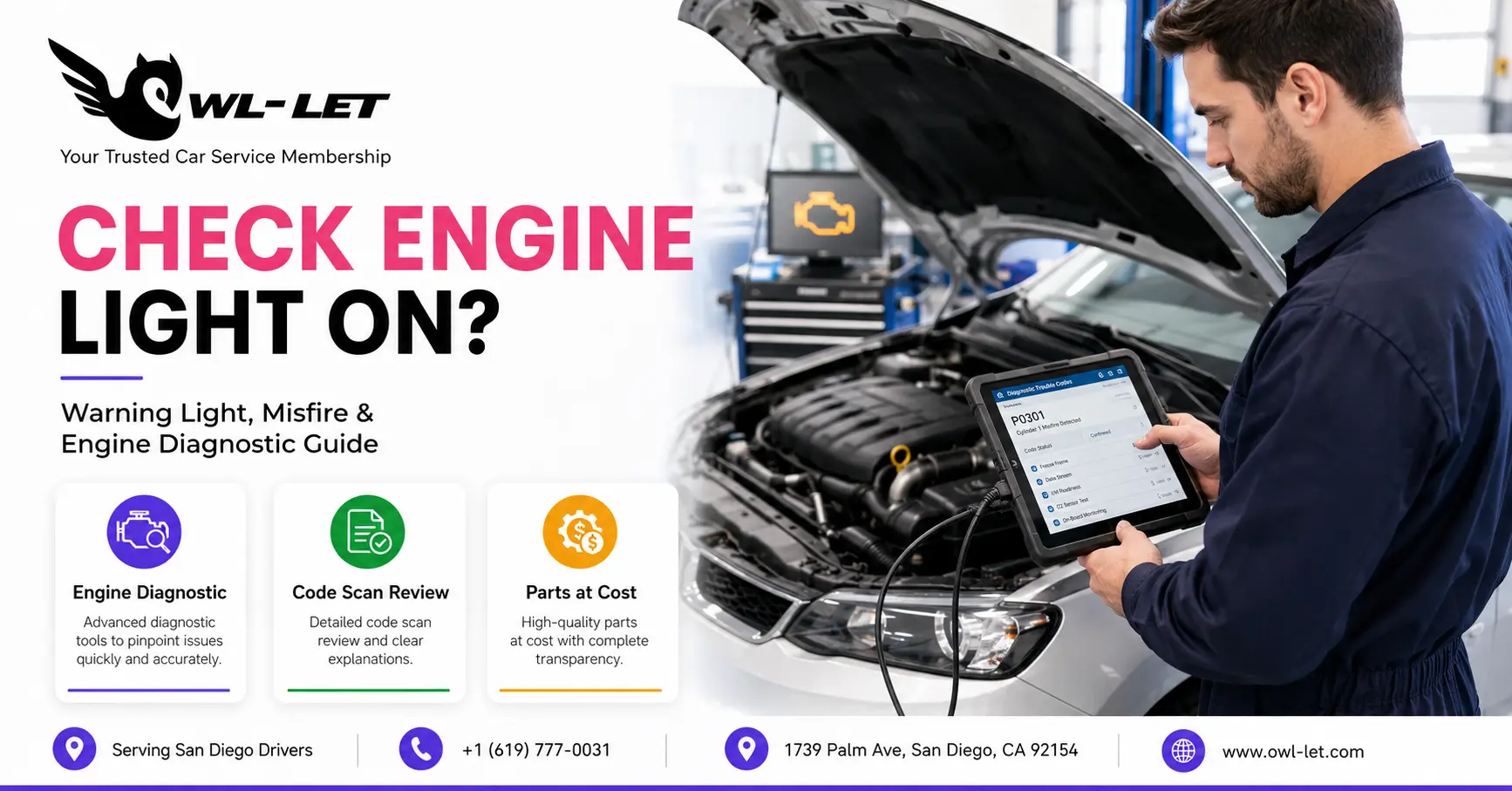
A proper diagnostic inspection may include:
-
Scanning engine codes
-
Checking spark plugs and coils
-
Reviewing live engine data
-
Testing fuel pressure
-
Inspecting injectors
-
Checking air intake and sensors
-
Inspecting transmission behavior
-
Road-testing when safe
The goal is to find the real cause before repair work begins.
How OWL-LET May Help
OWL-LET provides diagnostics, maintenance, and auto repair services for San Diego drivers.
Members may receive:
-
Free diagnostics
-
Qualifying parts at cost
-
Member labor pricing
-
Engine performance inspection
-
Roadside benefits depending on the selected plan
Membership plans start at $24.99 per month.
If your car jerks while accelerating, OWL-LET can inspect the engine, fuel system, ignition system, transmission behavior, and related components before recommending repair.
Schedule Acceleration Diagnostics in San Diego
If your vehicle jerks, hesitates, shakes, or loses power when accelerating, do not wait until the problem leaves you stranded.
OWL-LET Service Center
1739 Palm Ave, San Diego, CA 92154
Phone
+1 (619) 777-0031
OWL-LET can help diagnose acceleration problems and explain whether your vehicle needs spark plugs, coils, fuel-system service, sensor diagnostics, transmission inspection, or another repair.
Service availability, diagnostics, pricing, parts, roadside benefits, and membership terms vary by vehicle and selected plan.
Comments 0
No comments yet
Be the first!