Why Does My Car Shake When Braking?
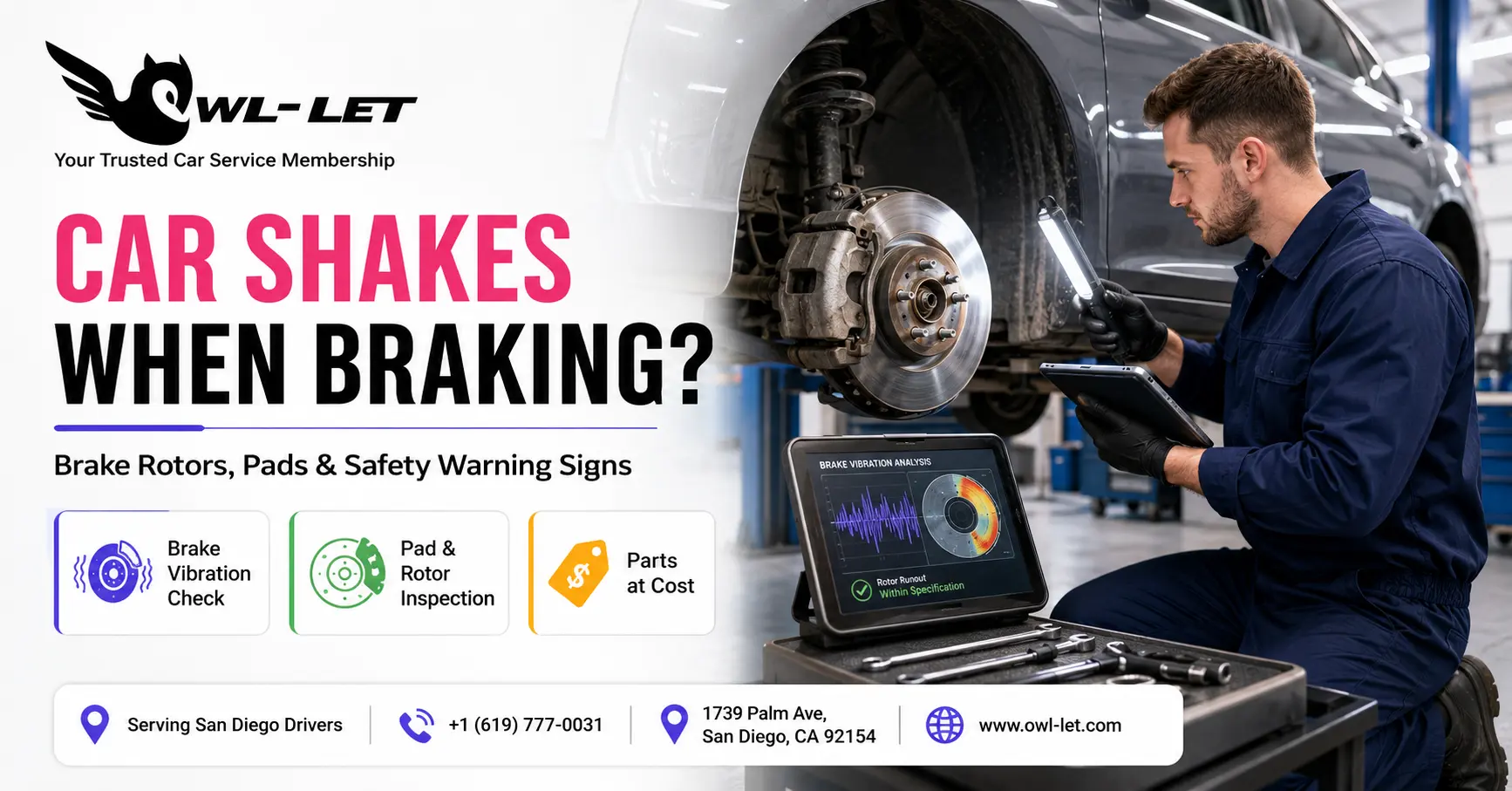
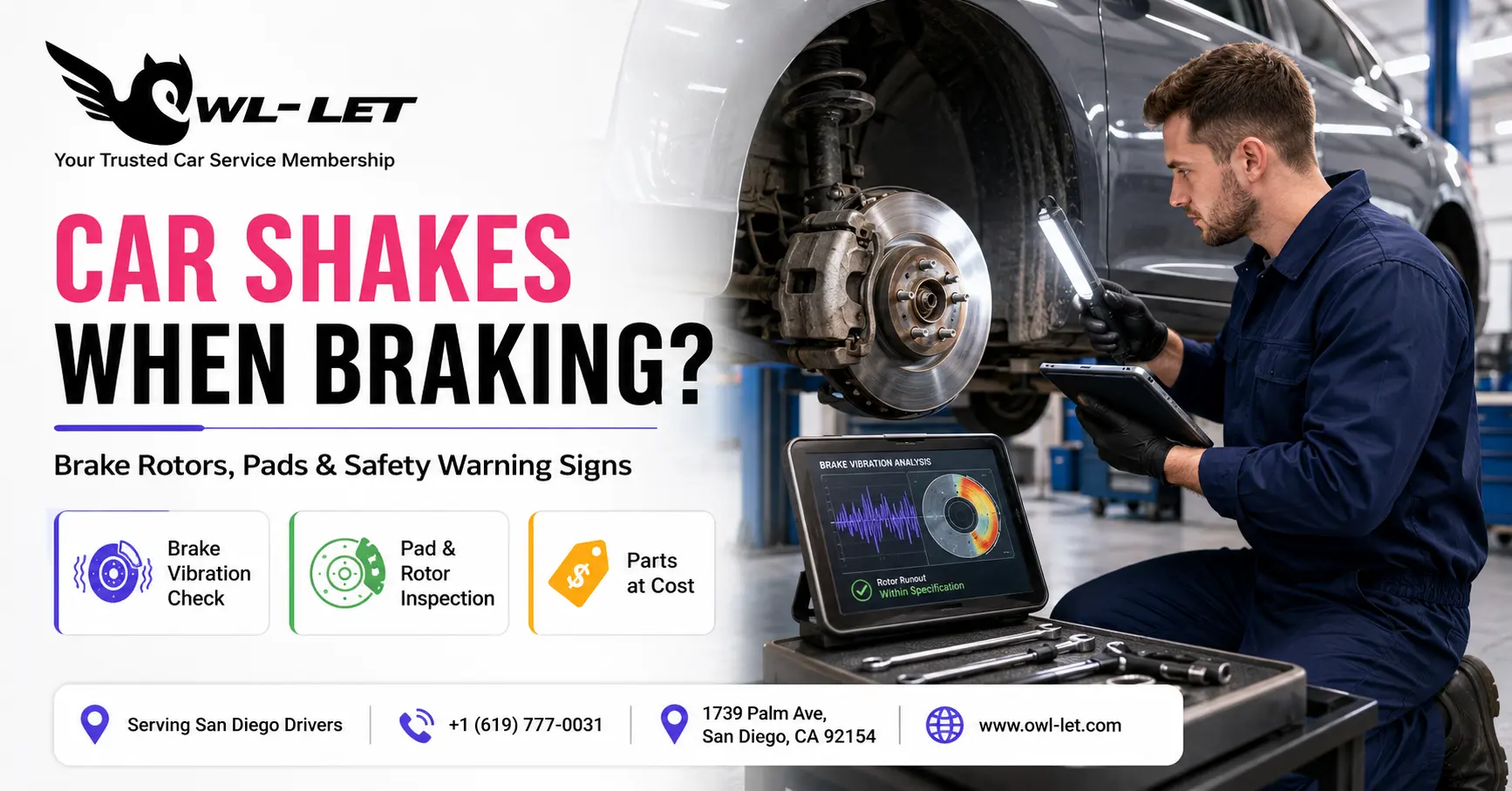
If your car shakes when braking, the issue should not be ignored.
You may feel vibration in the steering wheel, brake pedal, seat, or entire vehicle. Sometimes the shaking only happens at higher speeds. Other times, it happens every time you press the brake pedal.
Brake vibration can come from worn rotors, uneven brake pads, stuck calipers, tire issues, suspension wear, or wheel alignment problems.
Common Reasons Your Car Shakes When Braking
Warped or Uneven Brake Rotors
Brake rotors are the metal discs your brake pads press against to slow the vehicle.
Over time, rotors can become uneven from heat, wear, hard braking, or worn brake pads. When the rotor surface is uneven, the brake pedal or steering wheel may shake during braking.
Common signs include:
-
Steering wheel vibration when braking
-
Brake pedal pulsing
-
Shaking at freeway speeds
-
Grinding or scraping noise
-
Longer stopping distance
Worn Brake Pads
Brake pads wear down over time.
If pads become too thin, uneven, or contaminated, braking may feel rough. Worn pads can also damage the rotors, making the repair more expensive.
Sticking Brake Caliper
A caliper pushes the brake pads against the rotor.
If a caliper sticks, one wheel may brake harder than the others. This can cause vibration, pulling, uneven pad wear, heat, or a burning smell.
Tire or Wheel Problems
Not every vibration is caused by brakes.
A bent wheel, uneven tire wear, tire imbalance, or damaged tire can also cause shaking. If the vibration happens even when you are not braking, tires and wheels should be inspected too.
Suspension or Steering Wear
Worn control arms, bushings, ball joints, tie rods, or other suspension parts can make braking vibration worse.
If the vehicle also pulls, clunks, or feels loose, a full inspection is recommended.
Is It Safe to Drive If the Car Shakes When Braking?
It depends on how severe the vibration is.
Schedule service soon if the shaking happens repeatedly.
Stop driving and get help if:
-
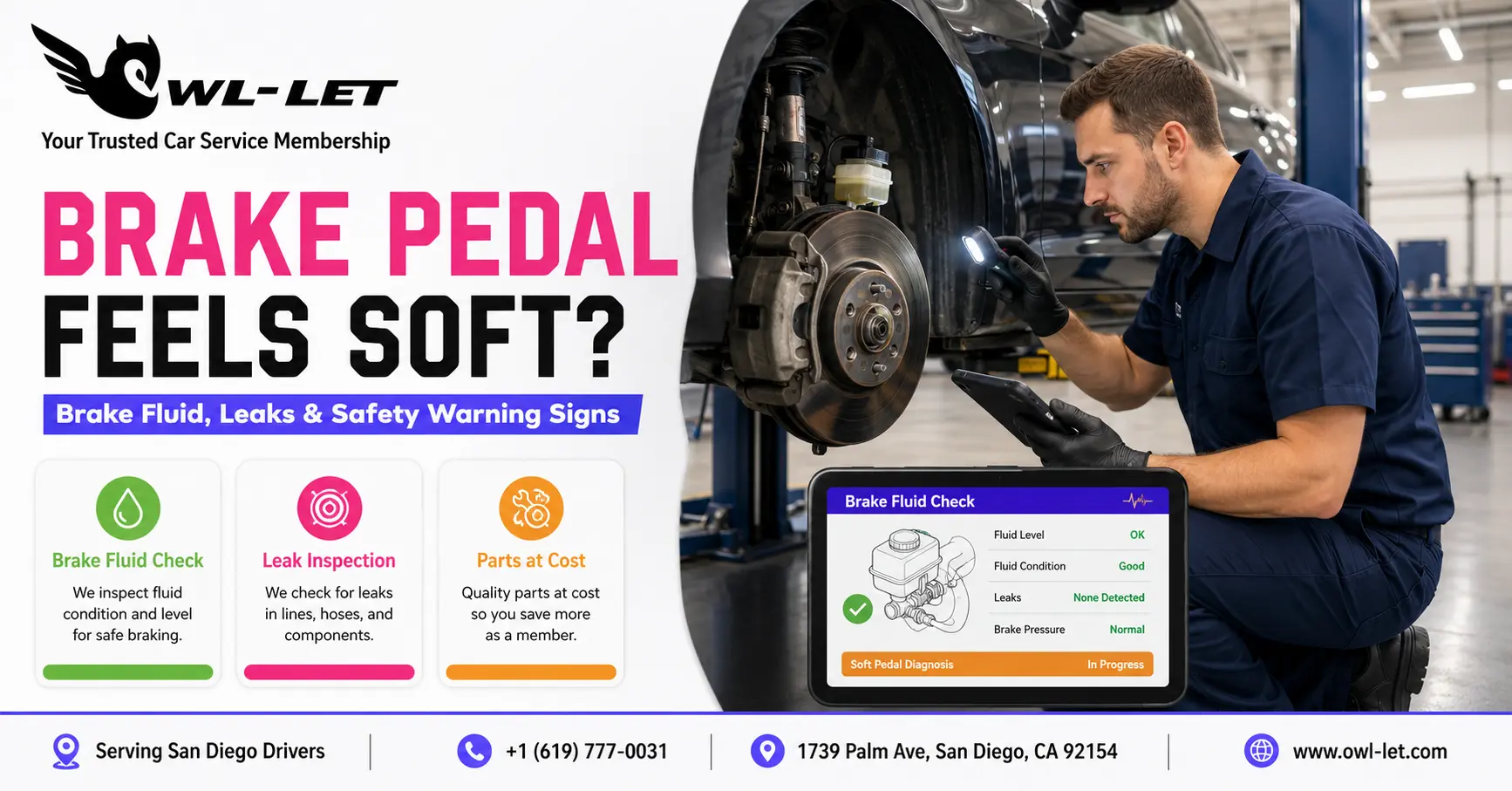
The brake pedal feels soft
-
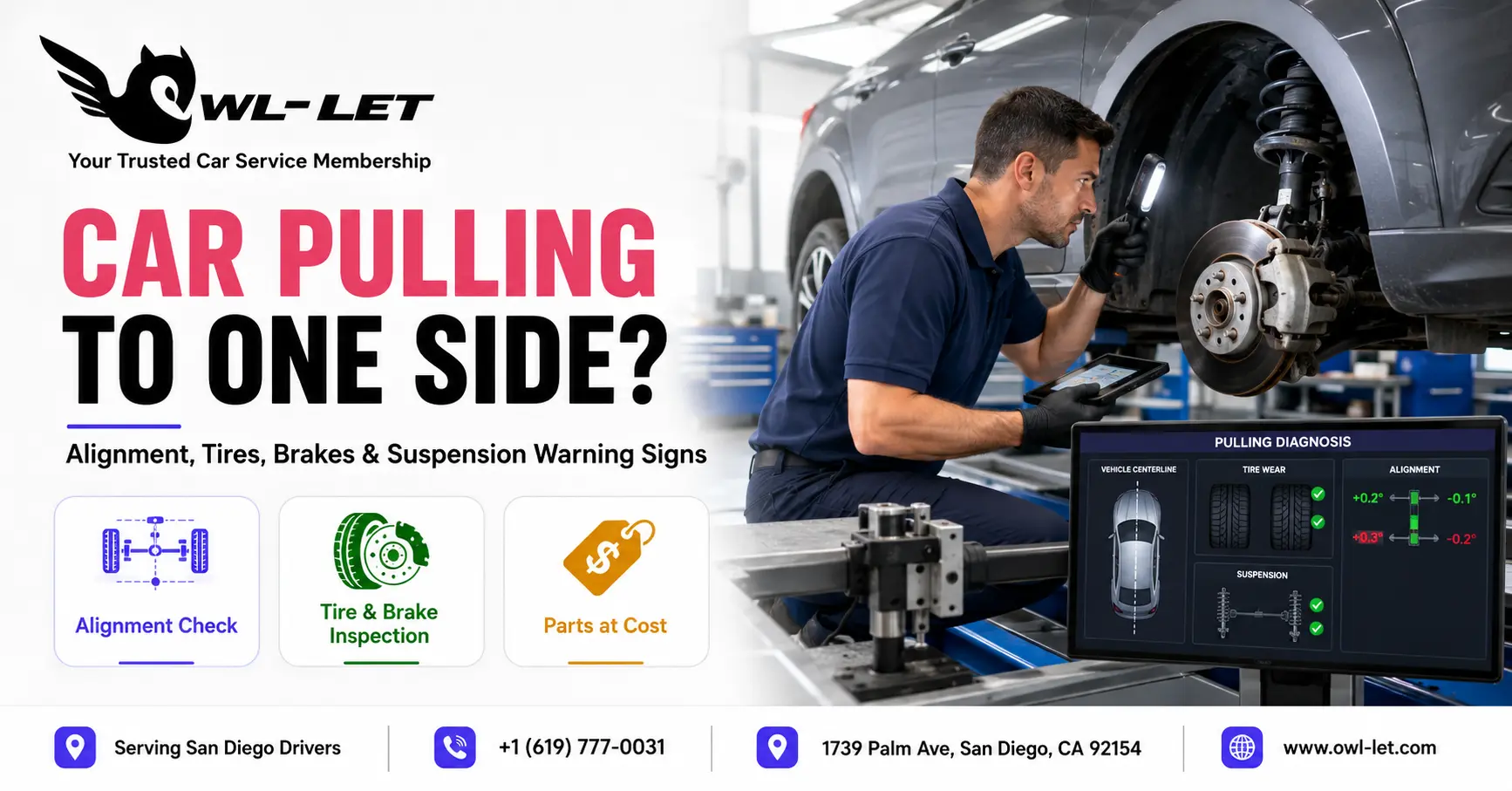
The car pulls while braking
-
The steering wheel shakes badly
-
You hear grinding
-
The brake warning light appears
-
You smell burning
-
The vehicle feels unsafe
Brake problems can affect stopping distance and safety, so early inspection matters.
Brake Rotors vs. Brake Pads
Some vehicles only need pads. Others may need pads and rotors together.
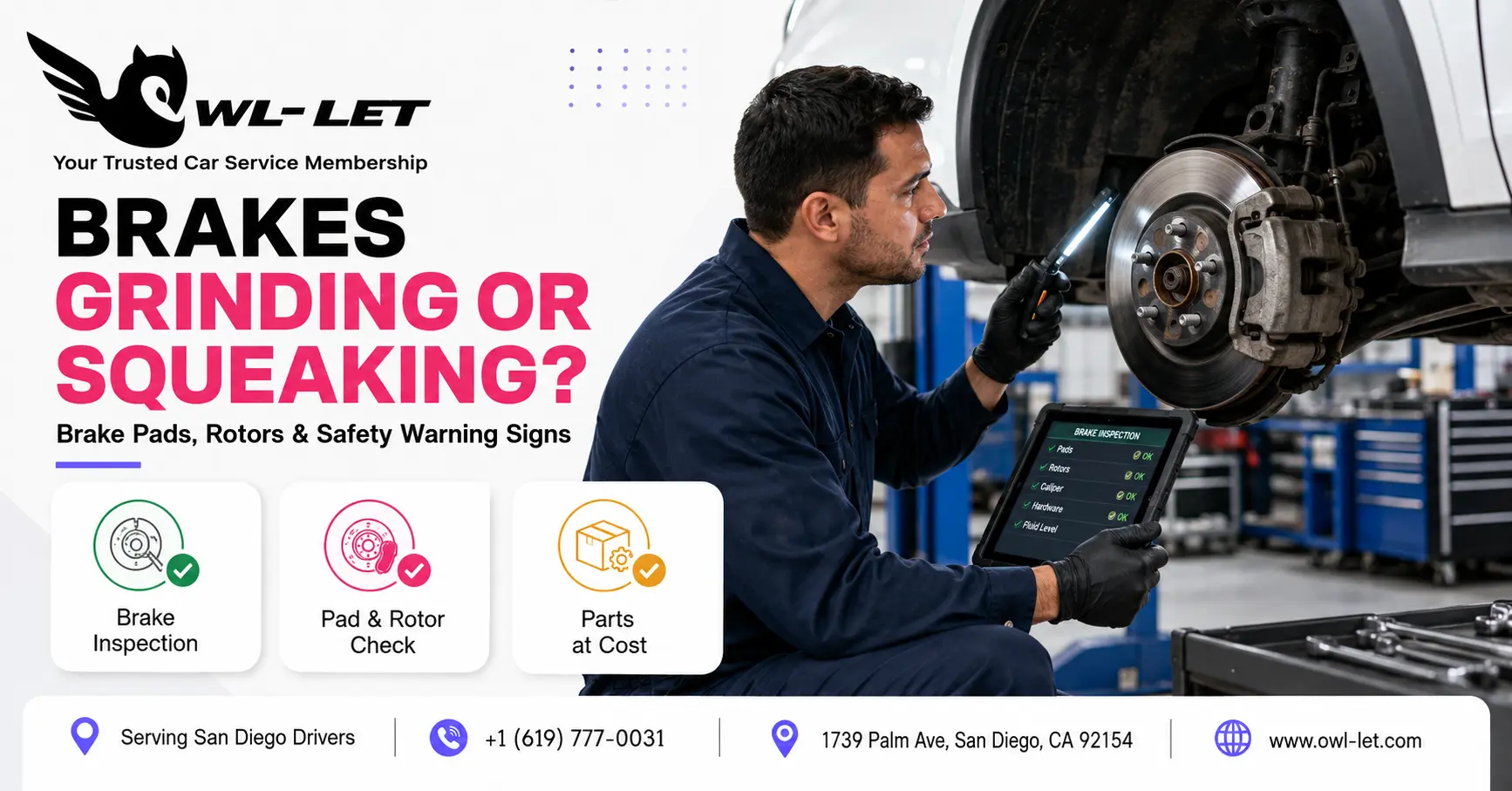
A brake inspection should check:
-
Brake pad thickness
-
Rotor surface condition
-
Rotor thickness
-
Calipers
-
Brake hardware
-
Brake fluid
-
Tire condition
-
Suspension and steering parts
This helps confirm the real cause before replacing parts.
How OWL-LET May Help
OWL-LET provides diagnostics, maintenance, and auto repair services for San Diego drivers.
Members may receive:
-
Free diagnostics
-
Qualifying parts at cost
-
Member labor pricing
-
Brake inspection support
-
Roadside benefits depending on the selected plan
Membership plans start at $24.99 per month.
If your vehicle shakes when braking, OWL-LET can inspect the brakes, tires, wheels, suspension, and steering components before recommending repair.
Schedule Brake Vibration Inspection in San Diego
If your steering wheel shakes when braking or your brake pedal pulses, schedule an inspection before the problem gets worse.
OWL-LET Service Center
1739 Palm Ave, San Diego, CA 92154
Phone
+1 (619) 777-0031
OWL-LET can help diagnose brake vibration and explain whether your vehicle needs pads, rotors, calipers, tire service, alignment, or suspension repair.
Service availability, diagnostics, pricing, parts, and membership benefits vary by vehicle and selected plan.
Comments 0
No comments yet
Be the first!