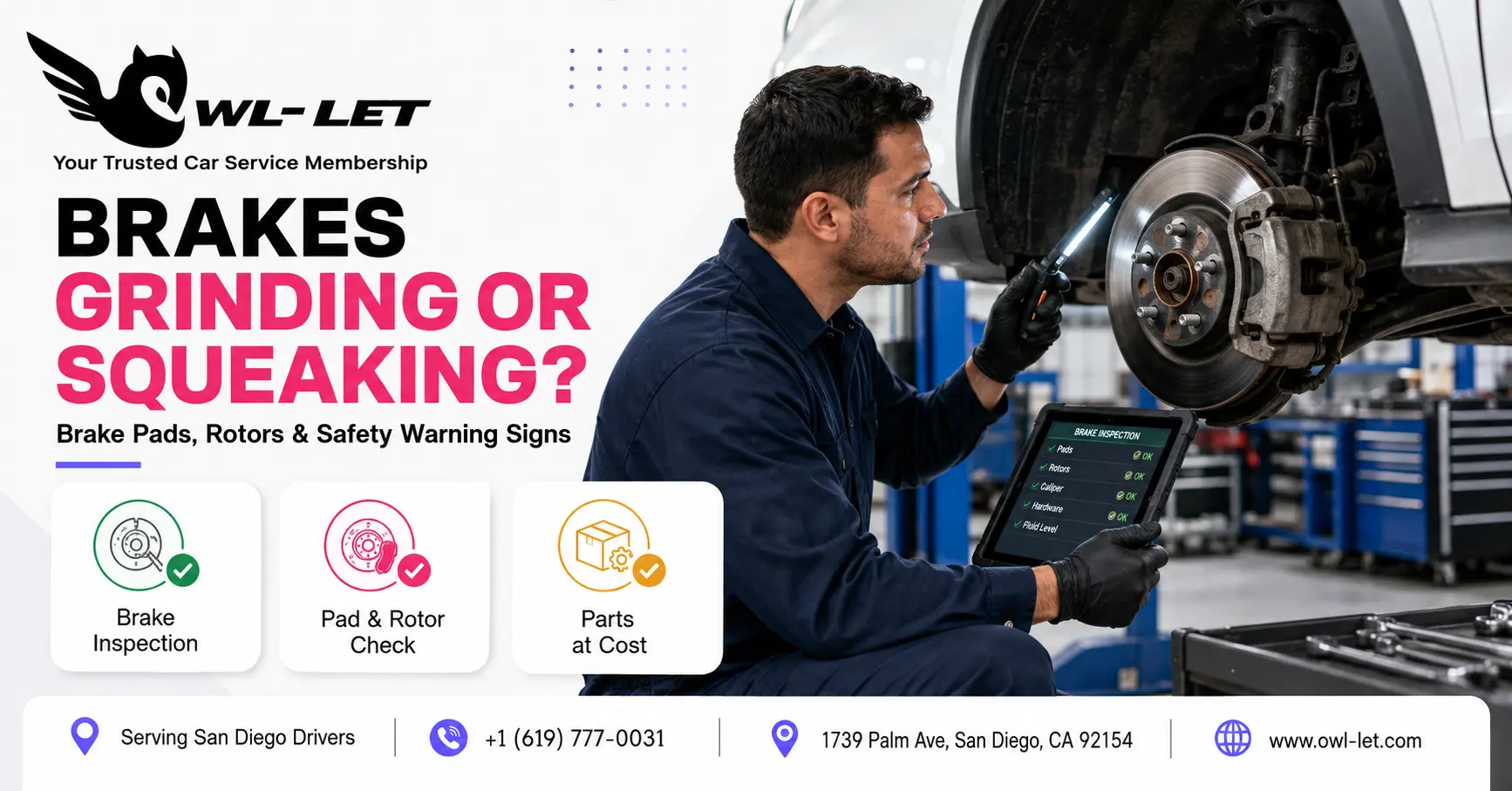
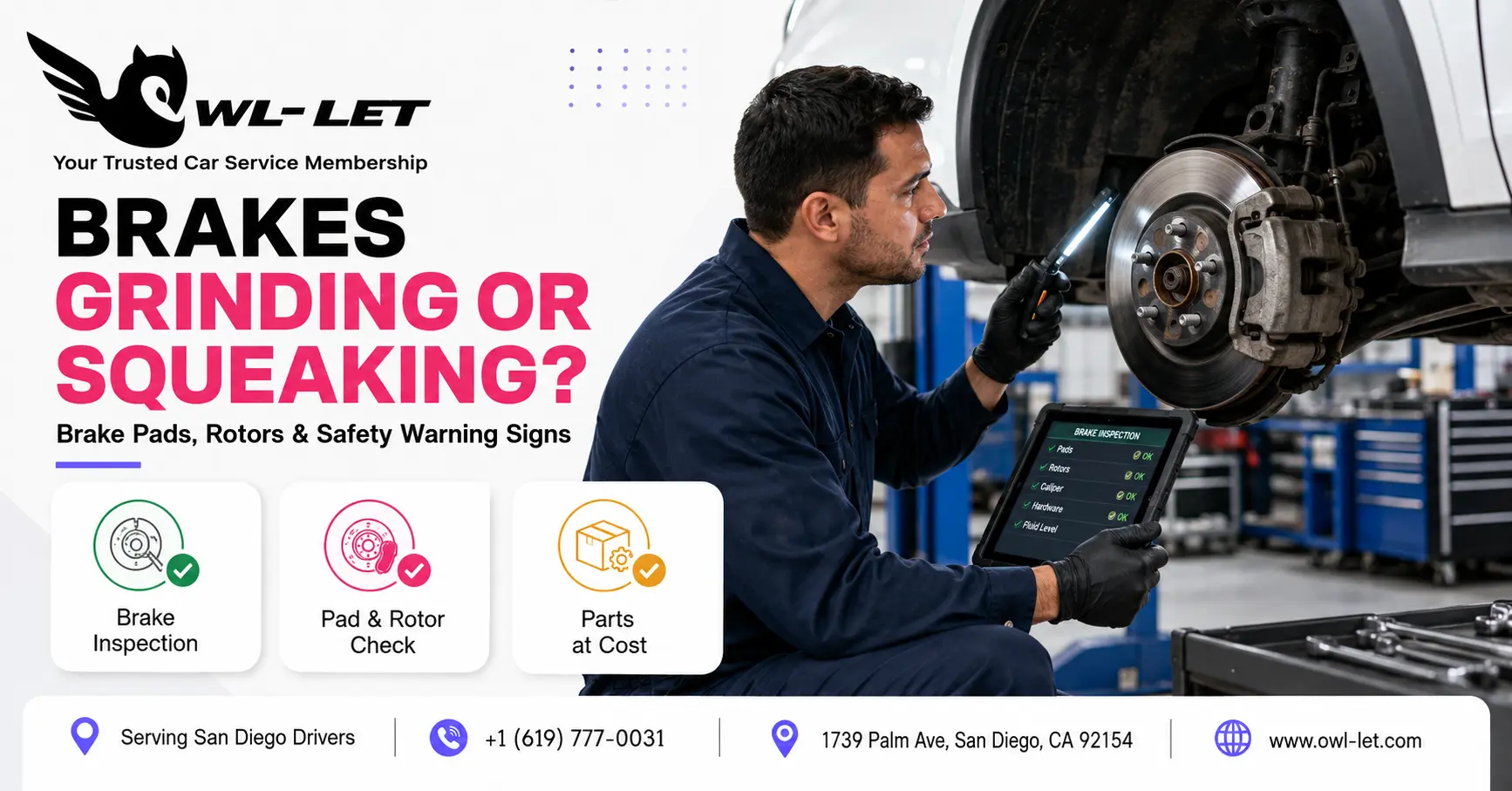
Why Are My Brakes Grinding or Squeaking?
Brake noise should never be ignored.
If your brakes are grinding, squeaking, squealing, or making a scraping sound, your vehicle may need brake inspection soon. Some brake noise may come from dust or moisture, but grinding can mean the brake pads are worn down and metal is touching the rotor.
Driving too long with brake noise can increase repair costs and reduce braking safety.
Common Reasons Brakes Make Noise
Worn Brake Pads
Brake pads wear down over time. When they become too thin, they may squeal, scrape, or grind.
Some brake pads have wear indicators that make noise to warn you before the pads are completely worn out.
If ignored, worn pads can damage the brake rotors.
Brake Rotor Damage
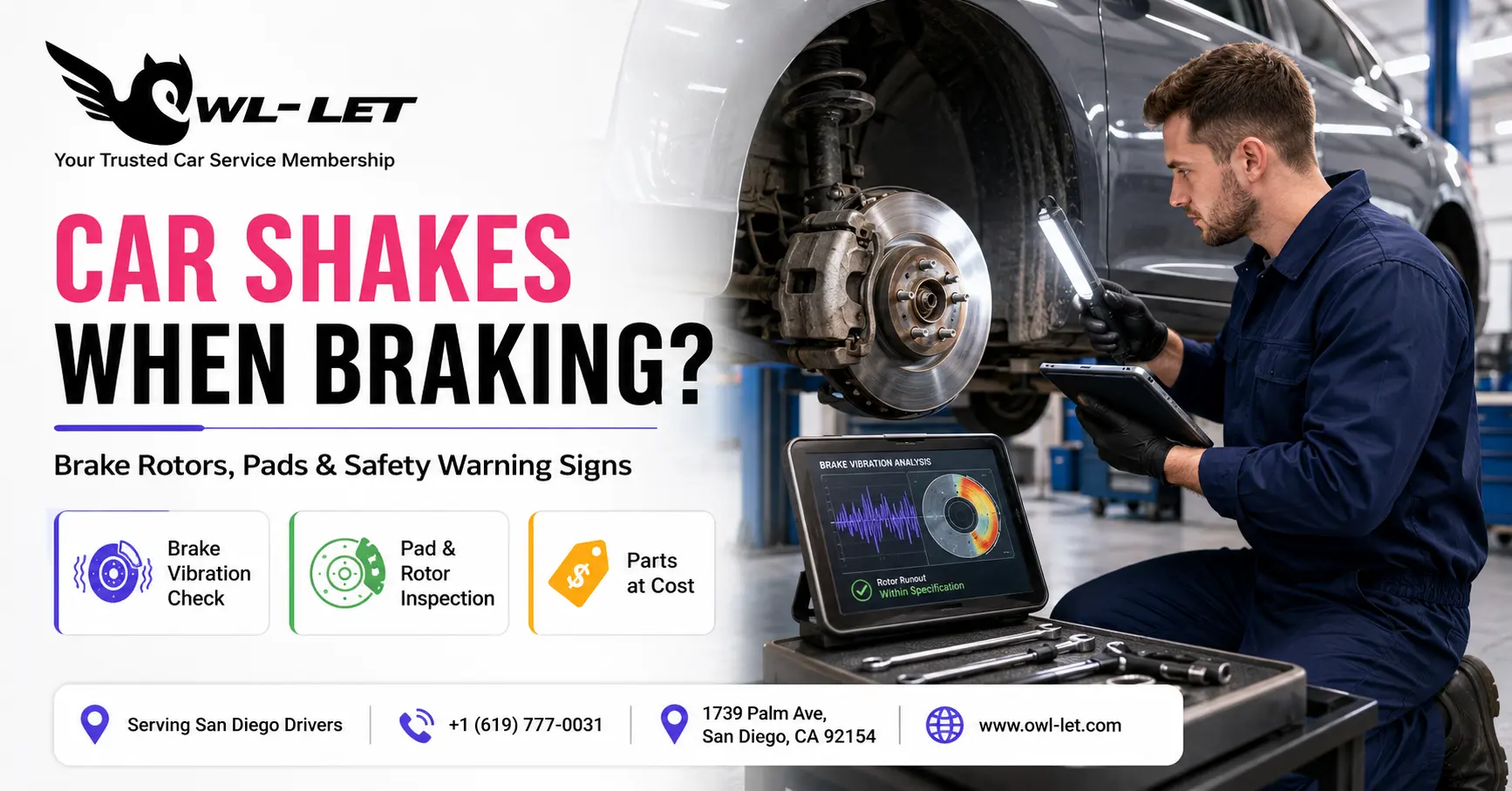
Rotors are the metal discs that brake pads press against to stop the vehicle.
If brake pads are worn too low, the rotors can become scratched, grooved, or warped.
Rotor problems may cause:
-
Grinding noise
-
Steering wheel vibration while braking
-
Brake pedal vibration
-
Longer stopping distance
-
Pulsing when braking
Dust, Moisture, or Surface Rust
A light squeak after rain, washing the car, or sitting overnight can sometimes happen because of moisture or light surface rust.
This noise may go away after a few stops. If it continues, schedule an inspection.
Sticking Brake Caliper
A caliper pushes the brake pads against the rotor.
If a caliper sticks, one brake may stay partly engaged. This can cause heat, uneven pad wear, pulling, burning smell, or grinding.
Loose or Worn Brake Hardware
Brake clips, shims, or hardware help hold brake components in place.
If hardware is worn or loose, you may hear rattling, squeaking, or clicking while braking.
Is It Safe to Drive With Grinding Brakes?
Grinding brakes are usually a warning sign that service is needed quickly.
Stop driving and get help if:
-
Brakes grind loudly
-
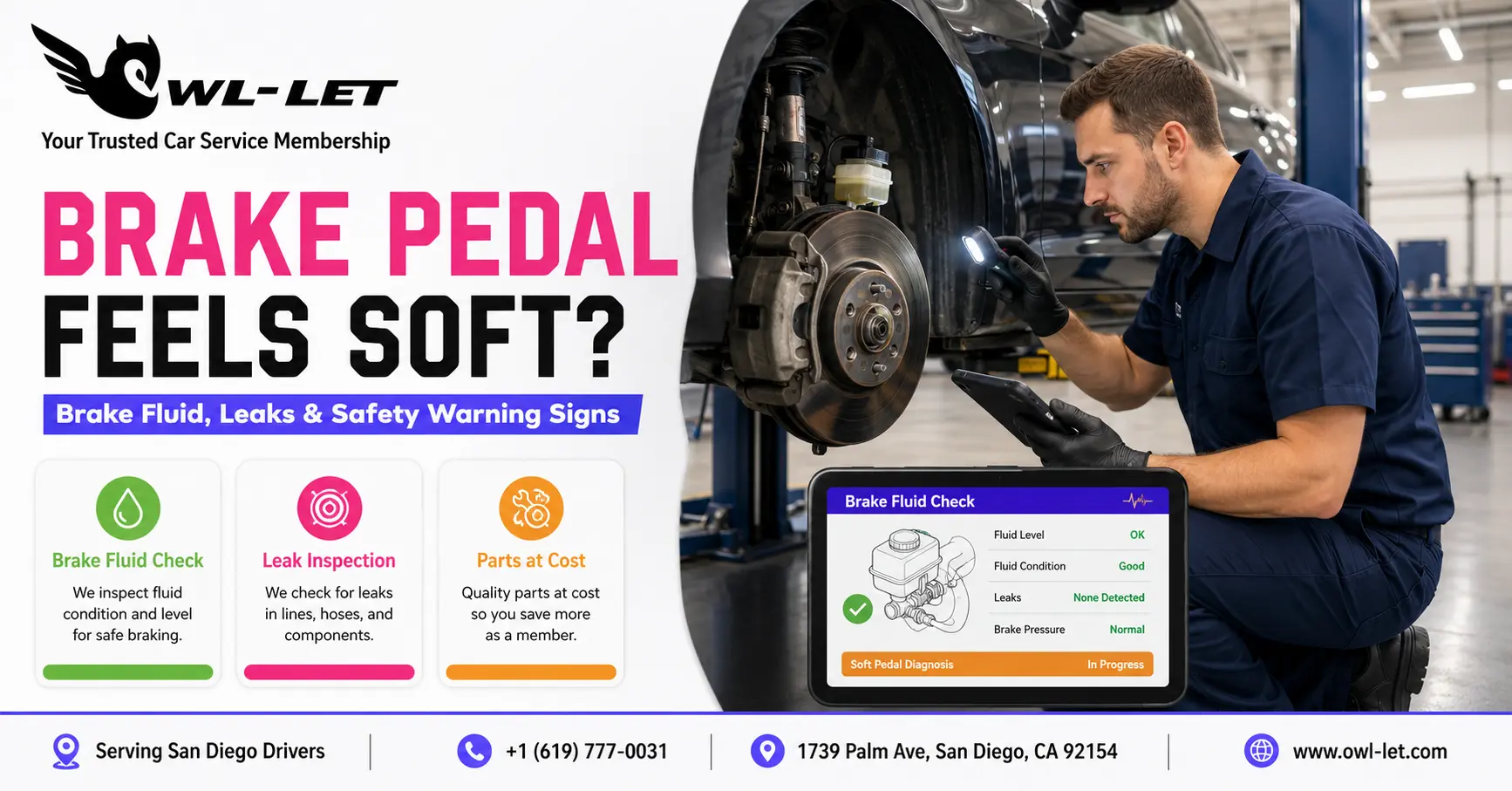
Brake pedal feels soft
-
Vehicle takes longer to stop
-
Car pulls while braking
-
Brake warning light appears
-
You smell burning
-
The vehicle feels unsafe
Driving with grinding brakes can damage rotors and may make the repair more expensive.
Brake Pads vs. Rotors
Some vehicles only need brake pads. Others may need pads and rotors together.
The decision depends on rotor thickness, surface condition, heat damage, vibration, and manufacturer specifications.
A proper brake inspection should check:
-
Pad thickness
-
Rotor condition
-
Calipers
-
Brake fluid
-
Brake lines
-
Brake hardware
-
Warning lights
-
Test drive symptoms
How OWL-LET May Help
OWL-LET provides diagnostics, maintenance, and auto repair services for San Diego drivers.
Members may receive:
-
Free diagnostics
-
Qualifying parts at cost
-
Member labor pricing
-
Brake inspection support
-
Roadside benefits depending on the selected plan
Membership plans start at $24.99 per month.
If your brakes are grinding or squeaking, OWL-LET can inspect the brake system and explain whether your vehicle needs pads, rotors, calipers, brake fluid service, or related repairs.
Schedule Brake Inspection in San Diego
If your brakes are making noise, do not wait until stopping distance gets worse.
OWL-LET Service Center
1739 Palm Ave, San Diego, CA 92154
Phone
+1 (619) 777-0031
OWL-LET can help inspect the brake system and provide repair options before the issue becomes more expensive.
Service availability, diagnostics, pricing, parts, and membership benefits vary by vehicle and selected plan.
Comments 0
No comments yet
Be the first!