Ignoring a check engine light for a year can lead to severe engine damage, reduced fuel efficiency, and expensive repairs like catalytic converter failure. While the car may seem "fine," underlying issues like faulty oxygen sensors or vacuum leaks worsen over time, eventually causing a total breakdown or failed emissions test.
Key Takeaways: The Risks of Long-Term Neglect
|
Impact Category |
Risk Level |
Common Result After 1 Year |
|
Fuel Economy |
High |
15–25% increase in fuel consumption. |
|
Engine Health |
Critical |
Internal carbon buildup; potential engine misfires. |
|
Repair Costs |
Extreme |
A $200 sensor issue turns into a $2,500 catalytic converter replacement. |
|
Safety |
Moderate |
Risk of stalling in traffic or sudden "Limp Mode" activation. |
Why is my check engine light on?
When your vehicle’s On-Board Diagnostics (OBD-II) system detects a malfunction in the emission, ignition, or fuel systems, it triggers the Malfunction Indicator Lamp (MIL). If you’ve been asking, "What happens if I ignore my check engine light? It’s been on for a year now," you are essentially gambling with your vehicle's lifespan.
A year of neglect means your car has likely been operating in "Open Loop" mode, where the computer ignores sensor data and uses "safe" default settings. This keeps the car running but destroys efficiency and clogs internal components. At Owl-Let, we’ve seen how minor issues evolve into mechanical nightmares when left unaddressed for twelve months.
Is it safe to drive with the check engine light on for a year?
Technically, if the light is steady (not flashing) and the car feels normal, it is "drivable," but it is not "safe" in terms of long-term reliability. A year is a massive window for a secondary problem to occur. If a second, more critical fault develops, you won't know because the light is already illuminated.
The Danger of the Flashing Light
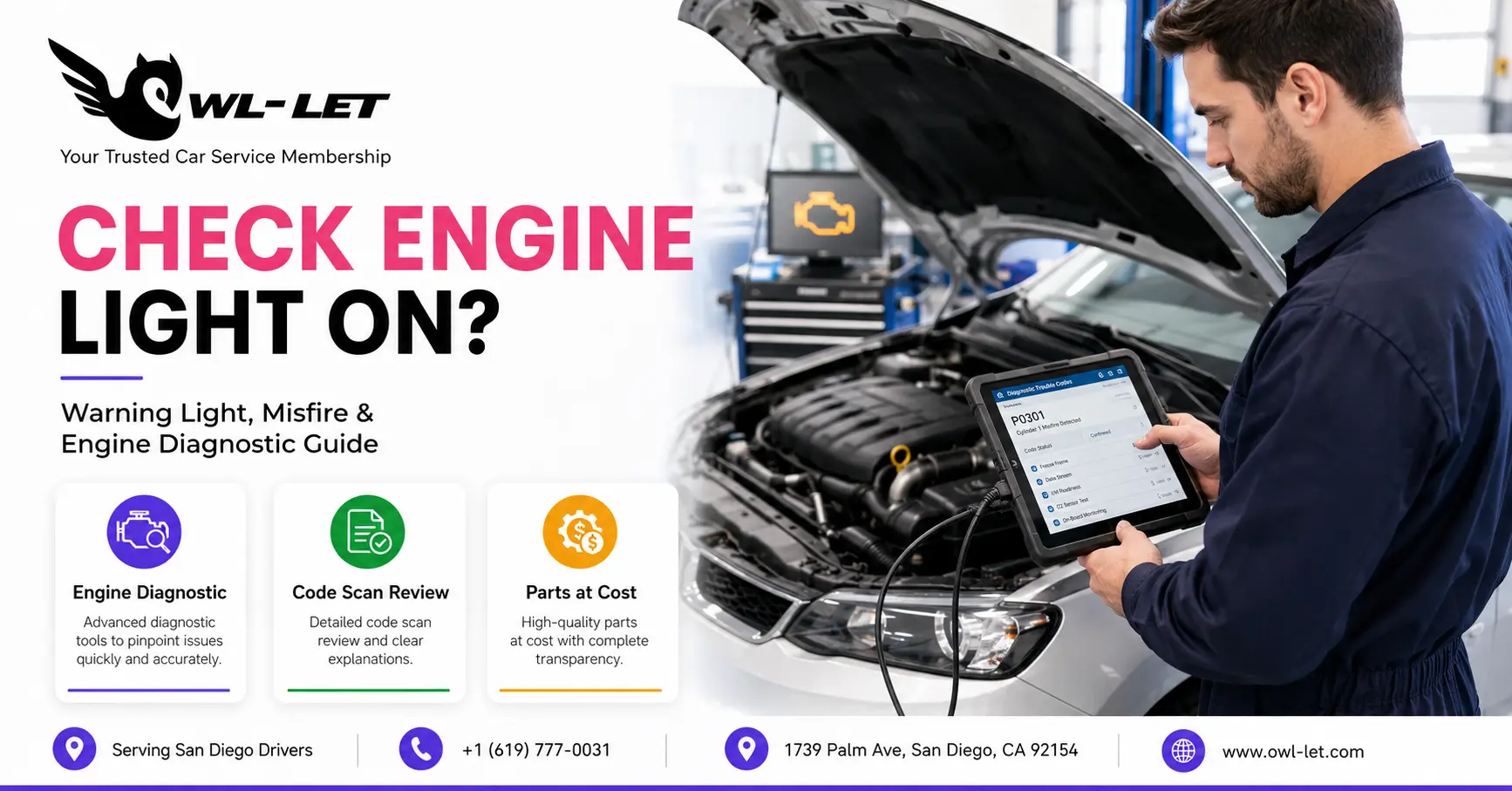
If that steady light ever begins to flash, stop immediately. A blinking light indicates a catalyst-damaging misfire. Driving even a few miles in this state can melt your catalytic converter.
What are the hidden costs of ignoring the check engine light?
The most immediate "invisible" cost is at the gas pump. Most check engine lights are triggered by the Oxygen (O2) Sensor or the Mass Air Flow (MAF) Sensor. When these fail, the engine often runs "rich," burning significantly more fuel than necessary. Over 12 months, you could easily spend an extra $400–$600 on gasoline—money that could have covered the repair three times over.
How does a year of neglect affect the catalytic converter?
The catalytic converter is designed to last the life of the car, provided the engine is healthy. However, if you ignore a check engine light for a year, unburnt fuel often reaches the converter. This causes it to overheat and eventually fail.
-
Minor Fix: $150–$300 (O2 Sensor).
-
Neglected Result: $1,500–$3,000 (Catalytic Converter replacement).
Will the check engine light turn off by itself?
No. Even if the problem is intermittent (like a loose gas cap you eventually tightened), the hard code remains stored in the ECU. To properly clear it and ensure the vehicle is optimized, an OBD-II scanner must be used to verify the repair. Our experts at Owl-Let suggest that "ghosting" your dashboard only leads to "ghosting" your bank account later.
What common issues cause the light to stay on for so long?
-
Loose or Damaged Gas Cap: Allows fuel vapors to escape.
-
Faulty Spark Plugs/Wires: Causes incomplete combustion.
-
Worn Out Evaporative Emission (EVAP) System: Prevents harmful vapors from reaching the atmosphere.
-
Bad Thermostat: If the engine doesn't reach the right temperature, the light stays on.
How to diagnose a check engine light that’s been on for a year?
To resolve this, you must follow a logical troubleshooting path.
-
Scan for Codes: Use an OBD-II reader to pull the specific alphanumeric code (e.g., P0420).
-
Inspect Visuals: Look for cracked hoses or loose connections.
-
Check Service Records: See if you are overdue for "Level 2" maintenance.
-
Professional Assessment: Some codes are "symptoms" of other problems. A professional diagnostic is essential for long-term fixes.
What are the consequences of failing an emissions test?
In most regions, a lit check engine light is an automatic failure for state inspections. If you’ve ignored it for a year, you likely haven't been able to renew your registration legally. Clearing the light right before the test won't work either, as the "Readiness Monitors" will show as "Incomplete" to the technician.
Why should you choose a car service membership?
Preventative maintenance is the only way to avoid the anxiety of a yellow light. Instead of waiting for a breakdown, proactive monitoring ensures your vehicle stays in peak condition. Owl-Let provides the peace of mind every driver deserves.
Conclusion: Stop Ignoring the Warning
Answering the question, "What happens if I ignore my check engine light? It’s been on for a year now," usually ends with a warning about catastrophic failure. Your car is a complex machine; when it speaks to you via the dashboard, it's asking for help.
To keep your car running like new without the stress of surprise repair bills, visit Owl-Let. Owl-Let offers comprehensive car service membership plans starting from just $24.99 monthly, ensuring you never have to ignore a warning light again. Secure your vehicle’s future today.
Comments 0
No comments yet
Be the first!