
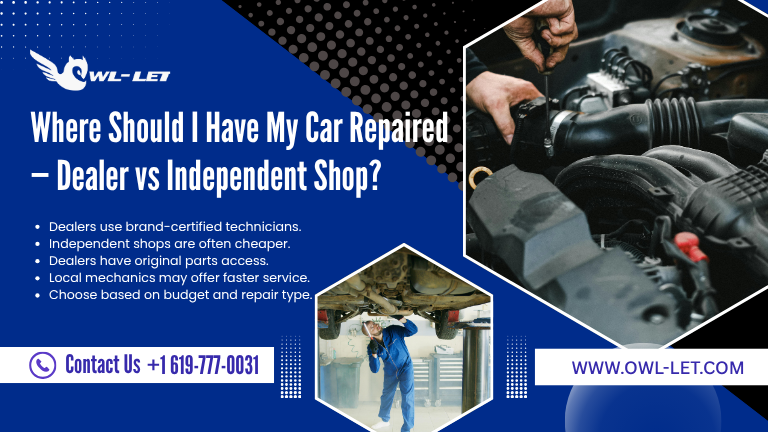
Choosing between a dealership and an independent shop depends on your vehicle’s age and your budget. Dealerships offer specialized technicians and OEM parts, ideal for cars under warranty. Independent shops provide personalized service and significant cost savings, making them the superior choice for out-of-warranty maintenance and routine repairs.
Key Comparison: Dealership vs. Independent Mechanic
|
Feature |
Dealership (The Specialist) |
Independent Shop (The Generalist) |
|
Average Cost |
Higher ($$$) |
Lower ($$) |
|
Parts Used |
OEM (Original Equipment) |
Aftermarket or OEM |
|
Warranty |
Manufacturer Backed |
Shop Specific |
|
Expertise |
Brand-Specific Specialists |
Broad Multi-Make Knowledge |
|
Customer Service |
Corporate/Standardized |
Personalized/Local |
Why Does the Choice of Repair Shop Matter in 2026?
The automotive landscape has shifted. With the rise of complex EV drivetrains and advanced driver-assistance systems (ADAS), the question of where should I have my car repaired — dealer vs independent shop? is no longer just about price. It is about technical capability and long-term vehicle health. Making the right choice ensures you don't void your warranty while keeping your "owl-let" (wallet) full for future adventures.
Is a Dealership Always Better for Newer Cars?
When you purchase a new vehicle, the dealership is your primary partner. They have direct access to proprietary diagnostic software and factory recalls that independent shops might not receive immediately.
-
Warranty Integrity: For repairs covered under the manufacturer's bumper-to-bumper warranty, the dealer is mandatory to ensure the work is performed at zero cost to you.
-
Specialized Training: Dealership technicians focus on one or two brands exclusively. They see the same common failures daily, leading to faster diagnostic times.
-
Resale Value: A documented "Full Dealer Service History" can often fetch a premium when it's time to trade in or sell your vehicle.
What are the Benefits of Using an Independent Mechanic?
Independent shops are the backbone of the automotive industry. They offer a level of flexibility and transparency that corporate service centers often lack.
-
Cost-Effectiveness: Independent shops typically have lower overhead, translating to labor rates that are 20-40% cheaper than dealers.
-
Direct Communication: You often get to speak directly with the technician working on your car, rather than a service advisor acting as a middleman.
-
Choice of Parts: At an independent shop, you can choose between OEM parts and high-quality aftermarket alternatives, allowing you to control the total bill.
Does servicing my car at a local shop void my warranty?
A common misconception is that you must go to the dealer to keep your warranty active. This is false. According to the [Placeholder: Citation for Magnuson-Moss Warranty Act], manufacturers cannot deny warranty coverage just because service was performed by an independent professional, provided the work was done correctly and documented.
How Do Repair Costs Compare Between Dealers and Private Shops?
The financial aspect is usually the deciding factor. Dealerships operate on a "Flat Rate" system dictated by the manufacturer, which can sometimes result in inflated labor hours for simple tasks. Independent shops are more likely to charge based on the actual time spent on the vehicle.
Expert Insight: Many car owners find that for "wear and tear" items like brake pads, tires, and batteries, an independent shop provides identical quality for a fraction of the price.
Should I Trust Independent Shops for Complex Electronics?
As cars become "computers on wheels," the gap in tech is closing. High-end independent shops now invest in multi-brand diagnostic tools that rival dealership equipment. However, for deep-level ECU programming or specialized EV battery calibration, the dealer may still hold the edge in 2026.
How Can I Identify a High-Quality Independent Repair Shop?
If you choose the independent route, look for these "Green Flags":
-
ASE Certification: Look for the Blue Seal of Excellence.
-
Clean Facilities: A tidy shop often reflects a disciplined approach to mechanics.
-
Transparent Estimates: They should be willing to show you the old parts they replaced.
-
Membership Options: Modern shops now offer preventative maintenance plans to help owners budget for annual upkeep.
The Verdict: Which One Is Right for You?
Deciding where should I have my car repaired — dealer vs independent shop? ultimately comes down to the "Rule of Three":
-
Is it under warranty? Go to the Dealer.
-
Is it a complex electrical/hybrid issue? Go to the Dealer.
-
Is it routine maintenance or a mechanical repair? Go to an Independent Shop.
Keeping your vehicle in top shape shouldn't be a source of stress. Whether you prefer the specialized touch of a dealer or the local charm of a mechanic, staying ahead of maintenance is the best way to ensure your car remains reliable for years to come.
Conclusion: Taking Care of Your Vehicle and Your Budget
Maintaining a car is an investment in your mobility. While the dealer offers prestige and specialized tech, the independent shop offers value and a personal connection. To bridge the gap, consider a middle-ground approach: use the dealer for major milestones and a trusted local professional for the rest. For those looking for total peace of mind and fixed costs, check out the comprehensive car care solutions at Owl-Let.
Don't let unexpected repairs drain your savings. Join our Car Service Membership Plan starting from just $24.99/month and drive with confidence knowing your maintenance is handled by experts.
Comments 0
No comments yet
Be the first!