
There is nothing quite as unsettling as backing out of your driveway and hearing a high-pitched piercing sound echoing through the neighborhood. If you’ve ever wondered, "Why do your brakes squeak every morning but stop making noise after a few minutes?" you aren't alone. It’s one of the most common complaints we hear at Owl-let, and fortunately, the answer is usually rooted in simple chemistry rather than a mechanical catastrophe.
Key Takeaways: Morning Brake Squeaks vs. Serious Issues
|
Symptom |
Primary Cause |
Severity |
|
High-Pitched Squeak (First 2-3 stops) |
Surface Rust/Moisture |
Low (Normal) |
|
Continuous Grinding Noise |
Worn Brake Pads (Metal-on-Metal) |
Critical (Inspect Immediately) |
|
Squealing While Driving |
Wear Indicator Tab |
Moderate (Schedule Service) |
|
Vibration/Pulsing Pedal |
Warped Rotors |
High (Needs Resurfacing) |
Why does moisture cause brakes to squeal only in the morning?
The most frequent culprit behind morning brake noise is surface oxidation. Most brake rotors are made of cast iron, which is highly susceptible to moisture. Overnight, humidity, rain, or even just temperature shifts cause a microscopic layer of rust to form on the surface of the rotor.
When you first apply the brakes in the morning, the brake pads rub against this thin layer of rust. This creates a high-frequency vibration that manifests as a squeak. After you’ve made three or four stops, the friction effectively "sandpapers" the rust away, leaving the rotor smooth and silent again. This is why the noise disappears as you continue your commute.
Can humidity make my brakes louder?
Absolutely. High humidity levels act as a catalyst for the oxidation process mentioned above. In coastal areas or during "dewy" spring mornings, the moisture content in the air is high enough to create a thicker layer of surface film.
If you notice this happening daily, it doesn't necessarily mean your brakes are failing. However, it is a sign that your braking components are exposed to the elements. At Owl-let, we recommend a $24.99 monthly membership to ensure that your brake hardware is cleaned and lubricated regularly, preventing that moisture from leading to deeper, more permanent "pitting" of the rotors.
Is morning brake squeak a sign that I need new brake pads?
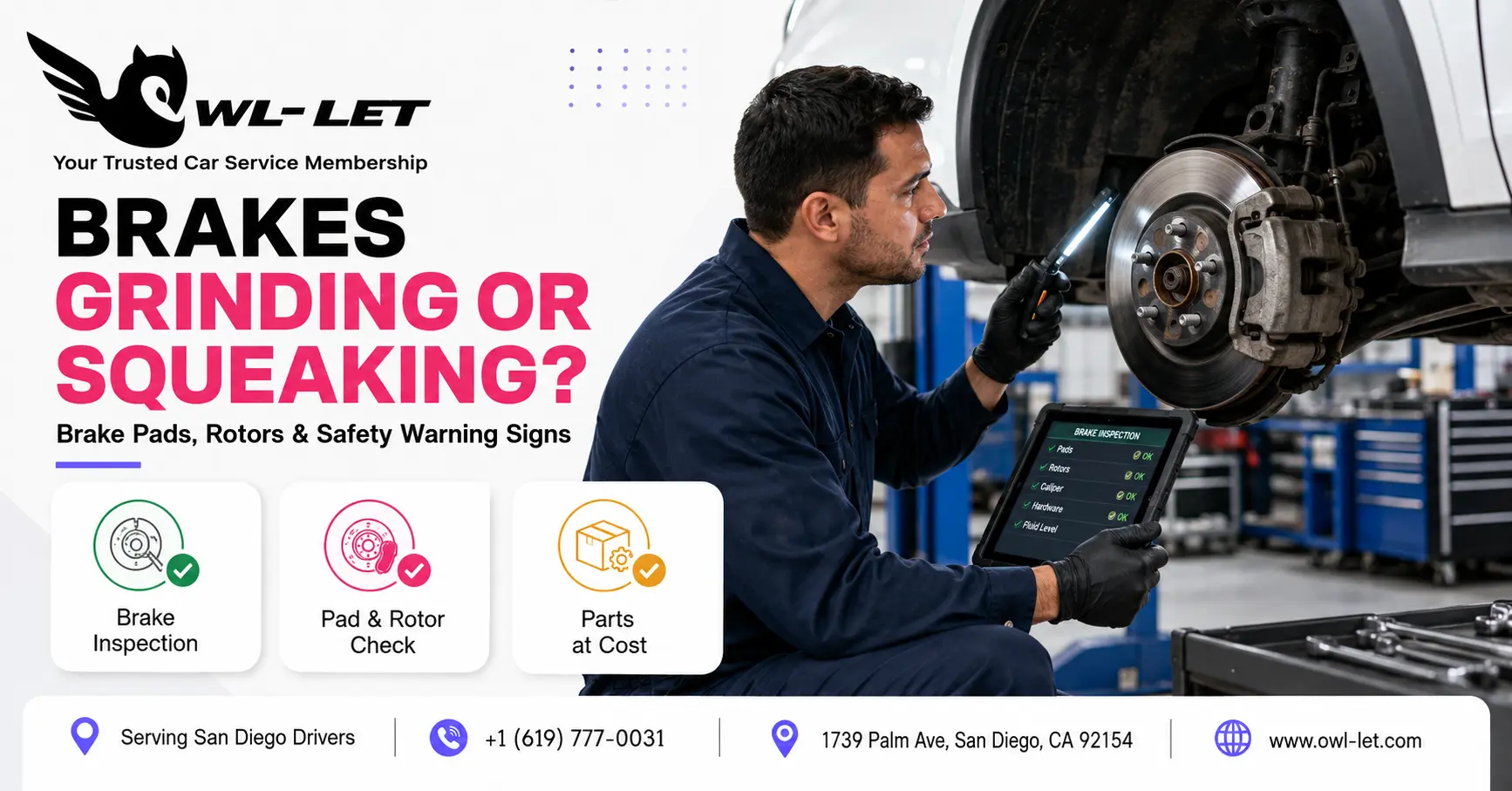
While morning squeaks are often harmless, you shouldn't ignore them entirely. You need to distinguish between "morning moisture" and the mechanical wear indicator.
-
The "Morning Film": Disappears after a few minutes of driving.
-
The Wear Indicator: A small metal tab designed to hit the rotor when the pad material gets low. This creates a constant high-pitched squeal that happens every time the wheels are turning, or specifically when you apply pressure, and it does not go away after the brakes warm up.
If your noise persists past the first mile of your drive, it’s a clear signal that your pads are reaching the end of their lifespan. Through the Owl-let platform, members get parts at wholesale cost, making a brake pad swap significantly cheaper than at a traditional dealership.
Do ceramic brakes squeak more than semi-metallic ones?
Interestingly, the material of your brake pads plays a massive role in noise levels.
-
Semi-Metallic Pads: These contain metal fibers that are durable but can be quite noisy when cold.
-
Ceramic Pads: These are generally quieter and produce less dust, but they require a "bedding" process to remain silent.
If you recently changed your brakes and the morning squeak started afterward, it could be due to the "glazing" of the pads or a lack of anti-seize lubricant on the back of the pads. This is a common oversight in DIY jobs that a professional Owl-let technician can diagnose during a routine inspection.
How can I prevent my brakes from squeaking every morning?
While you can't control the weather, you can reduce the frequency of that morning "alarm clock" for your neighbors:
-
Garage Parking: Keeping your vehicle in a climate-controlled environment significantly reduces moisture buildup on the rotors.
-
Brake Cleaning: Using a dedicated brake cleaner can remove accumulated dust that traps moisture.
-
Regular Maintenance: Ensuring your calipers are moving freely prevents "dragging," which can contribute to uneven rotor wear and increased noise.
By joining the Owl-let family for just $24.99 a month, you get a dedicated partner in vehicle health. We track these small acoustic changes in your car and help you address them before a simple "squeak" turns into a "grind" that requires expensive rotor replacement.
Conclusion: Peace of mind for your morning commute
The answer to "Why do your brakes squeak every morning but stop making noise after a few minutes?" is usually just a bit of morning rust being cleared away. However, consistent noise is your car’s way of asking for an expert eye.
Don't let brake anxiety ruin your morning. With an Owl-let membership, you have access to expert technicians and the lowest parts prices in the industry. Whether it’s a simple cleaning or a full pad replacement, we ensure your vehicle stays safe and silent for a fraction of the cost. Visit www.owl-let.com and sign up for our $24.99 monthly plan to keep your car—and your wallet—in perfect harmony.
Comments 0
No comments yet
Be the first!