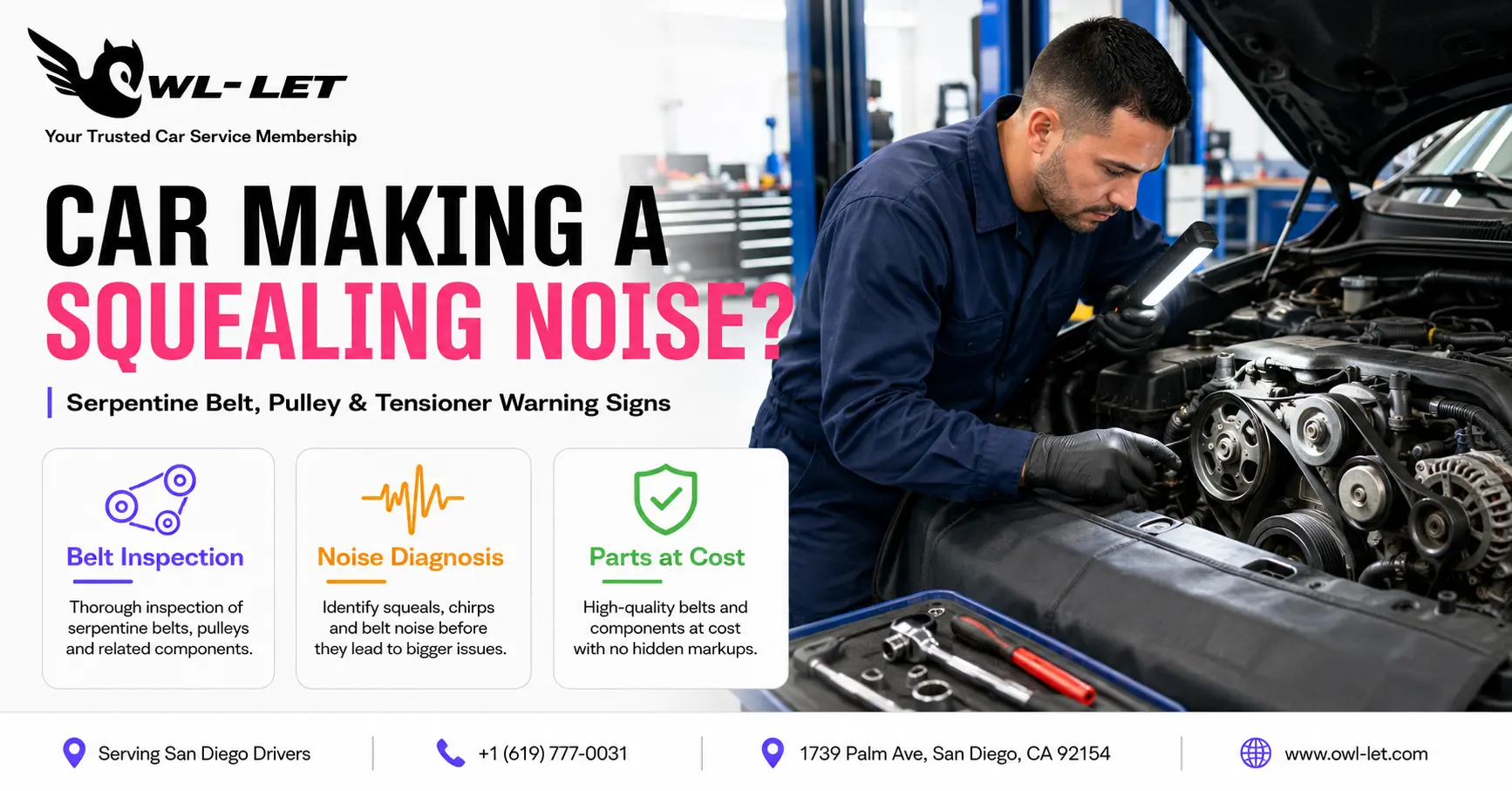
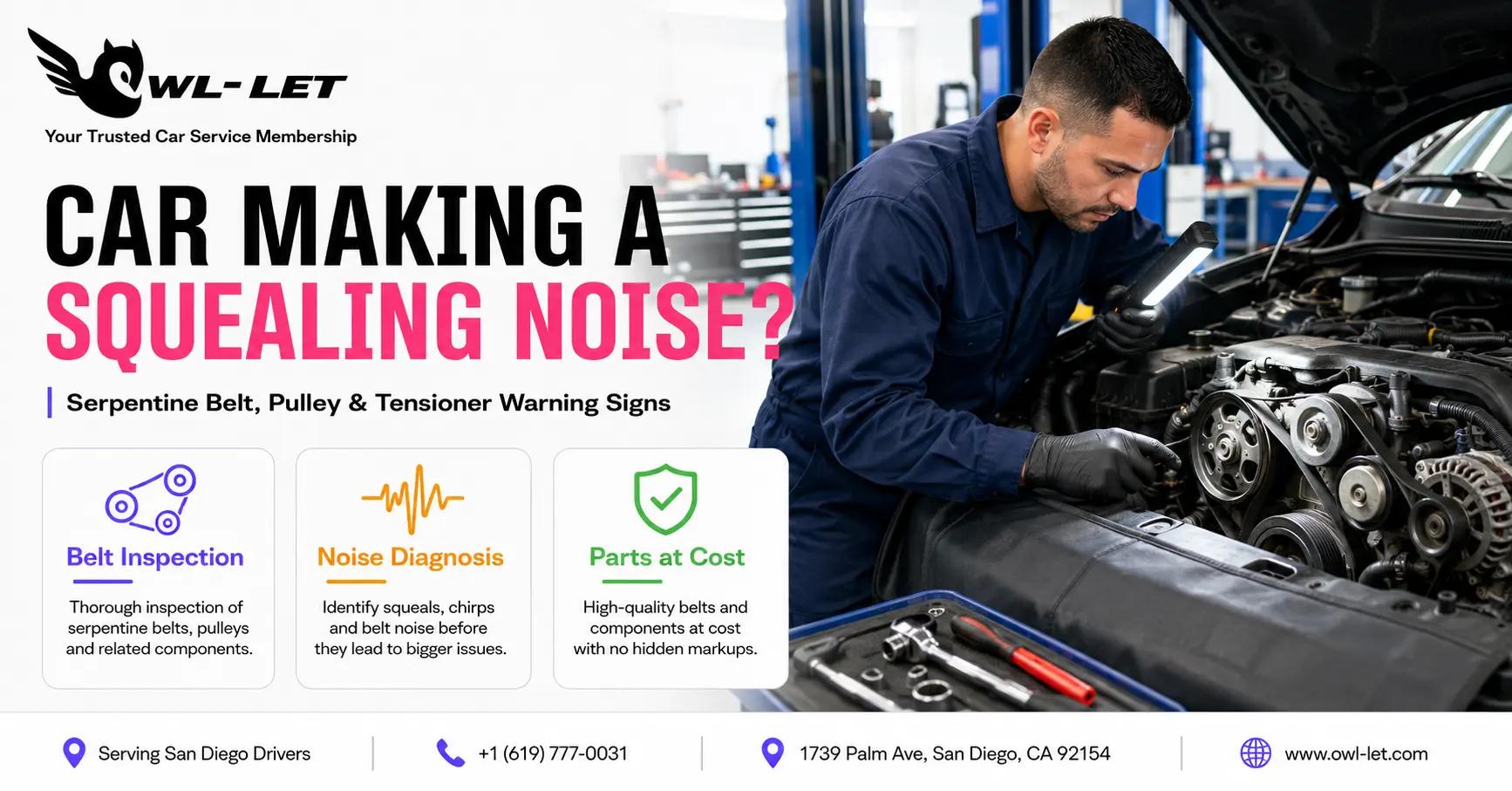
Why Is My Car Making a Squealing Noise?
A squealing noise from your car can be annoying, but it can also be an early warning sign.
Many drivers notice the sound when starting the engine, turning the steering wheel, using the AC, or accelerating. In many cases, the noise comes from the serpentine belt, belt tensioner, pulleys, alternator, or another accessory driven by the engine.
Ignoring belt noise can lead to bigger problems, including battery charging issues, overheating, power steering problems, or being stranded.
Common Reasons Your Car Squeals
Worn Serpentine Belt
The serpentine belt helps power important components such as the alternator, AC compressor, power steering pump, and water pump on some vehicles.
Over time, the belt can crack, glaze, stretch, or wear down.
Common signs include:
-
Squealing during startup
-
Chirping while driving
-
Visible cracks on the belt
-
Burning rubber smell
-
Warning lights
-
AC or steering issues
Loose or Weak Belt Tensioner
The belt tensioner keeps proper pressure on the belt.
If the tensioner weakens, the belt may slip and create a squealing sound. A weak tensioner can also cause faster belt wear.
Worn Pulley
A pulley can become noisy if its bearing wears out or if it becomes misaligned.
Pulley noise may sound like squealing, grinding, chirping, or rattling.
Alternator or Charging Issue
A belt problem can affect the alternator. If the alternator is not spinning correctly, the battery may not charge properly.
This may cause a battery warning light, dim lights, or a no-start problem later.
AC Compressor Load
If the squealing gets worse when the AC is turned on, the belt, tensioner, pulley, or AC compressor may need inspection.
Is It Safe to Drive With a Squealing Belt?
It depends on the cause and severity.
A short squeal at startup may not be urgent, but repeated or loud squealing should be inspected soon.
Stop driving and seek help if:
-
The battery warning light turns on
-
The temperature gauge rises
-
Steering becomes heavy
-
The belt breaks
-
You smell burning rubber
-
The noise becomes loud or constant
-
The vehicle feels unsafe
A broken belt can quickly lead to overheating or loss of important systems, depending on the vehicle design.
How Much Does Belt Replacement Cost?
The cost depends on the vehicle, belt type, labor time, and whether related parts need replacement.
Sometimes replacing only the belt is enough. Other times, the tensioner, idler pulley, or another accessory may also need service.
Ask for an estimate that separates:
-
Belt cost
-
Labor
-
Tensioner or pulley parts
-
Diagnostic time
-
Taxes and fees
Replacing the belt without fixing a bad pulley or tensioner may cause the noise to return.
How OWL-LET May Help
OWL-LET provides diagnostics, maintenance, and auto repair services for San Diego drivers.
Members may receive:
-
Free diagnostics
-
Qualifying parts at cost
-
Member labor pricing
-
Maintenance and repair support
-
Roadside benefits depending on the selected plan
Membership plans start at $24.99 per month.
If your car is squealing, OWL-LET can inspect the belt, pulleys, tensioner, charging system, and related components before recommending repair.
Schedule Belt Inspection in San Diego
If your vehicle squeals during startup, acceleration, turning, or AC use, schedule an inspection before the belt fails.
OWL-LET Service Center
1739 Palm Ave, San Diego, CA 92154
Phone
+1 (619) 777-0031
OWL-LET can help diagnose the noise and explain whether your vehicle needs a belt, pulley, tensioner, or related repair.
Service availability, diagnostics, pricing, parts, and membership benefits vary by vehicle and selected plan.
Comments 0
No comments yet
Be the first!