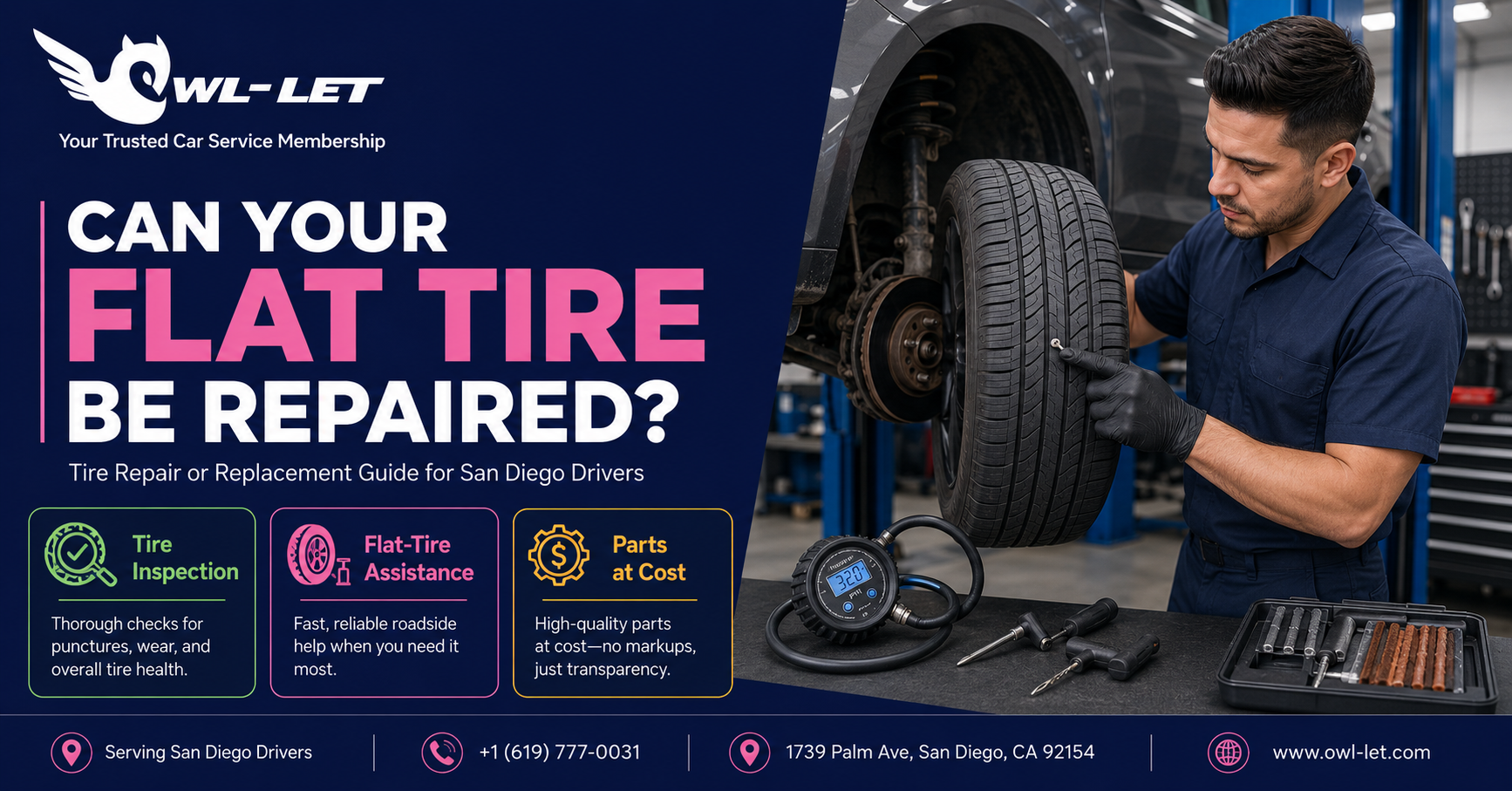
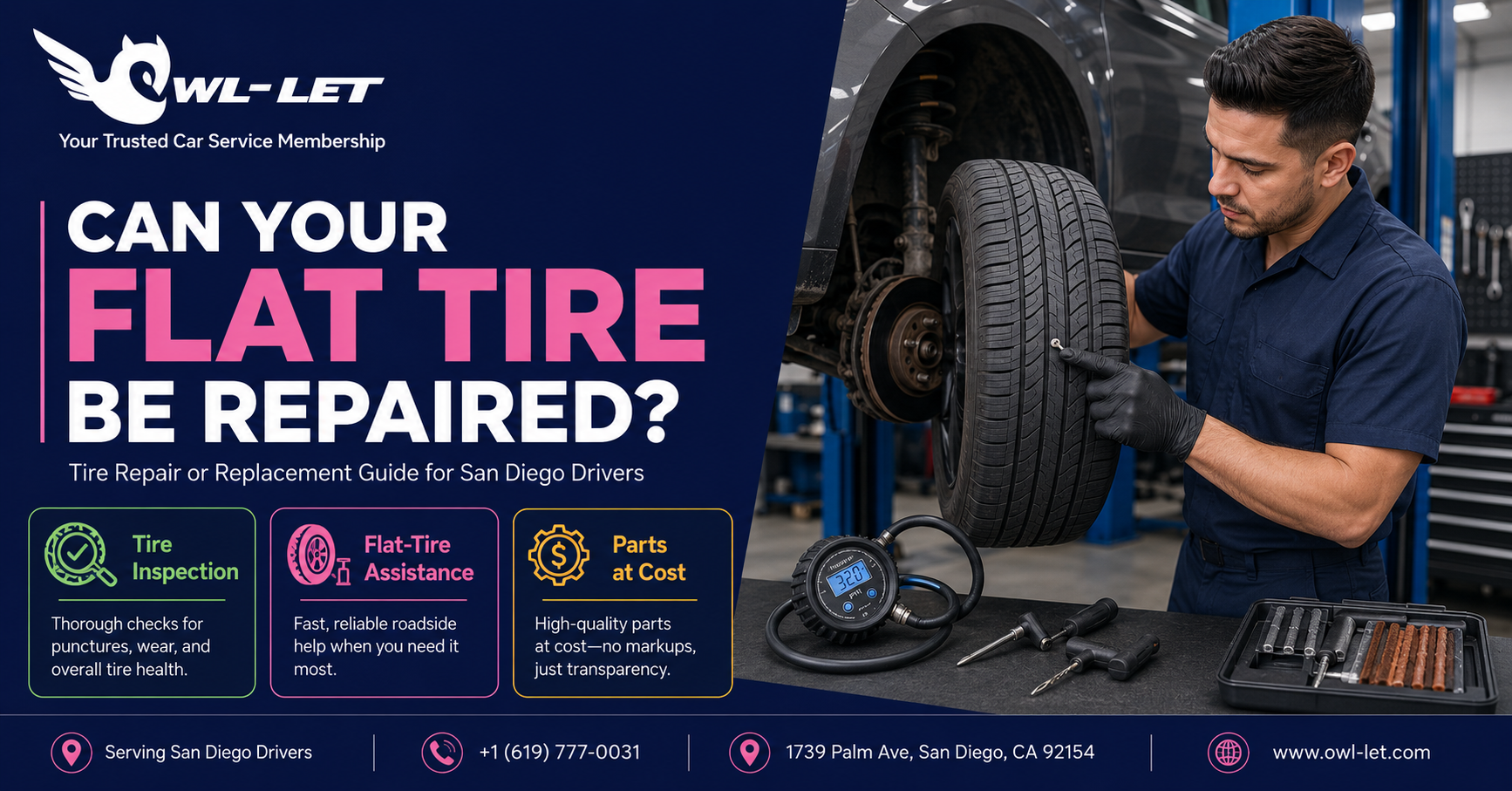
Can a Flat Tire Be Repaired?
Finding a nail in your tire does not always mean you need to buy a new tire.
Some punctures can be repaired safely, while damage to the sidewall, shoulder, or internal tire structure may require replacement.
The correct answer depends on where the damage is located, how large it is, whether the tire was driven while flat, and the overall condition of the tire.
When Can a Flat Tire Be Repaired?
A tire may be repairable when the puncture is located within the main tread area and the tire still has enough usable tread.
A technician should remove the tire from the wheel and inspect both the outside and inside before deciding whether a repair is safe.
A professional repair commonly involves sealing the puncture from inside the tire rather than using only an external plug.
The tire should also be checked for:
-
Internal damage
-
Additional punctures
-
Uneven wear
-
Exposed cords
-
Low tread depth
-
Damage caused by driving while flat
-
Problems around the wheel or valve stem
When Should a Tire Be Replaced?
Replacement may be necessary when the damage is located in the sidewall or shoulder area.
These sections flex while the vehicle is moving and generally cannot be repaired in the same way as the center tread.
A tire may also need replacement when:
-
The sidewall has a cut or bubble
-
Internal cords are damaged
-
The tire was driven while completely flat
-
The tread is badly worn
-
There are several nearby punctures
-
The tire has severe cracking
-
The wheel damaged the inside of the tire
-
The previous repair is failing
A technician should inspect the tire before recommending repair or replacement.
Is It Safe to Drive With a Flat Tire?
Driving on a flat or severely underinflated tire is not recommended.
Even a short distance can damage the sidewall, tire structure, wheel, and nearby suspension components.
If the tire-pressure warning appears, slow down and move to a safe location. Check the tire before continuing.
Stop driving when:
-
The vehicle pulls strongly to one side
-
You hear flapping or grinding
-
Steering becomes difficult
-
The tire is visibly flat
-
The wheel begins contacting the road
-
The vehicle feels unstable
Roadside help or towing may cost less than replacing both a damaged tire and wheel.
Why Does My Tire Keep Losing Air?
Not every slow leak is caused by a nail.
Possible causes include:
-
A small tread puncture
-
A damaged valve stem
-
A leaking valve core
-
Corrosion around the wheel
-
A bent or cracked wheel
-
Damage where the tire meets the rim
-
Temperature changes
-
A previous repair that is leaking
Repeatedly adding air without finding the cause can leave you stranded later.
A tire inspection can help identify the source of the leak and determine whether repair is possible.
Temporary Sealant vs. Professional Tire Repair
Emergency sealant may help you reach a safe location, but it should not automatically be treated as a permanent repair.
Some sealants can also make inspection and cleaning more difficult.
After using emergency sealant, tell the technician before the tire is removed.
A professional inspection is still necessary to check for internal damage and confirm whether the tire can be safely repaired.
Should Two Tires Be Replaced Together?
Sometimes replacing only one tire may create a large difference in tread depth between tires on the same axle.
This may affect traction and handling.
All-wheel-drive vehicles may have additional requirements because the tires may need to remain close in size and tread depth.
Before replacing one tire, ask whether the new tire should be matched with another tire or adjusted to better match the existing set.
How OWL-LET May Help
OWL-LET provides tire-related inspections, diagnostics, maintenance, and auto repair services for San Diego drivers.
Members may receive:
-
Qualifying parts at cost
-
Free vehicle diagnostics
-
Member labor pricing
-
Flat-tire or roadside benefits depending on the plan
-
Local repair and maintenance support
Membership plans start at $24.99 per month.
Roadside usage limits, eligibility, service areas, and flat-tire benefits vary by plan. Review the current membership details before relying on a roadside benefit.
Schedule Tire Repair in San Diego
If your tire is losing air, has a visible puncture, or triggered the tire-pressure warning, schedule an inspection before the damage becomes worse.
OWL-LET Service Center
1739 Palm Ave, San Diego, CA 92154
Phone
+1 (619) 777-0031
OWL-LET can inspect the tire, locate the leak, and explain whether repair or replacement is the safer option.
Tire repairs, replacement recommendations, roadside benefits, parts availability, and membership terms vary by vehicle, tire condition, and selected plan.
Comments 0
No comments yet
Be the first!