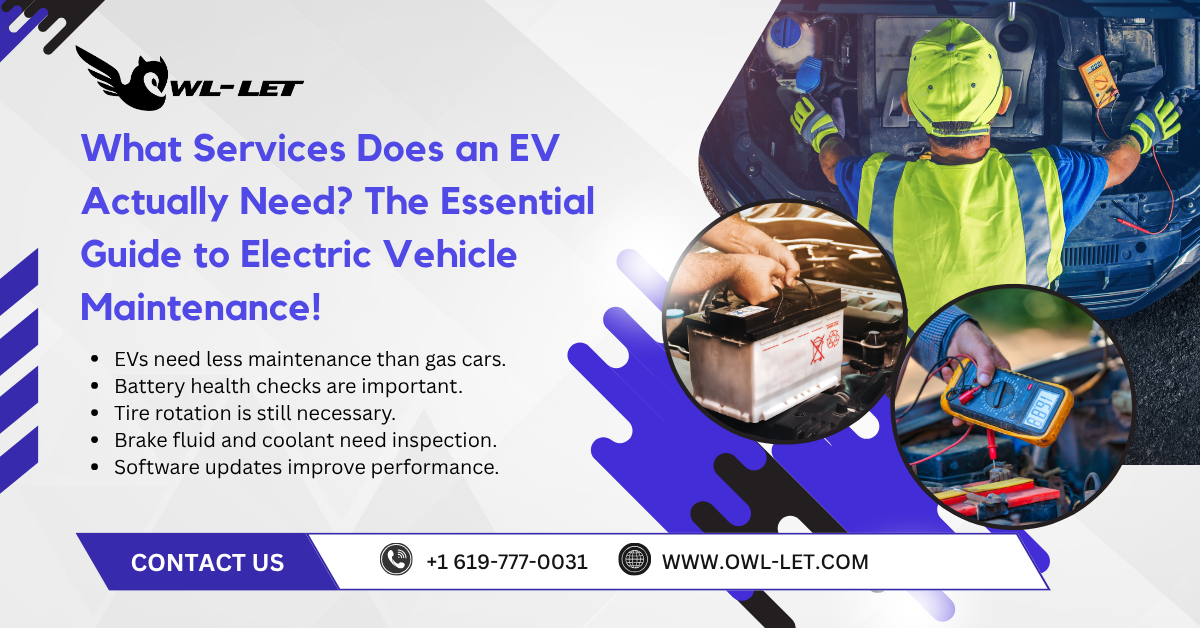
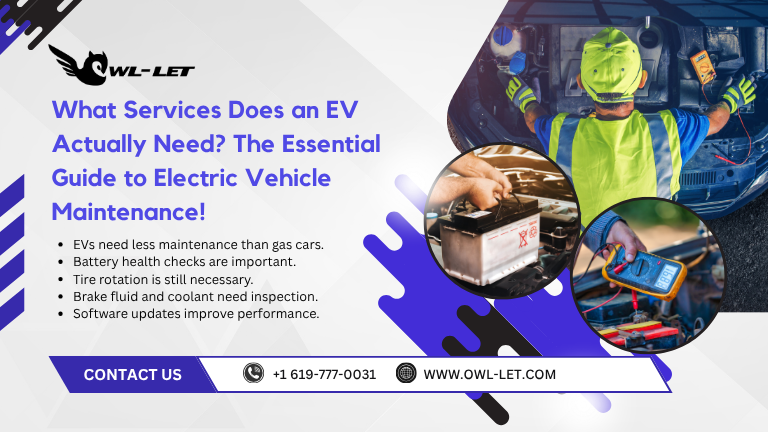
Electric vehicles require significantly less maintenance than internal combustion engines, primarily focusing on tire rotations, cabin air filter replacements, and brake fluid checks. Unlike gas cars, EVs do not need oil changes, spark plugs, or timing belt replacements, though the thermal management system and battery health remain critical long-term service priorities.
Key Takeaways for EV Owners
|
Service Item |
Frequency |
Why It Matters |
|
Tire Rotation |
Every 5,000–8,000 miles |
EVs are heavier and have high instant torque, causing faster wear. |
|
Cabin Air Filter |
Every 2 years |
Maintains air quality and HVAC efficiency. |
|
Brake Fluid Flush |
Every 2–4 years |
Ensures moisture doesn't corrode the system (even with regenerative braking). |
|
Coolant System |
Per manual (often 100k+ miles) |
Keeps the high-voltage battery at optimal temperatures. |
|
12V Battery Test |
Every 3 years |
Powers onboard electronics and "wakes up" the big battery. |
Why Is Maintenance Different for Electric Vehicles?
Transitioning from a traditional car to an EV often leads to "maintenance culture shock." You are trading hundreds of moving parts—pistons, valves, and exhaust systems—for a simplified drivetrain. However, "less maintenance" does not mean "zero maintenance."
To understand what services does an EV actually need, we have to look at the unique physics of these machines. Because EVs carry heavy battery packs, they exert more pressure on the chassis and tires. Furthermore, while the motor is virtually maintenance-free, the systems that support it—like the thermal management loop—are vital for longevity and E-E-A-T (Experience, Expertise, Authoritativeness, and Trustworthiness) in vehicle care.
Does an EV Need an Oil Change?
This is the most common question for new owners. The short answer is no. Since there is no internal combustion engine, there is no motor oil to circulate, filter, or change.
However, EVs do use gearbox fluid. Many modern electric motors are paired with a single-speed transmission that contains lubricant. While often marketed as "fill-for-life," some manufacturers recommend a fluid swap at high mileage intervals to remove any microscopic metal shavings. Checking your specific owner's manual is the gold standard here.
How Often Should I Rotate My EV Tires?
Tires are the most frequent "service" an EV requires. Because of the instant torque provided by electric motors, tires can wear down significantly faster than on a petrol car.
-
Weight Distribution: The heavy battery pack means the car puts more stress on the rubber.
-
Regenerative Braking: While it saves your brake pads, the constant "push-pull" on the tire tread can cause uneven wear.
For a smooth ride, aim for a rotation every 5,000 to 7,500 miles. Always ensure you are using EV-specific tires, which are designed with reinforced sidewalls and low rolling resistance to maximize your range.
What Services Does an EV Actually Need for the Braking System?
One of the "magic" features of an EV is regenerative braking. When you lift off the accelerator, the motor reverses to act as a generator, slowing the car and sending power back to the battery.
People Also Ask: Do EV brake pads last longer?
Yes, they often last 100,000 miles or more. Because the motor does most of the stopping, the mechanical friction brakes are used far less frequently. However, this creates a new problem: oxidation. Because the brakes aren't used often, they can collect rust or debris. A professional service will include cleaning and lubricating the calipers to ensure they don't seize up. Additionally, brake fluid is hygroscopic (it absorbs water), so it still needs to be tested and flushed every few years to maintain hydraulic integrity.
Why Is the 12V Battery Still Important?
It might surprise you to find a standard 12V lead-acid battery under the hood of a high-tech EV. This smaller battery handles the lights, infotainment, and—most importantly—the relays that "start" the high-voltage system. If this small battery dies, your car won't turn on, even if the main battery is at 100%. Expect to replace this every 3 to 5 years, just like in a traditional car.
How Do I Maintain the EV Cooling System?
Your EV’s battery is happiest between 15°C and 35°C. To maintain this, most EVs use a liquid cooling system. This involves a pump, a radiator, and specialized dielectric coolant.
People Also Ask: Does EV coolant need to be changed?
Most manufacturers suggest a flush and refill at the 100,000 or 150,000-mile mark. Keeping this fluid fresh is essential for preventing the battery from overheating during rapid charging or losing efficiency in the winter.
Are There Any Software Maintenance Requirements?
In 2026, an "oil change" has essentially been replaced by a "software update." Many EV services are performed Over-the-Air (OTA). These updates can optimize battery management software, improve regenerative braking profiles, and even increase total range. Always ensure your vehicle is connected to Wi-Fi periodically to receive these critical "digital tunes."
Conclusion: The Modern Way to Manage Your EV
Maintaining an electric vehicle is less about dirty hands and more about proactive monitoring. By focusing on tires, fluids, and filters, you ensure your car remains efficient for decades. If you’re looking for a seamless way to stay on top of these intervals without the stress of high dealership costs, choosing a dedicated partner is key.
At Owl-Let, we specialize in the future of mobility. Whether you are navigating the streets of Chandigarh or planning a long-distance trip, our platform ensures your vehicle is always peak-ready. We recommend our Owl-Let Car Service Membership Plan, starting at just $24.99 Monthly. It’s the smartest way to protect your investment and enjoy the road ahead. Visit www.owl-let.com to join the community of savvy EV owners today.
Comments 0
No comments yet
Be the first!