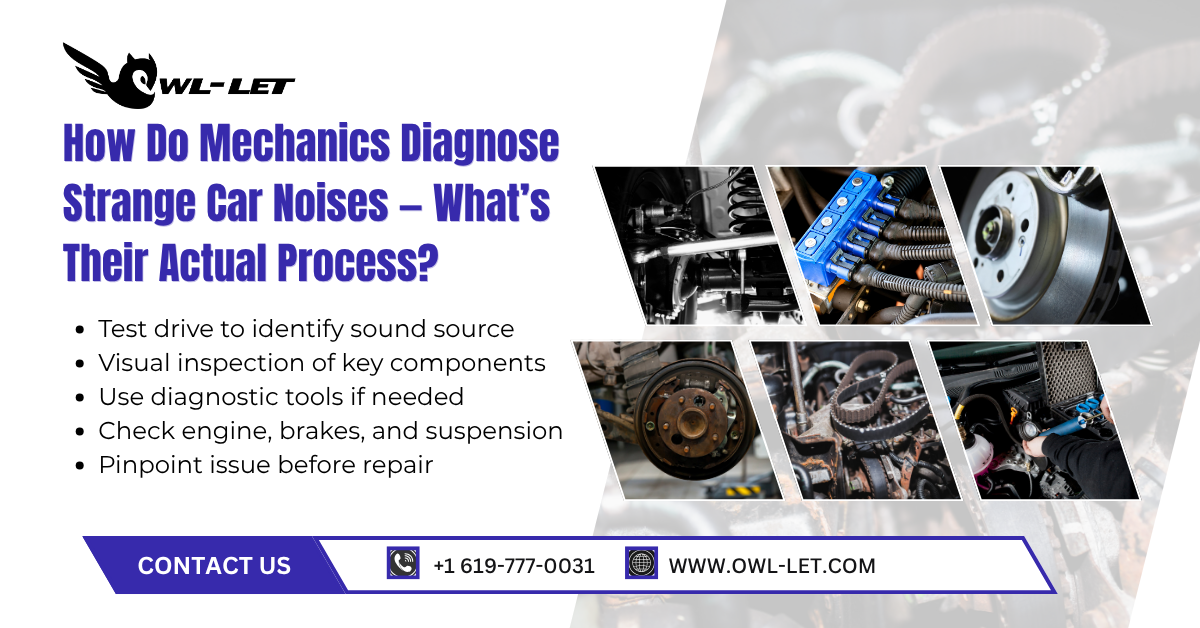
Mechanics diagnose strange car noises using a systematic multi-sensory approach combined with advanced diagnostic technology. The process begins with auditory profiling (identifying pitch and rhythm), followed by a road test, and concludes with specialized tools like electronic chassis ears or OBD-II scanners to pinpoint mechanical friction or vibration sources.
Key Takeaways: The Diagnostic Roadmap
|
Stage |
Action Taken |
Primary Goal |
|
Initial Consultation |
Interviewing the driver about noise conditions. |
Narrowing down triggers (speed, braking, turning). |
|
Acoustic Profiling |
Identifying chirps, thumps, or grinding sounds. |
Categorizing the likely system (brakes, engine, suspension). |
|
Visual/Physical Inspection |
Checking for leaks, worn bushings, and loose heat shields. |
Finding physical evidence of mechanical failure. |
|
Advanced Scans |
Utilizing OBD-II and vibration analysis tools. |
Verifying sensor data and internal component health. |
How Do Mechanics Diagnose Strange Car Noises Using Acoustic Signatures?
The secret to expert auto repair isn't just a high-end wrench; it’s a trained ear. When you ask, "how do mechanics diagnose strange car noises — what's their actual process?", you are really asking about acoustic fingerprinting.
Experienced technicians treat every rattle and hum as a data point. They begin by isolating the frequency and cadence of the sound. For instance, a noise that speeds up with the engine suggests an accessory belt or alternator issue, while a sound that increases with wheel speed points toward a bearing or tire problem. Expert teams, like those at Owl-Let, often use this initial "listening phase" to rule out 50% of potential issues before even opening the hood.
Why Is the Road Test the Most Important Step?
A car on a lift behaves differently than a car under load. A technician will perform a road test to replicate the exact conditions you reported. They look for:
-
Torque-related noises: Does it clunk only when accelerating?
-
Suspension loading: Does the groan happen when the car leans into a turn?
-
Brake harmonics: Is it a high-pitched squeal (wear indicator) or a low-frequency grind (metal-on-metal)?
What Tools Do Mechanics Use to Find Hidden Noises?
-
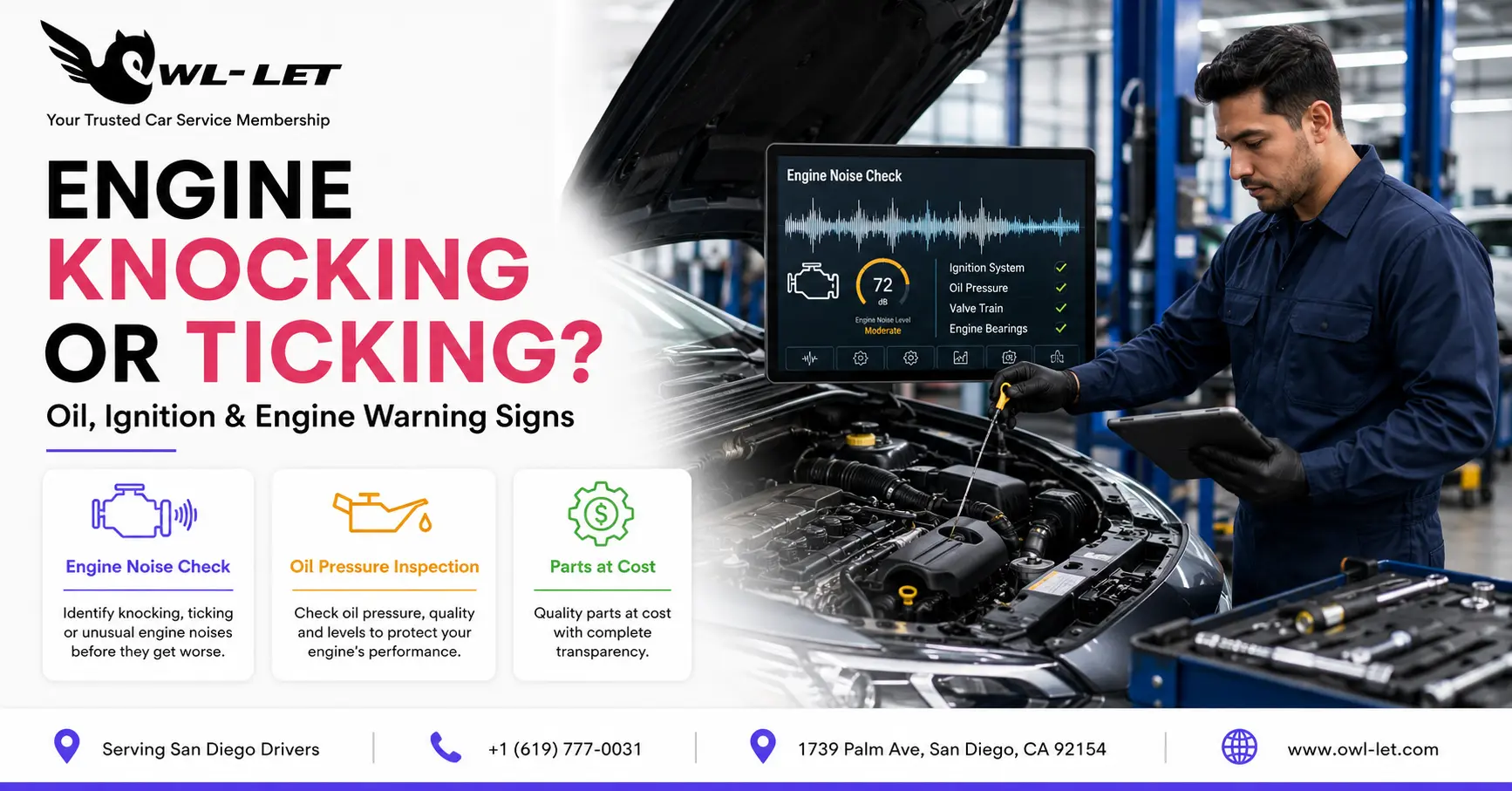
Electronic Chassis Ears: These are wireless microphones clipped to various parts of the undercarriage (struts, transmissions, differentials). The mechanic listens through headphones while driving to hear exactly which corner is failing.
-
OBD-II Diagnostic Scanners: If a noise is caused by a misfire or a timing issue, the computer will often log a "pending code" before a light even appears on the dash.
-
Automotive Stethoscopes: Used for pinpointing internal engine sounds like piston slap or valve tick.
-
Smoke Machines: Surprisingly, some "noises" are actually air leaks (hisses). Pumping specialized smoke into the intake can reveal cracked hoses that a human eye would never catch.
How Do Mechanics Distinguish Between Suspension and Engine Noises?
This is where Owl-Let’s systematic approach proves invaluable. Mechanics use a logic tree to separate the vehicle's systems.
Is the Noise RPM-Dependent or Speed-Dependent?
-
RPM-Dependent: If you rev the engine while parked and the noise persists, it is likely the serpentine belt, water pump, or internal valvetrain.
-
Speed-Dependent: If the noise only starts at 20 mph and gets louder at 60 mph, the culprit is in the drivetrain—think wheel bearings, CV joints, or the differential.
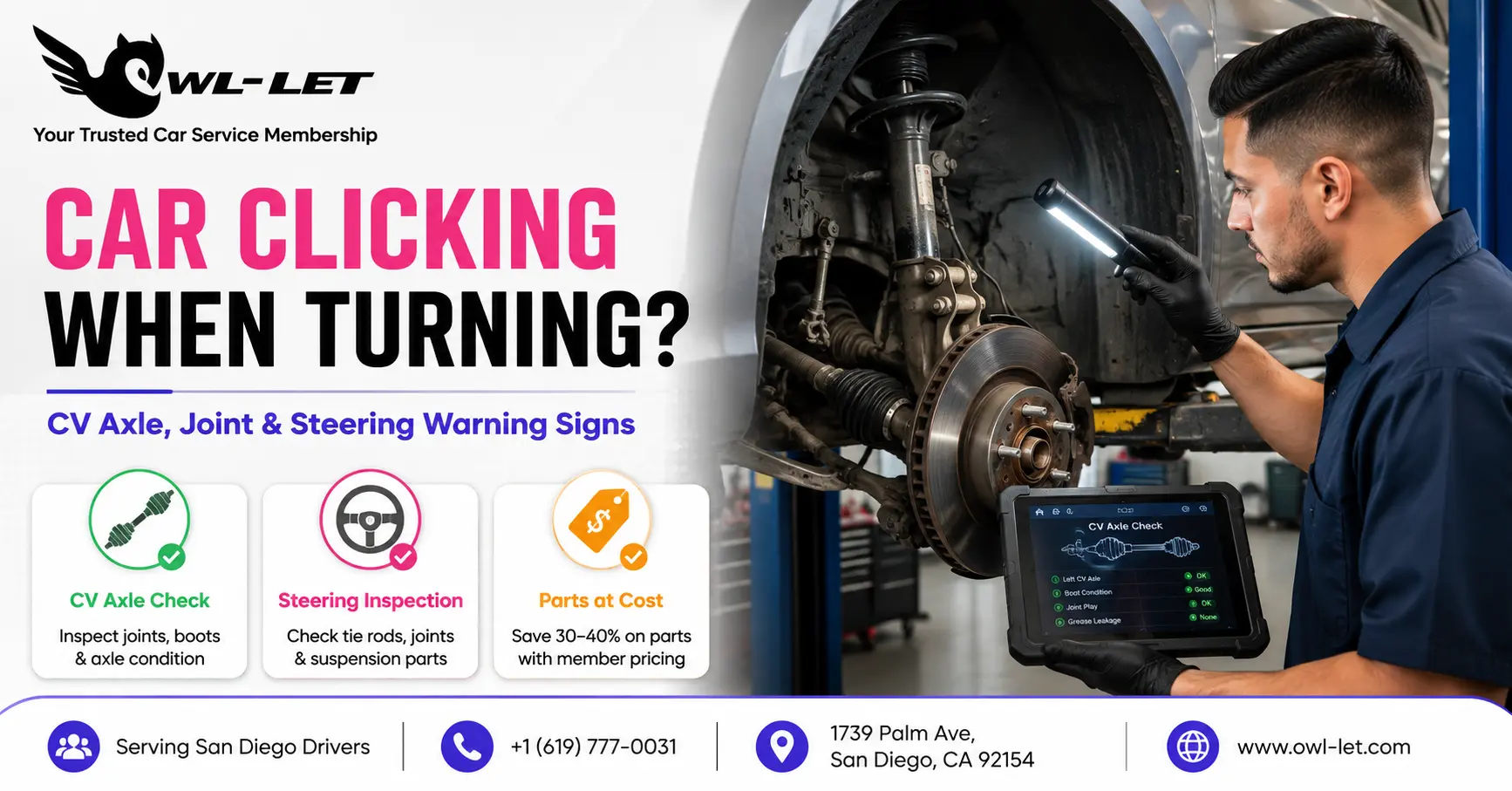
Why Does My Car Make a Clicking Sound When Turning?
A rhythmic clicking during sharp turns is the classic "smoking gun" for a failing CV (Constant Velocity) axle. Mechanics check this by inspecting the rubber boots for tears; if the grease has leaked out, the joint is grinding itself to pieces.
How Does a Mechanic's Inspection Process Prevent "Parts Cannon" Repairing?
The "Parts Cannon" refers to the amateur mistake of replacing parts until the noise stops. Professional diagnostic workflows prevent this waste.
-
Step 1: Visual Confirmation. Looking for "shiny spots" on metal where parts might be rubbing.
-
Step 2: Component Isolation. Removing a belt to see if a noise disappears, which confirms if the noise is internal to the engine or an external accessory.
-
Step 3: Verification. Using a secondary test to prove the theory.
[Source: Society of Automotive Engineers (SAE) Diagnostic Standards, 2025]
Is a Grinding Noise Always a Brake Issue?
While grinding is often associated with brake pads, it can also signal a failing alternator bearing or a bad wheel bearing. Mechanics will "shake down" the wheel while the car is on a lift. If there is play (movement) at the 12 and 6 o'clock positions, the bearing is the likely culprit, not the brakes.
Summary of Professional Car Noise Diagnosis
Understanding how do mechanics diagnose strange car noises — what's their actual process empowers you as a car owner. It moves the conversation from "it’s making a sound" to "it’s a rotational grinding sound at low speeds." Professional memberships, such as those offered by Owl-Let, ensure that these diagnostic hours are covered, preventing a small squeak from turning into a massive overhaul.
Conclusion: The Value of Professional Ear
Diagnosing a vehicle in 2026 requires a blend of old-school intuition and new-age tech. Mechanics follow a rigid protocol: listen, replicate, isolate, and verify. By understanding this process, you can provide better information to your shop, leading to faster and more affordable repairs.
For total peace of mind and expert diagnostic support, visit Owl-Let. Owl-Let offers comprehensive car service membership plans starting at just $24.99 monthly, providing you with professional oversight and maintenance schedules that catch those "strange noises" before they become "strange repair bills." Don't let a mystery sound ruin your drive—join the Owl-Let family today
Comments 0
No comments yet
Be the first!