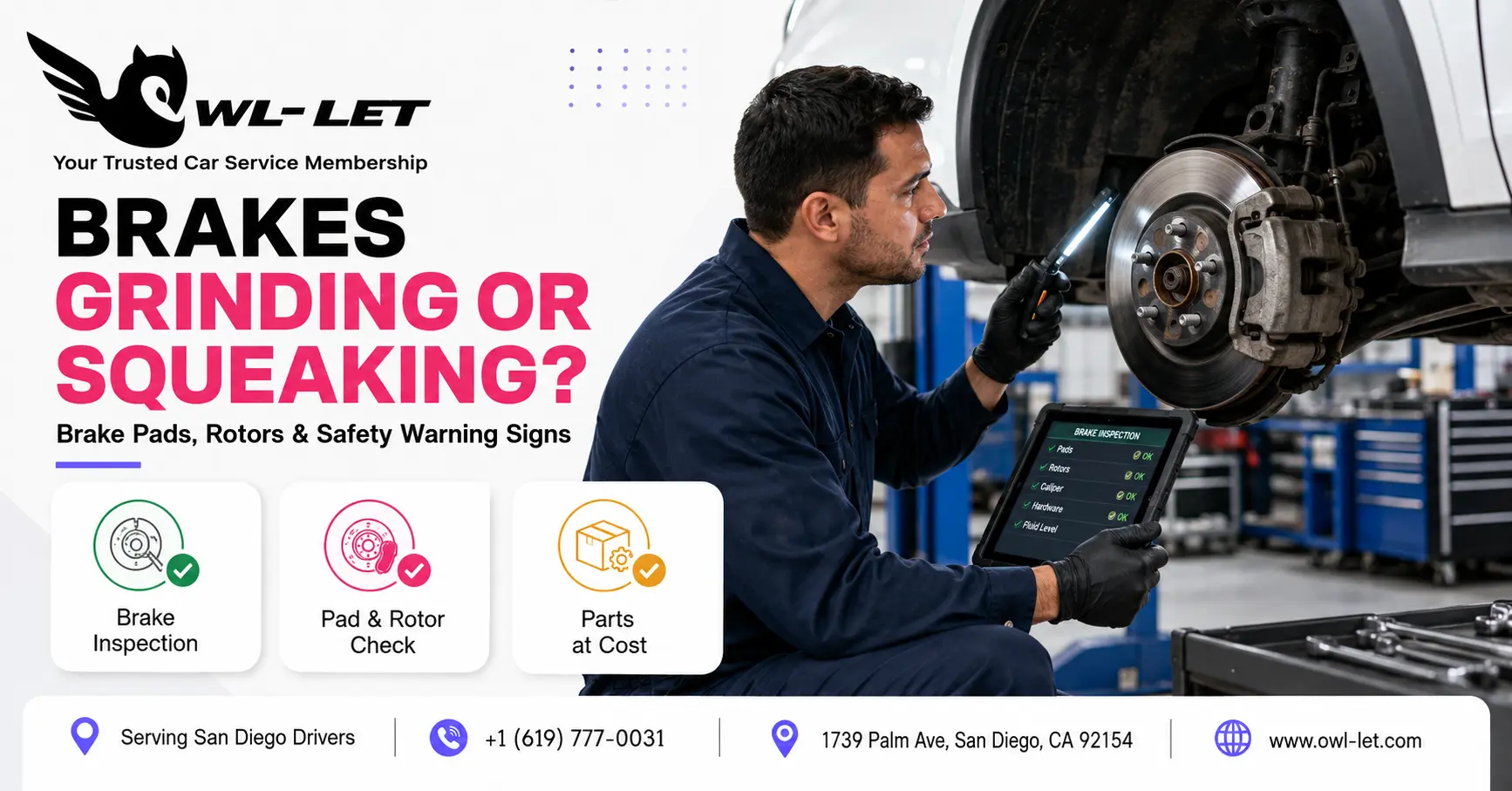
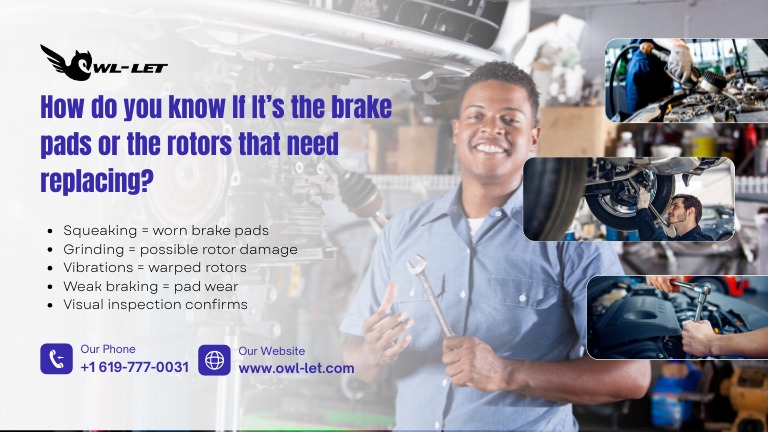
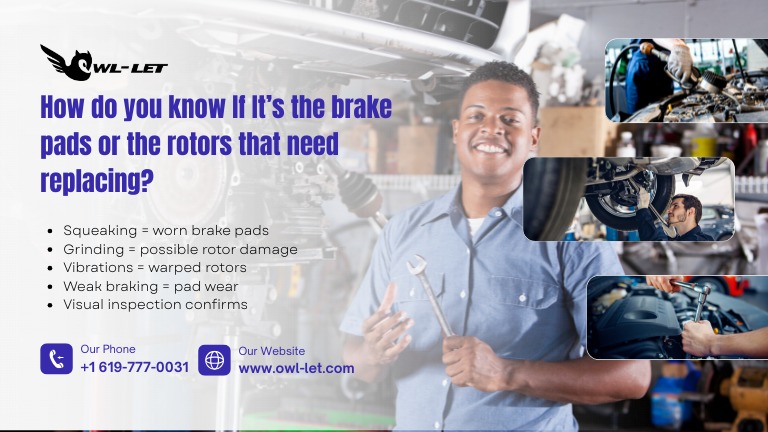
As a driver, your ears and feet are the best diagnostic tools you have. When your stopping power feels "off," the immediate concern is the cost and scope of the repair. How do you know if it's the brake pads or the rotors that need replacing? Understanding the difference can save you hundreds of dollars in unnecessary upsells at the mechanic.
At Owl-let, we believe in transparency. While many shops will automatically tell you that you need "the works," often one component is the primary offender. By recognizing the specific feedback your car gives you, you can make an informed decision before you even pull into the service bay.
Key Takeaways: Brake Pads vs. Rotors Diagnostic
|
Symptom |
Likely Culprit |
Action Required |
|
High-Pitched Squeal |
Brake Pads |
Replace pads soon (wear indicator active). |
|
Grinding/Metal-on-Metal |
Pads & Rotors |
Immediate replacement of both. |
|
Vibrating Steering Wheel |
Rotors |
Resurface or replace rotors. |
|
Pulsing Brake Pedal |
Rotors |
Check for lateral runout or warping. |
|
Visible Grooves/Lips |
Rotors |
Replace rotors for safety. |
What are the signs that my brake pads are worn out?
Brake pads are the "sacrificial" part of your braking system. They are designed to wear down over time. Generally, a new brake pad starts with about 10mm to 12mm of friction material.
-
The Squeal of the Wear Indicator: Most pads have a small metal clip called a "scratcher." When the pad wears down to about 2mm or 3mm, this clip touches the rotor, creating a constant chirp or squeal.
-
Visual Inspection: If you look through your wheel spokes, you can often see the pad compressed against the rotor. If it looks as thin as a couple of stacked quarters, it's time for a change.
-
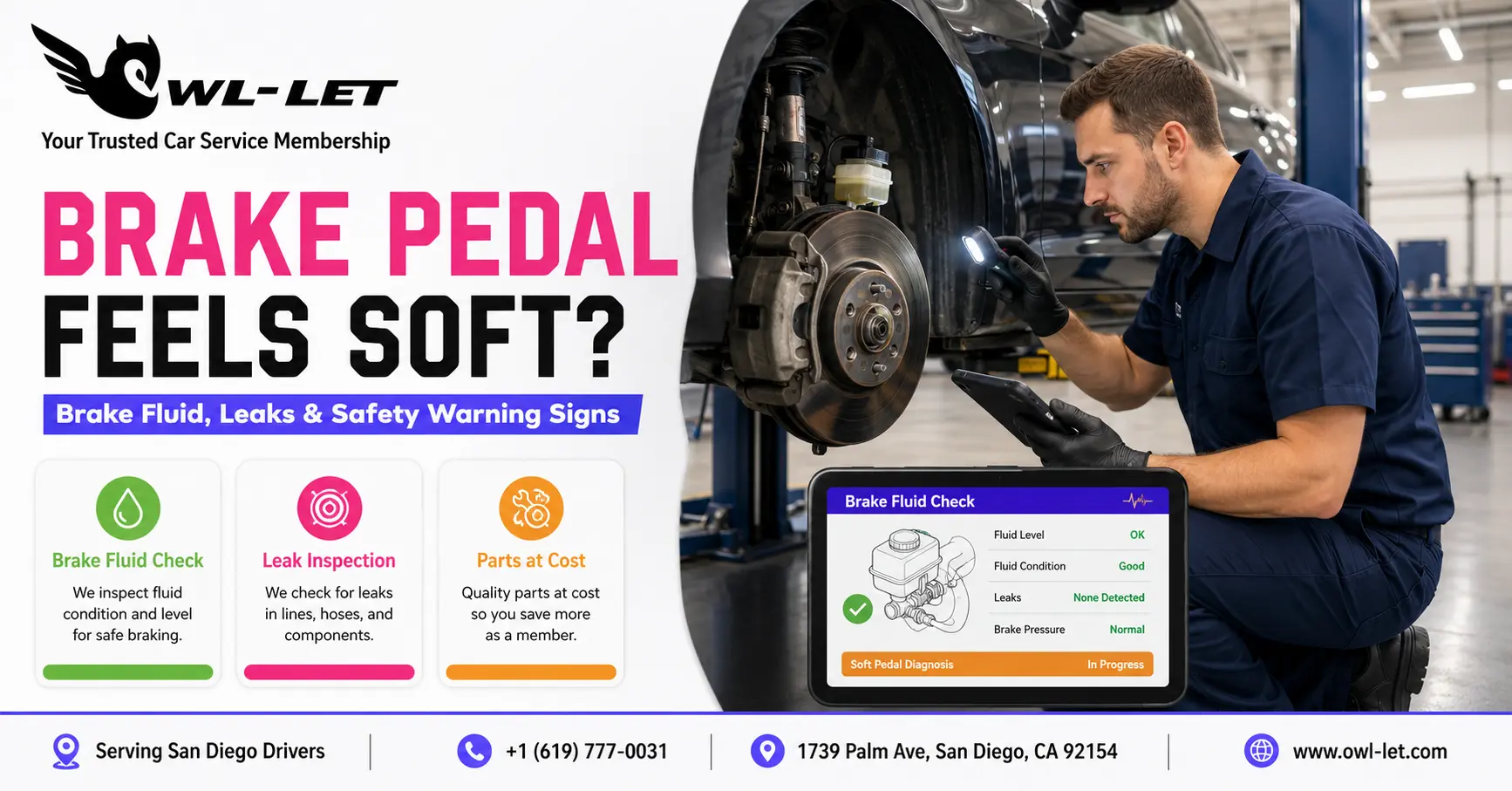
Low Brake Fluid Light: As pads wear down, the calipers must extend further, which draws more fluid from the reservoir. A low fluid light often points to thin pads.
Through an Owl-let membership starting at $24.99 monthly, we monitor these wear cycles for you, providing parts @cost so you never have to drive on "paper-thin" pads.
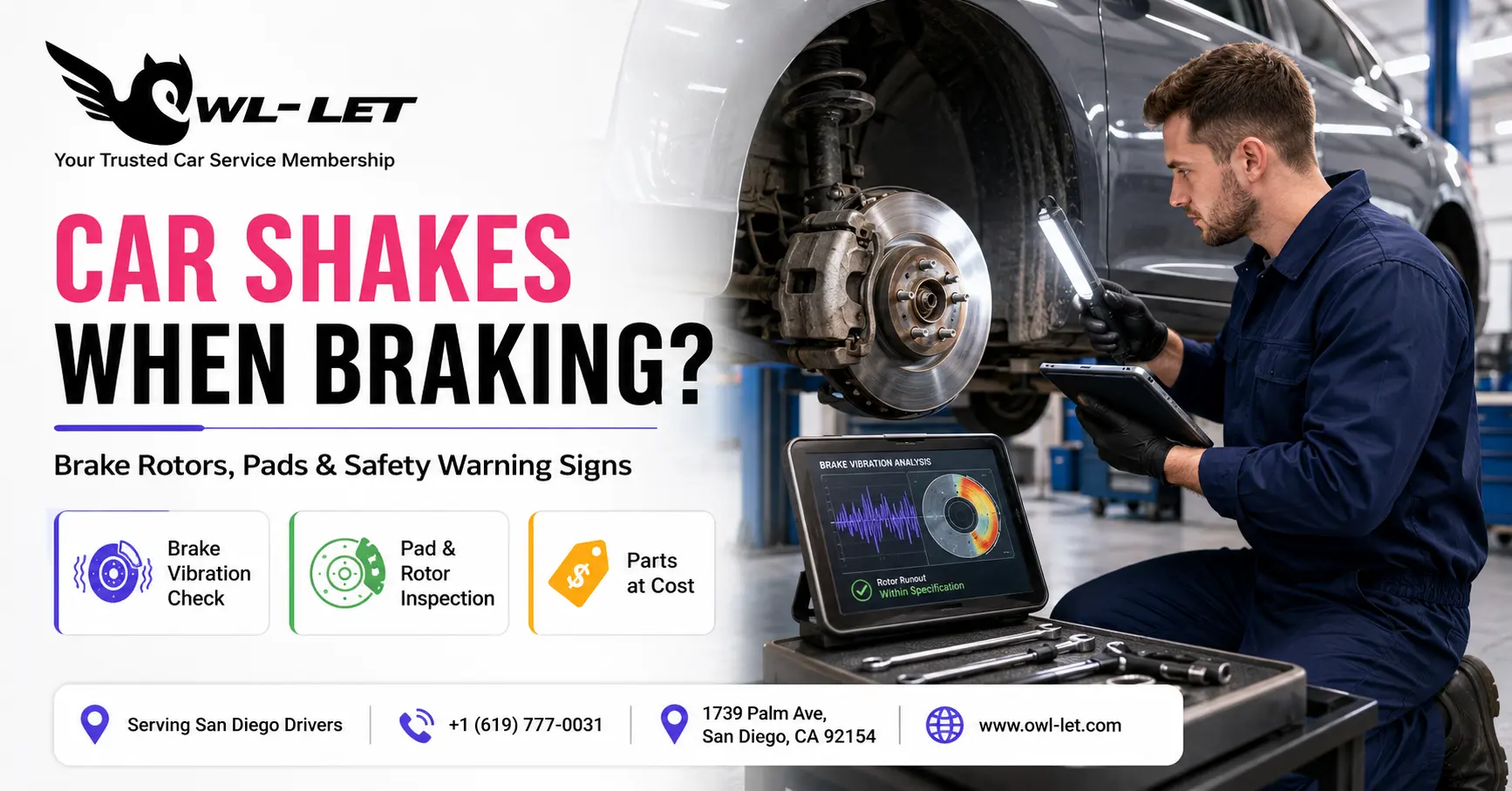
Why does my car shake when I hit the brakes?
If you feel a shudder in the steering wheel or a pulsing sensation in the brake pedal, the problem is almost certainly the rotors. This is often referred to as "warping," though it is technically "disc thickness variation."
When rotors get too hot or are subjected to uneven cooling, they can develop high and low spots. As the brake pads squeeze these uneven surfaces, the vibration travels up the steering column.
-
Steering wheel vibration: Usually indicates the front rotors are the issue.
-
Seat or pedal vibration: Usually indicates the rear rotors are the issue.
How do you know if it's the brake pads or the rotors if you hear grinding?
If you hear a sound like sandpaper on metal or a deep, gutteral "crunch," you have likely moved past a simple pad replacement. This is known as metal-on-metal braking.
When the friction material on the brake pad is completely gone, the steel backing plate of the pad grinds directly against the iron rotor.
-
The Result: This destroys the rotor surface instantly.
-
The Fix: In this scenario, you cannot just "slap pads on." You must replace both the brake pads and the rotors.
Maintaining a proactive schedule with Owl-let helps you avoid this "point of no return." Our members enjoy labor at just $84.99/hr, ensuring that a simple pad swap doesn't turn into a full-system overhaul.
Can I replace just the pads and not the rotors?
This is a frequent point of contention. Technically, yes—if your rotors are still thick enough (above the "minimum discard" measurement) and are perfectly flat, you can do a "pad slap."
However, modern rotors are thinner than they used to be to save weight. Most experts, including those at Owl-let, recommend replacing or at least "turning" (resurfacing) the rotors when you get new pads. Putting flat, new pads on a grooved or glazed rotor will lead to:
-
Increased brake noise.
-
Longer stopping distances.
-
Premature wear of your new pads.
How to perform a "Touch and See" inspection
If you feel comfortable, you can check your rotors yourself (after the car has cooled down!).
-
The "Finger Test": Run your fingernail across the rotor surface from the center toward the edge. If you feel deep ridges (like a vinyl record) or a large "lip" at the very edge, the rotors are worn beyond their service life.
-
The Color Check: A healthy rotor should look like shiny silver. If you see blue spots (overheating) or dark, burnt-looking patches, the rotor's integrity is compromised.
Conclusion: Stop the guesswork with Owl-let
Figuring out how do you know if it's the brake pads or the rotors that need replacing doesn't have to be a stressful experience. Listen for the squeaks, feel for the shakes, and look for the grooves.
For the ultimate peace of mind, join the Owl-let car service membership. For only $24.99 a month, you get professional diagnostics, parts at wholesale prices, and the assurance that your braking system is handled by experts who prioritize your safety over dealership profits. Visit www.owl-let.com to sign up today and keep your stopping power sharp and affordable.
Comments 0
No comments yet
Be the first!