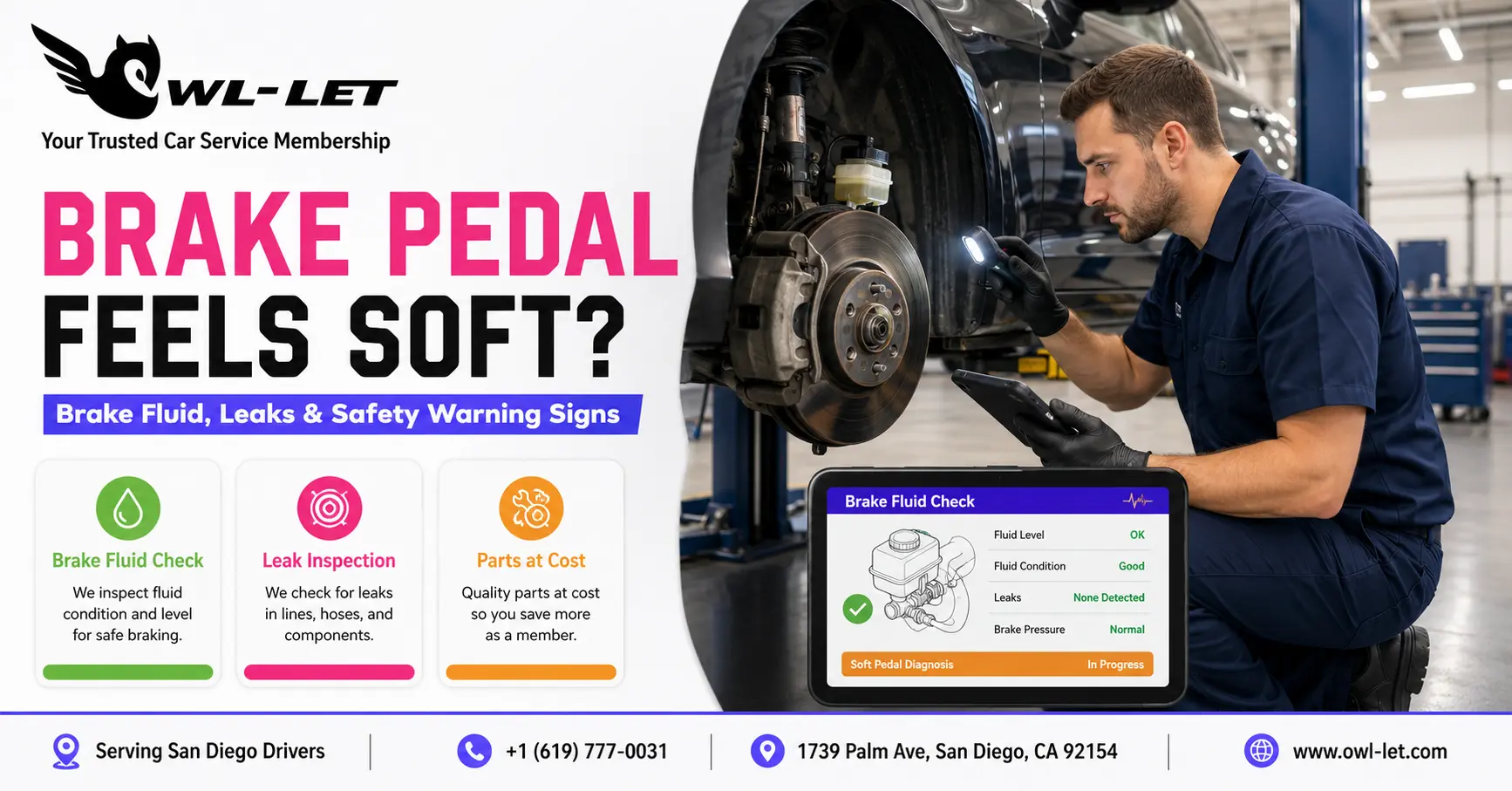


When you press down on your brakes, you expect a firm, progressive resistance. However, discovering What Does it mean when your brake pedal feels spongy or sinks to the floor is a jarring experience that signals a breach in your vehicle’s hydraulic integrity. In the world of automotive diagnostics, this isn't just a nuisance—it’s a direct communication from your braking system that pressure is being lost.
Key Takeaways: Brake Pedal Issues at a Glance
|
Symptom |
Primary Cause |
Severity |
Recommended Action |
|
Pedal sinks slowly while stopped |
Internal Master Cylinder leak |
High |
Replace Master Cylinder |
|
Spongy/Springy feeling |
Air bubbles in brake lines |
Medium |
Bleed the brake system |
|
Pedal goes to floor suddenly |
Major hydraulic fluid leak |
Critical |
Do not drive; Tow to mechanic |
|
Low fluid light + Spongy pedal |
Worn pads or external leak |
High |
Top up fluid & inspect calipers |
At Owl-Let, our experience with thousands of precision maintenance checks shows that this "soft" feeling usually stems from the compression of air or the bypass of fluid where there should be a solid hydraulic link. Because liquid (brake fluid) does not compress, any "give" in the pedal suggests that something compressible—like air—has entered the chat, or the fluid itself is escaping its closed-loop environment.
Why does air in the brake lines cause a spongy feeling?
The most common culprit for a "springy" or soft pedal is air trapped within the brake lines. Unlike brake fluid, air is highly compressible. When you apply pressure to the pedal, that energy is wasted compressing the air bubbles instead of moving the brake calipers or shoes.
-
How air gets in: This can happen during a DIY brake job if the lines aren't bled correctly, or through a tiny pinhole leak that allows air to be sucked in even if fluid isn't visibly pouring out.
-
The Fix: A professional "brake bleed" is required to purge the system and ensure only pure, incompressible fluid remains.
Can low brake fluid cause the pedal to sink?
Yes, low brake fluid is a leading cause of a sinking pedal. As brake pads wear down, the calipers must extend further, drawing more fluid from the reservoir. If the level drops too low, the master cylinder may suck in air.
However, if your fluid is disappearing rapidly, you likely have a leak in a brake line, a wheel cylinder, or a caliper. At Owl-Let, we recommend checking your reservoir monthly to catch these drops before they lead to total brake failure.
Is a failing Master Cylinder the reason my pedal sinks to the floor?
If your pedal feels normal while driving but slowly sinks to the floor while you are held at a stoplight, you are likely dealing with an internal leak in the master cylinder.
The master cylinder is the "heart" of your braking system. Inside, rubber seals keep the fluid pressurized. Over time, these seals can perish or "bypass," allowing fluid to flow past them internally rather than being pushed toward the wheels. Because the fluid stays inside the unit, you might not see a puddle on your driveway, making this a "silent" but dangerous failure.
How do damaged brake lines affect pedal pressure?
Your brake lines are the "veins" of the system. While most are hard steel, the sections near your wheels are made of flexible rubber.
-
Internal Bulging: Over time, these rubber hoses can weaken. When you hit the brakes, the hose might "expand" like a balloon under pressure. This expansion absorbs the force intended for the brakes, resulting in a spongy pedal.
-
Corrosion: In coastal or snowy regions, steel lines can rust through, leading to a catastrophic loss of fluid and a pedal that drops instantly to the floor.
People Also Ask: Can a bad ABS Modulator cause a soft brake pedal?
Though less common, a fault in the Anti-lock Braking System (ABS) hydraulic modulator can cause a spongy feel. If an internal valve in the ABS unit gets stuck open due to debris or old, contaminated fluid, it can prevent the system from holding full pressure. Regular fluid flushes (every 2 years or 30,000 miles) are the best defense against modulator failure.
How to diagnose a sinking brake pedal at home?
Before heading to the shop, you can perform a quick diagnostic:
-
The Pump Test: With the engine off, pump the brake pedal 5-6 times. It should become very firm. If it stays soft, there is air in the system.
-
The Static Hold: Press the pedal and hold it with steady pressure. If it slowly creeps toward the floor, your master cylinder is likely bypassing.
-
Visual Leak Check: Look behind each wheel for wetness and check the master cylinder area for signs of "bubbling" paint (brake fluid is a powerful paint stripper).
What are the risks of driving with a spongy brake pedal?
Driving with compromised brakes is a gamble with your safety. A spongy pedal increases your stopping distance significantly. In an emergency "panic stop," a pedal that sinks to the floor may not provide enough force to engage the ABS or stop the vehicle in time to avoid a collision.
Conclusion: Prioritizing Your Road Safety
Understanding What Does it mean when your brake pedal feels spongy or sinks to the floor is the first step in maintaining a roadworthy vehicle. Whether it's a simple air bleed or a master cylinder replacement, these symptoms require professional attention to ensure your car stops exactly when you need it to.
Don't wait for a "no-brake" emergency. At Owl-Let, we specialize in preventative care that keeps you ahead of mechanical failures. Join the Owl-Let family today with our Car Service Membership Plan starting at just $24.99 Monthly. Visit www.owl-let.com to secure your peace of mind and ensure your braking system is always in peak condition.
Comments 0
No comments yet
Be the first!