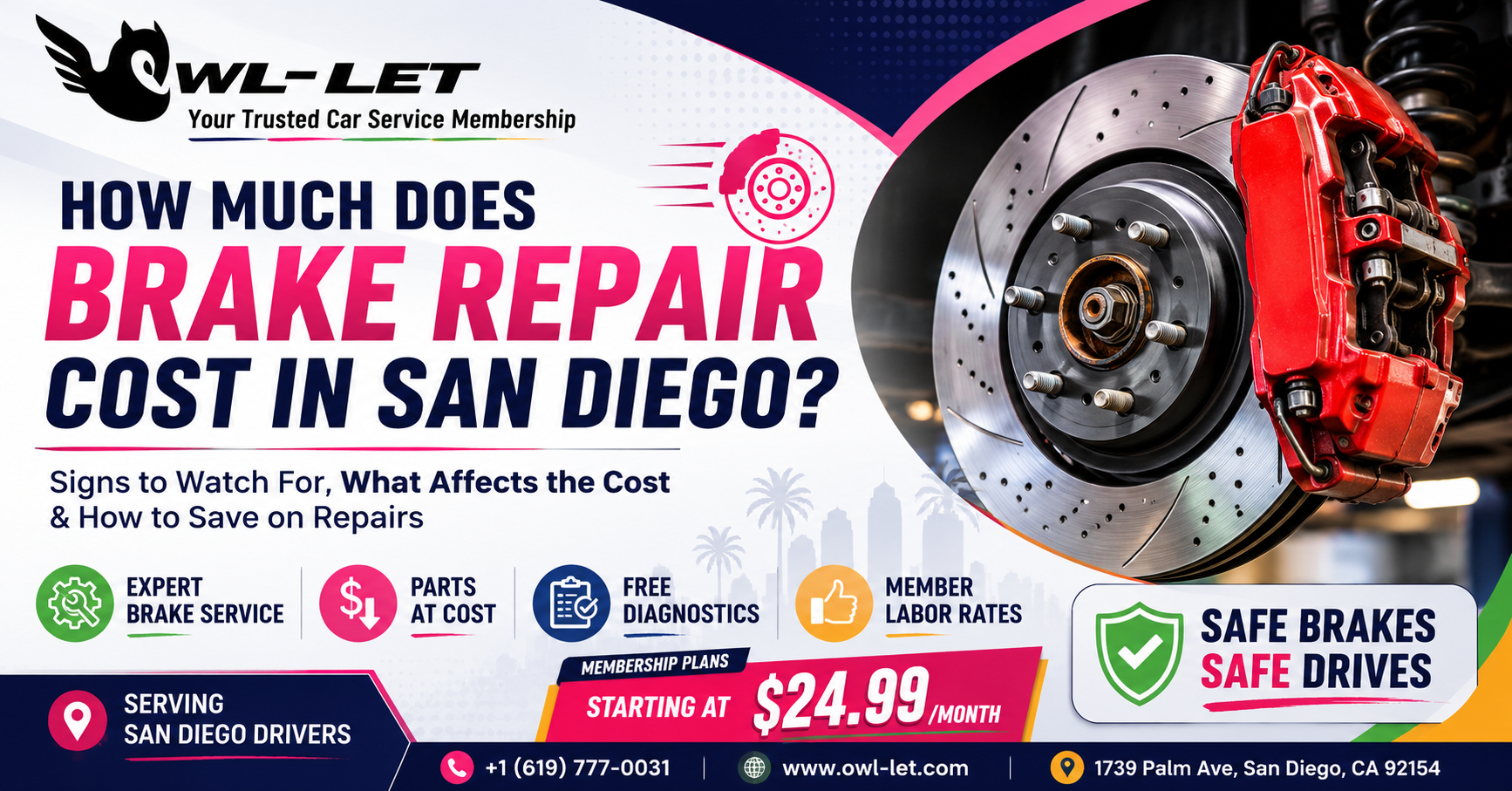
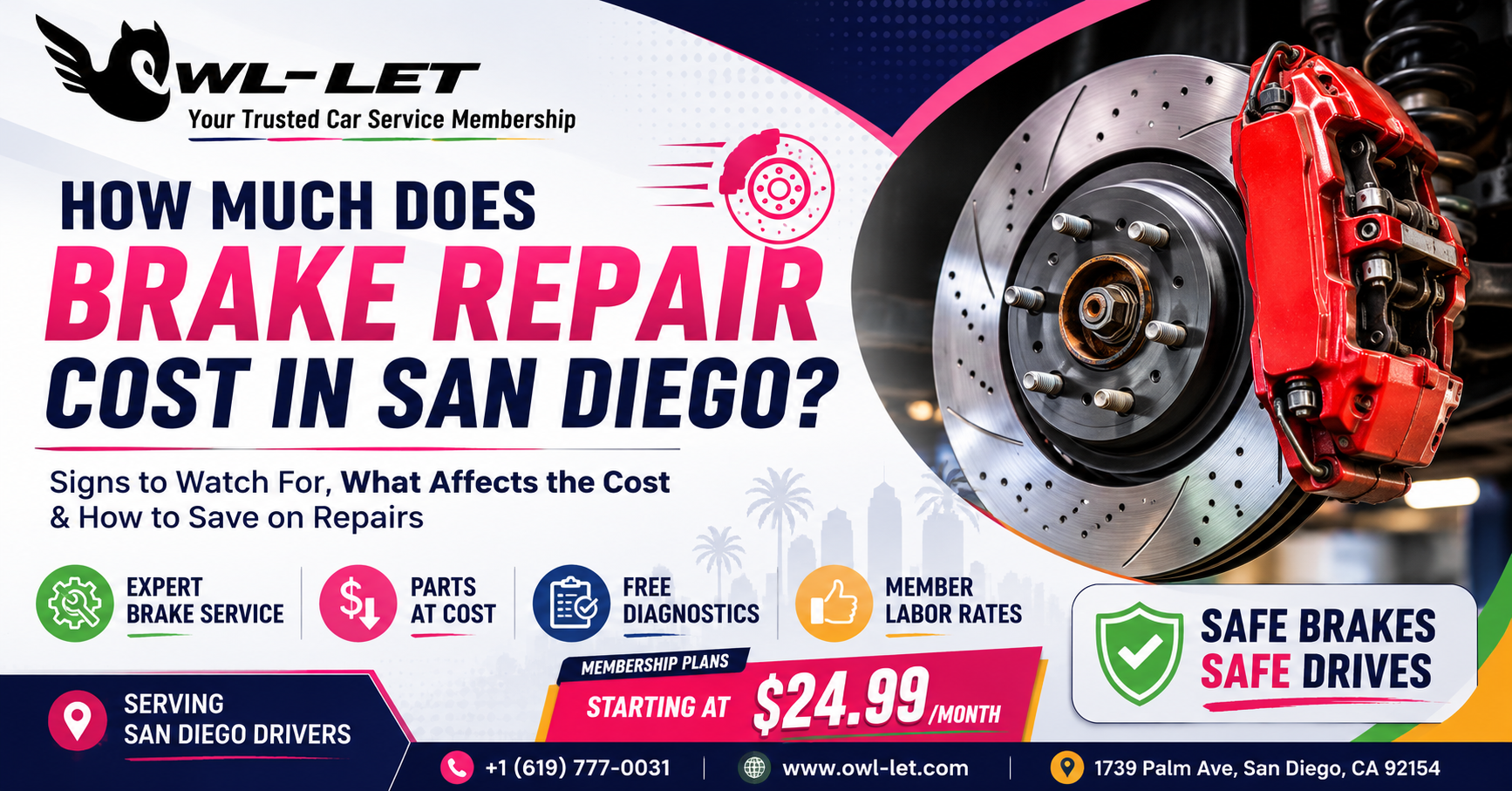
How Much Does Brake Repair Cost in San Diego?
Brake repair is one of the most important services a vehicle may need. When brakes begin squeaking, grinding, vibrating, or taking longer to stop the car, many drivers immediately search for “brake repair near me” or “brake replacement cost.”
The price can vary considerably because brake service may involve only the pads or may require rotors, calipers, fluid, sensors, or additional repairs.
This guide explains what affects brake repair costs in San Diego, the warning signs to watch for, and how OWL-LET may help members manage qualifying repair expenses.
What Affects Brake Repair Cost?
There is no single price for every brake repair. Your final estimate may depend on:
-
Vehicle make and model
-
Front or rear brakes
-
Brake-pad material
-
Rotor condition
-
Caliper condition
-
Brake hardware
-
Labor time
-
Electronic parking-brake procedures
-
Parts quality
-
Taxes and shop fees
A basic brake-pad replacement usually costs less than a repair that includes pads, rotors, calipers, brake fluid, or electronic diagnosis.
When comparing estimates, ask for an itemized quote that separates parts, labor, fees, and taxes.
Brake Pads vs. Brake Rotors
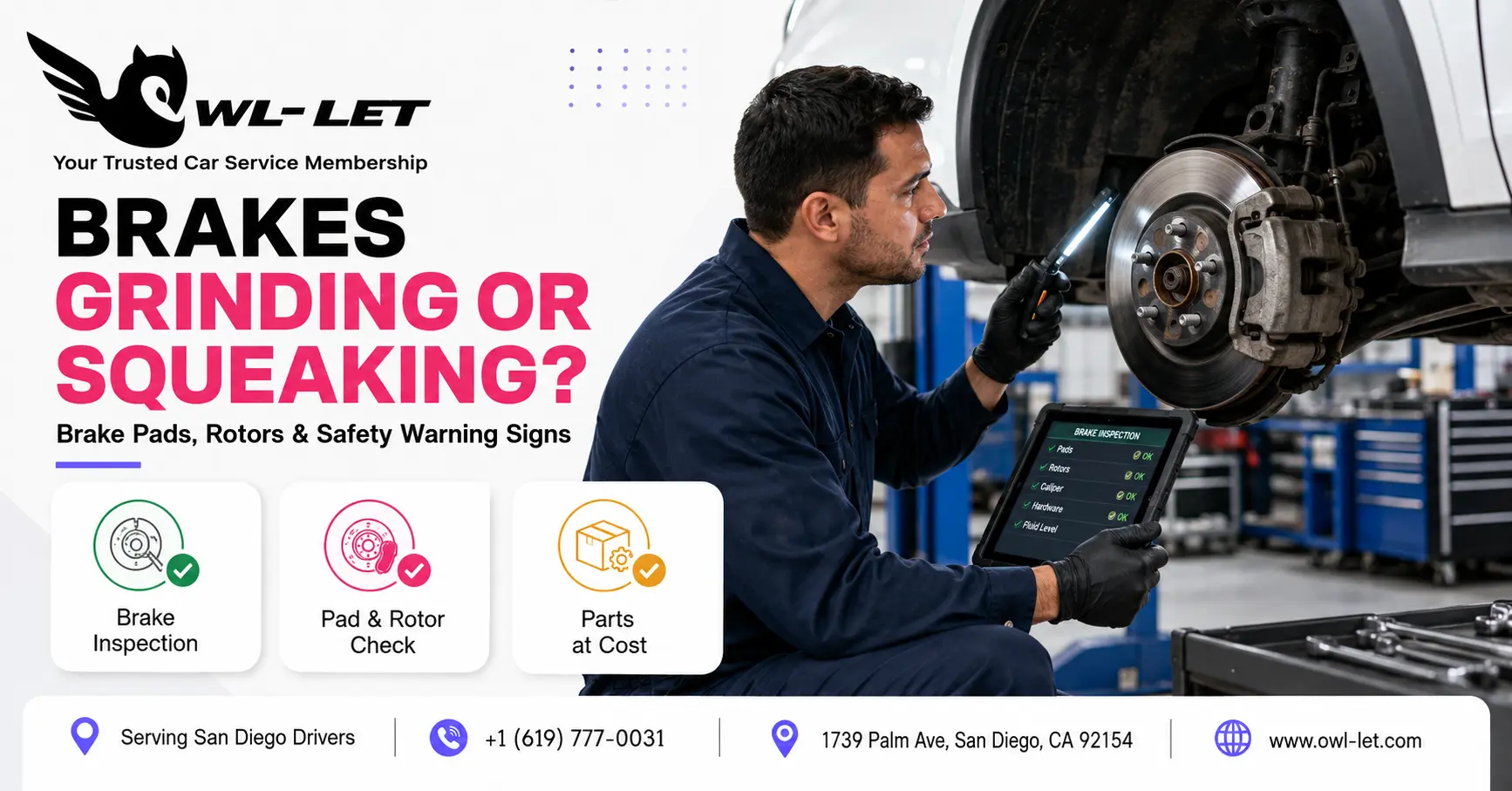
Brake pads press against the rotors to slow the vehicle. Pads are designed to wear down gradually, while rotors can also become worn, grooved, uneven, cracked, or too thin to reuse safely.
Not every brake-pad replacement requires new rotors.
A technician should inspect and measure the rotors before recommending replacement. Rotors may need to be replaced when they are:
-
Below minimum thickness
-
Deeply grooved
-
Cracked or heat damaged
-
Severely rusted
-
Unevenly worn
-
Causing vibration during braking
Ask the shop to explain the measurements before approving new rotors.
Signs Your Brakes Need Service
Schedule a brake inspection when you notice any of the following symptoms.
Squeaking or Squealing
A high-pitched sound may come from worn brake pads, surface rust, brake dust, damaged hardware, or pad material.
A brief sound after rain may disappear, but repeated noise should be inspected.
Grinding
Grinding may mean the brake-pad material has worn away and metal parts are contacting the rotor.
Continuing to drive can reduce braking performance and increase the repair cost.
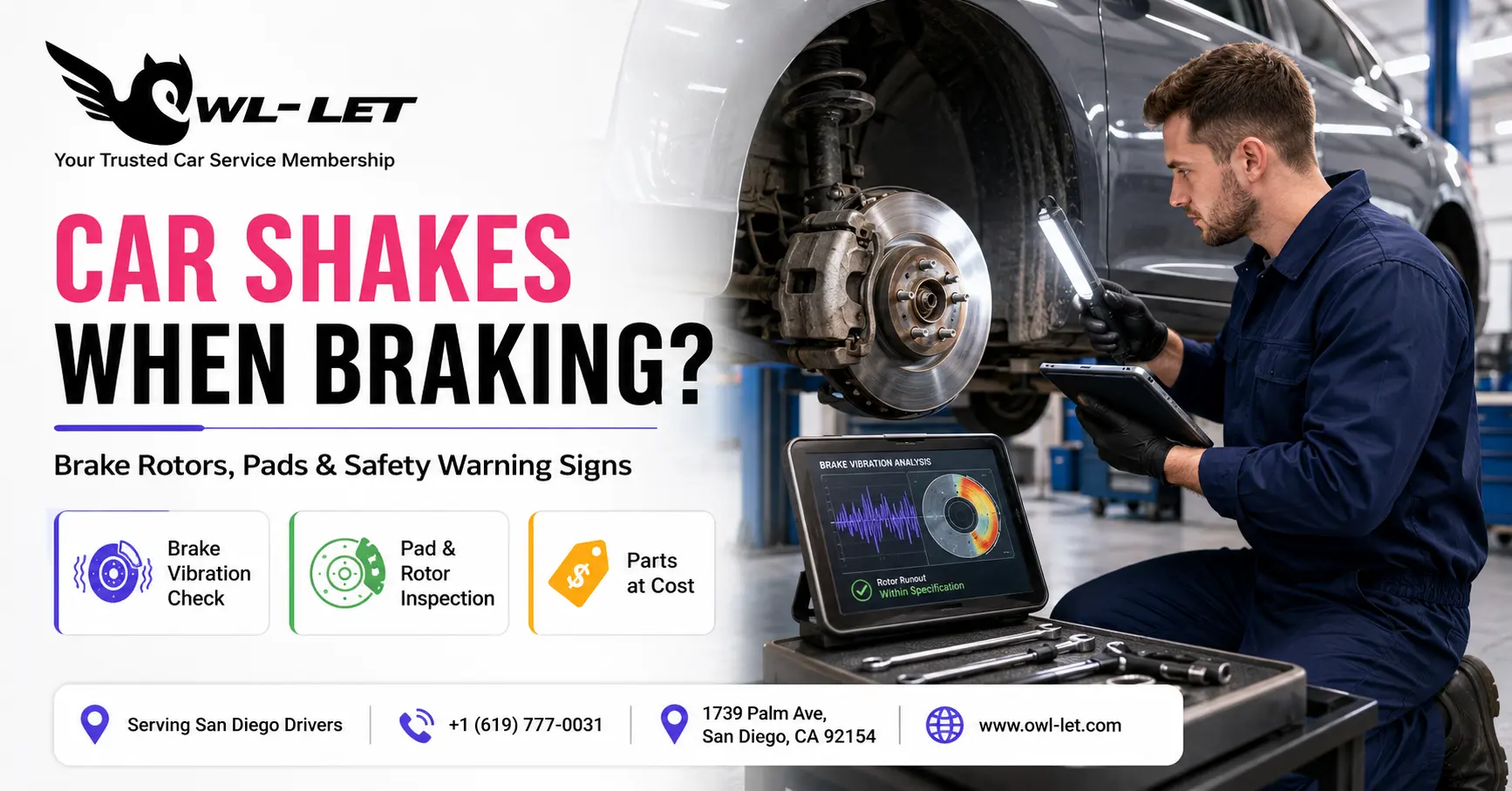
Vibration While Braking
A shaking steering wheel or pulsing brake pedal may be related to uneven rotors, brake wear, suspension issues, or wheel problems.
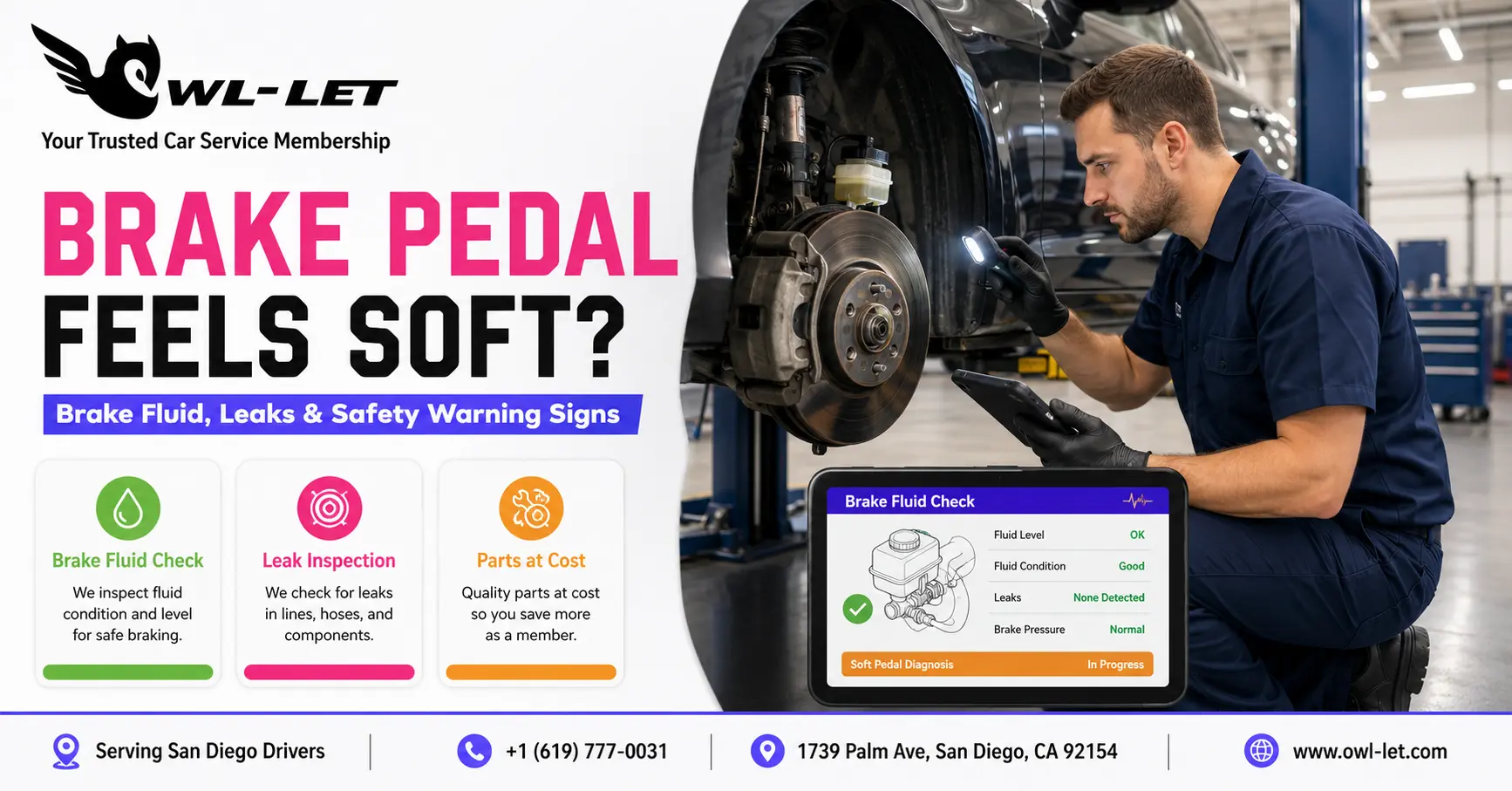
Soft Brake Pedal
A soft or spongy pedal may indicate air in the brake system, old fluid, a leak, a damaged hose, or a master-cylinder problem.
Longer Stopping Distance
When the vehicle takes longer to stop, avoid normal driving until the brakes have been inspected.
Brake Warning Light
A warning light may indicate low brake fluid, worn pads, an electronic fault, a parking-brake issue, or an anti-lock braking system problem.
Is It Safe to Drive With Noisy Brakes?
It depends on the noise and how the vehicle is behaving.
A light squeak that appears briefly after rain may come from surface rust. Persistent squeaking, grinding, vibration, pulling, or reduced stopping ability requires inspection.
Stop driving and seek help if:
-
The brake pedal suddenly feels different
-
The vehicle is difficult to stop
-
The pedal sinks toward the floor
-
You hear loud grinding
-
Brake fluid is leaking
-
A red brake warning light stays on
-
The vehicle pulls strongly while braking
It is safer to arrange towing than to risk a brake-system failure.
How Often Should Brakes Be Inspected?
Brake-pad life depends on traffic, driving style, hills, vehicle weight, towing, and the braking system.
San Diego drivers may experience stop-and-go traffic, freeway congestion, frequent short trips, and hills. These conditions can increase brake wear.
Consider having your brakes inspected:
-
During tire rotations
-
During routine vehicle maintenance
-
Before a long trip
-
When a warning sign appears
-
At the manufacturer’s recommended interval
Regular inspections may identify worn pads before they damage the rotors.
How to Avoid Overpaying for Brake Repair
Use these steps before authorizing the work.
Request Measurements
Ask for the remaining brake-pad thickness and rotor measurements.
Separate Urgent and Optional Work
Ask which services affect immediate safety and which can be planned for later.
Review the Itemized Estimate
Make sure the estimate clearly lists parts, labor, taxes, fees, and additional recommendations.
Ask About Parts Quality
The cheapest brake parts may create more noise, dust, or shorter service life. Ask which brand and material will be installed.
Confirm the Warranty
Ask whether both parts and labor are covered.
Consider a Second Opinion
A second inspection may be helpful when the estimate is unusually high or the explanation is unclear.
How OWL-LET May Help Reduce Brake Repair Costs
OWL-LET offers a car repair and service membership for San Diego drivers.
Instead of paying traditional retail pricing for every visit, members may receive benefits that help reduce qualifying repair expenses.
Parts at Cost
OWL-LET members may receive qualifying repair parts at cost rather than paying a traditional retail parts markup.
For a brake repair, eligible parts may include brake pads, rotors, calipers, hoses, sensors, and other components.
Labor, taxes, shop supplies, and other charges may still apply.
Free Diagnostics
OWL-LET membership plans include free diagnostics. This can be useful when a brake warning light, ABS warning, or electronic parking-brake fault requires testing.
Member Labor Pricing
Members may receive a lower labor rate for qualifying repairs. Combining member labor pricing with parts-at-cost benefits may provide additional value when several brake components need replacement.
OWL-LET membership plans start at $24.99 per month.
Not every plan includes the same oil-change, towing, or roadside benefits, so drivers should review the current plan details before enrolling.
Choosing a Brake Repair Shop in San Diego
Look for a repair provider that:
-
Inspects all four brakes
-
Measures pads and rotors
-
Explains the recommended work
-
Provides an itemized estimate
-
Separates required repairs from optional services
-
Uses suitable replacement parts
-
Provides clear warranty information
-
Can diagnose ABS and warning-light problems
A trustworthy shop should explain why each repair is needed instead of relying only on a low advertised price.
Schedule Brake Service With OWL-LET
OWL-LET provides brake inspections, diagnostics, maintenance, and auto repair services for San Diego-area drivers.
Service Center:
1739 Palm Ave, San Diego, CA 92154
Phone:
+1 (619) 777-0031
Call to confirm availability, schedule a brake inspection, or compare current membership options.
Final Thoughts
Brake repair costs in San Diego depend on the vehicle and the condition of the entire braking system.
A simple brake-pad replacement may cost less than a repair involving pads, rotors, calipers, fluid, or electronic diagnosis.
Before authorizing service, request measurements, review an itemized estimate, and ask which repairs are immediately necessary.
OWL-LET helps San Diego drivers access parts-at-cost pricing, free diagnostics, member labor rates, and additional plan-based benefits.
Membership plans start at $24.99 per month.
Repair costs, services, parts availability, and membership benefits vary by vehicle and plan. Request an estimate and review current terms before authorizing service.
Comments 0
No comments yet
Be the first!