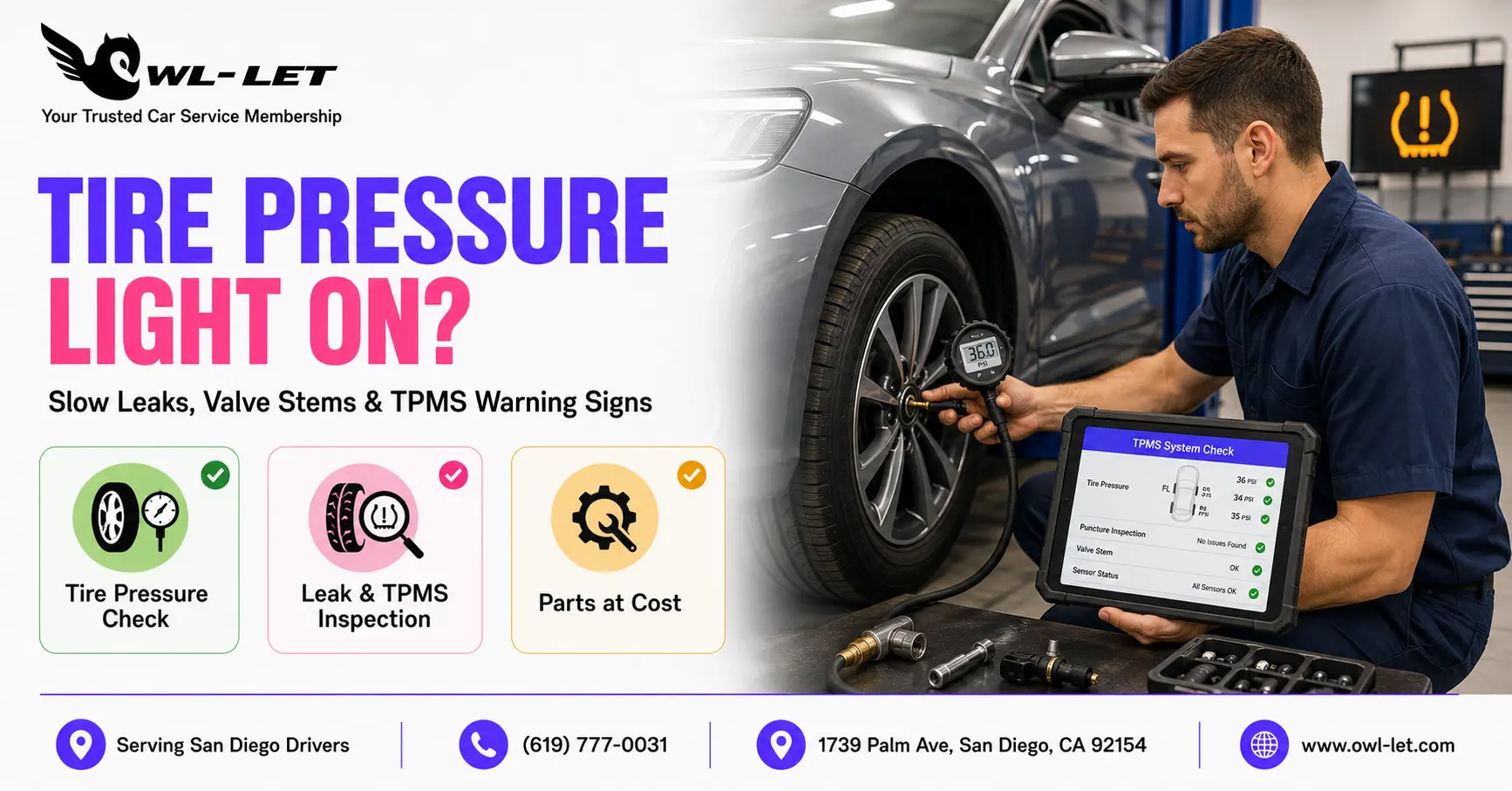
Why Does My Tire Pressure Light Keep Coming On?
If your tire-pressure warning light stays on or keeps returning after you add air, the vehicle may have more than a simple pressure change.
The problem could involve a slow puncture, damaged valve stem, leaking wheel, incorrect pressure, temperature change, or a failing tire-pressure sensor.
The warning should be inspected before the tire becomes unsafe or wears unevenly.
Common Reasons the TPMS Light Turns On
Low Tire Pressure
The system turns on the warning when one or more tires fall below the vehicle’s recommended pressure.
Use the pressure listed on the driver-side door label—not the maximum number printed on the tire sidewall.
Temperature Changes
Tire pressure can decrease as outside temperatures fall.
The warning may appear in the morning and disappear after driving, but the tires should still be checked and adjusted to the recommended pressure.
Slow Tire Puncture
A nail, screw, or small tread puncture may release air gradually.
Common signs include:
- One tire repeatedly becoming low
- Pressure dropping every few days
- A visible object in the tread
- Hissing near the tire
- The warning returning after inflation
Do not remove a nail or screw before the tire is professionally inspected.
Valve Stem or Valve-Core Leak
Air can escape through a damaged valve stem or loose valve core.
The leak may be small enough that the tire looks normal while pressure continues to fall.
Wheel Damage or Corrosion
A bent wheel, damaged sealing surface, or corrosion around the rim can prevent the tire from sealing correctly.
This may happen after pothole impacts, curb contact, or long-term exposure to moisture.
TPMS Sensor Problem
Each wheel usually contains a sensor that monitors pressure.
A failed sensor, weak sensor battery, damaged sensor, or programming problem may cause the TPMS light to flash or stay on even when tire pressure is correct.
Solid Light vs. Flashing TPMS Light
A solid warning light commonly indicates low pressure in one or more tires.
A flashing light that later stays on may indicate a sensor or system malfunction.
The exact behavior varies by vehicle, so the tires and TPMS system should both be inspected.
Is It Safe to Keep Driving?
Check the tires before continuing to drive.
Stop and seek help if:
- A tire looks visibly low
- The vehicle pulls suddenly
- Steering feels unstable
- The tire has sidewall damage
- You hear air escaping
- The tire is rapidly losing pressure
- The vehicle feels unsafe
Driving on an underinflated tire can increase heat, reduce handling, and damage the tire.
Why Tire Diagnostics Matter
Adding air may temporarily turn off the warning without fixing the actual cause.
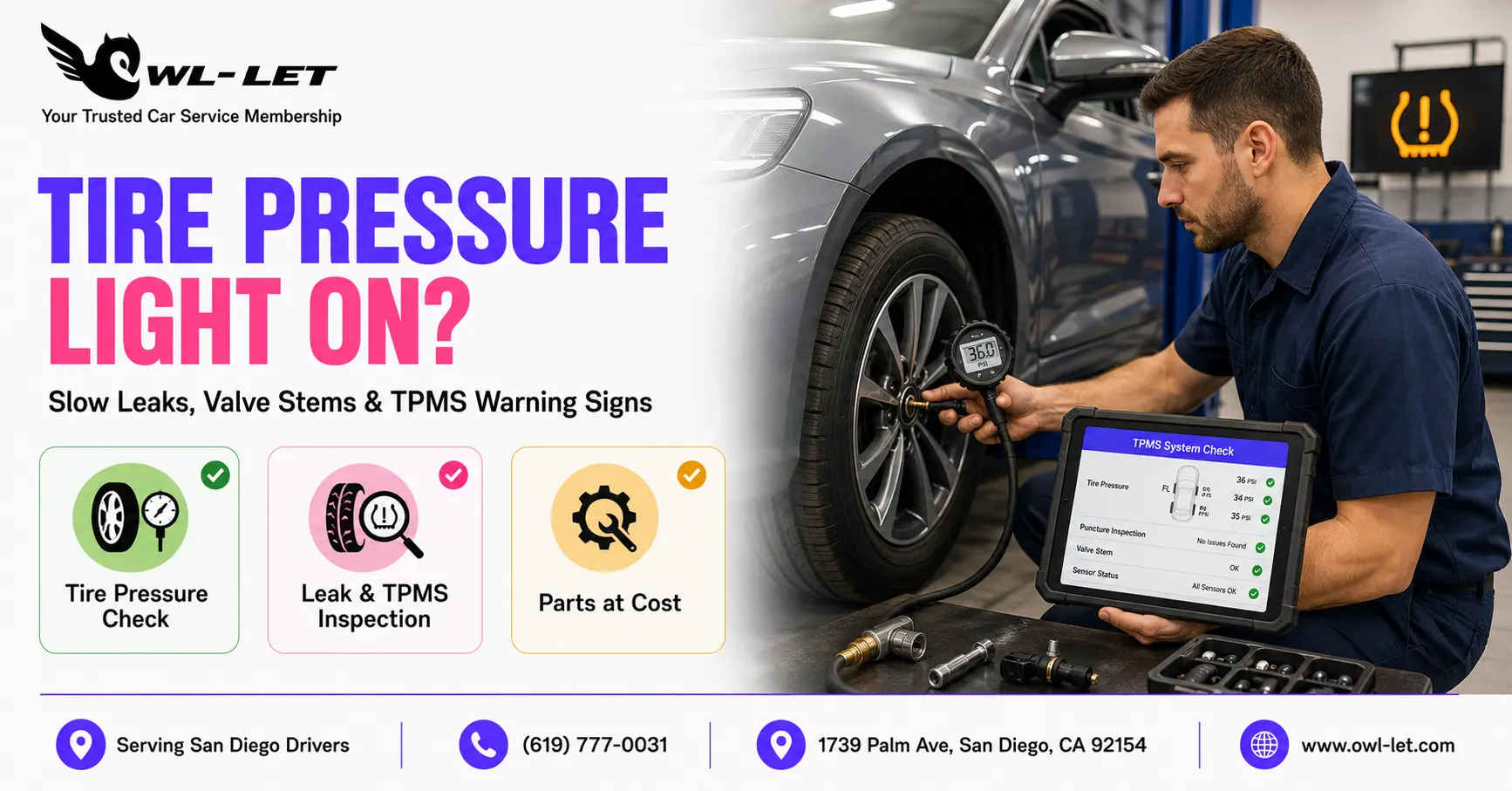
A proper inspection may include:
- Measuring all tire pressures
- Inspecting tread and sidewalls
- Checking for punctures
- Testing valve stems and valve cores
- Inspecting the wheel sealing surface
- Scanning TPMS sensor data
- Relearning or programming sensors when required
- Checking the spare tire when monitored by the vehicle
This helps determine whether the vehicle needs pressure correction, puncture repair, valve service, sensor replacement, wheel repair, or tire replacement.
How OWL-LET May Help
OWL-LET provides in-shop diagnostics, tire inspections, maintenance, and auto-repair services for San Diego drivers.
Approved membership benefits include free diagnostics for members, parts at cost, member repair pricing, priority booking, and entry plans from $24.99 per month.
Schedule a Tire and TPMS Inspection
Do not keep adding air without finding out why the pressure continues to drop.
OWL-LET Service Center
1739 Palm Ave, San Diego, CA 92154
Phone
(619) 777-0031
Website
www.owl-let.com
OWL-LET can inspect the tires, valves, wheels, pressure sensors, and TPMS system before recommending service.
Repairability depends on the puncture location, tire condition, internal damage, and inspection findings.
Comments 0
No comments yet
Be the first!