Why Won't My Car Start? Common Battery Problems Explained
A vehicle that refuses to start is one of the most common reasons drivers seek professional automotive service.
Although a dead battery is often responsible, the problem may also involve the alternator, starter motor, battery terminals, charging system, or electrical connections.
Professional diagnostics help determine the exact cause before unnecessary parts are replaced.
How Your Vehicle Starting System Works
Your vehicle depends on several components working together.
The battery provides electrical power to start the engine.
The starter motor cranks the engine.
Once running, the alternator recharges the battery and powers the vehicle's electrical systems.
A failure in any of these components may prevent the engine from starting.
Common Reasons a Car Won't Start
Weak or Dead Battery
Battery capacity naturally decreases over time.
Common warning signs include:
- Slow engine cranking
- Clicking when turning the key
- Interior lights becoming dim
- Dashboard lights flickering
- Vehicle needing jump starts
Corroded Battery Terminals
Corrosion creates resistance between the battery and electrical system.
Symptoms may include:
- Intermittent starting
- Slow cranking
- Electrical accessories losing power
- Visible white or blue corrosion around battery terminals
Failing Alternator
The alternator keeps the battery charged while driving.
A failing alternator may cause:
- Battery warning light
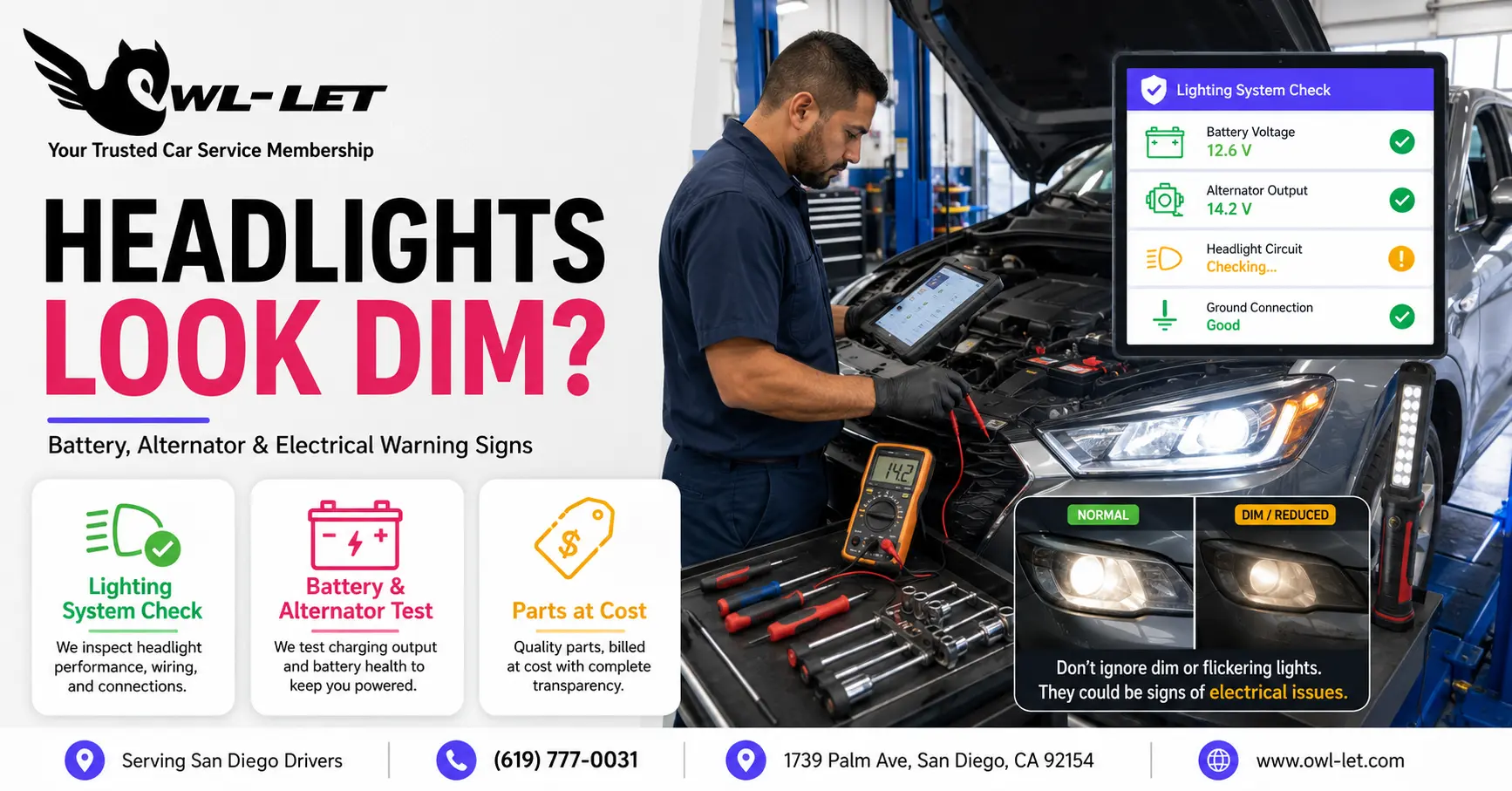
- Dim headlights
- Weak battery after driving
- Electrical accessories malfunctioning
- Vehicle stalling while driving
Starter Motor Problems
If the battery tests good but the engine will not crank, the starter motor may be faulty.
Possible symptoms include:
- Single clicking noise
- Grinding sounds
- No engine crank
- Intermittent starting
Loose or Damaged Battery Cables
Loose, damaged, or worn battery cables may interrupt electrical flow.
Professional inspection helps identify cable damage, loose connections, or excessive voltage drop.
Warning Signs Your Battery May Be Failing
Watch for these symptoms:
- Engine cranks slowly
- Frequent jump starts
- Battery warning light
- Flickering headlights
- Electrical accessories working intermittently
- Battery older than three to five years
- Difficulty starting during hot or cold weather
Can You Keep Driving?
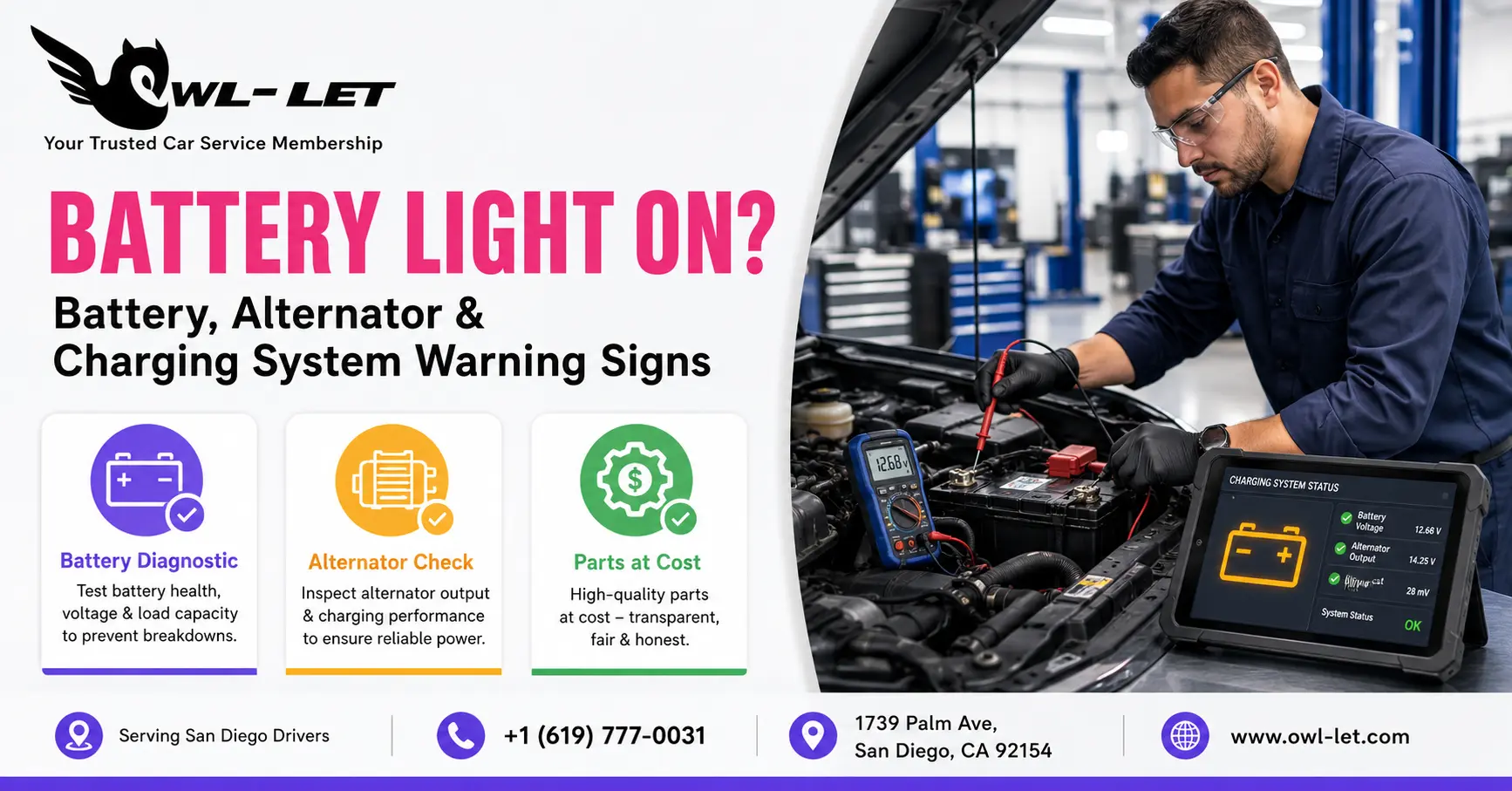
If the vehicle starts after a jump but the battery warning light remains on, the charging system may not be functioning correctly.
Continuing to drive could eventually leave the vehicle unable to restart.
Professional testing helps determine whether the battery, alternator, or starter requires service.
Why Professional Battery Diagnostics Matter
Replacing the battery without testing the charging system may not solve the problem.
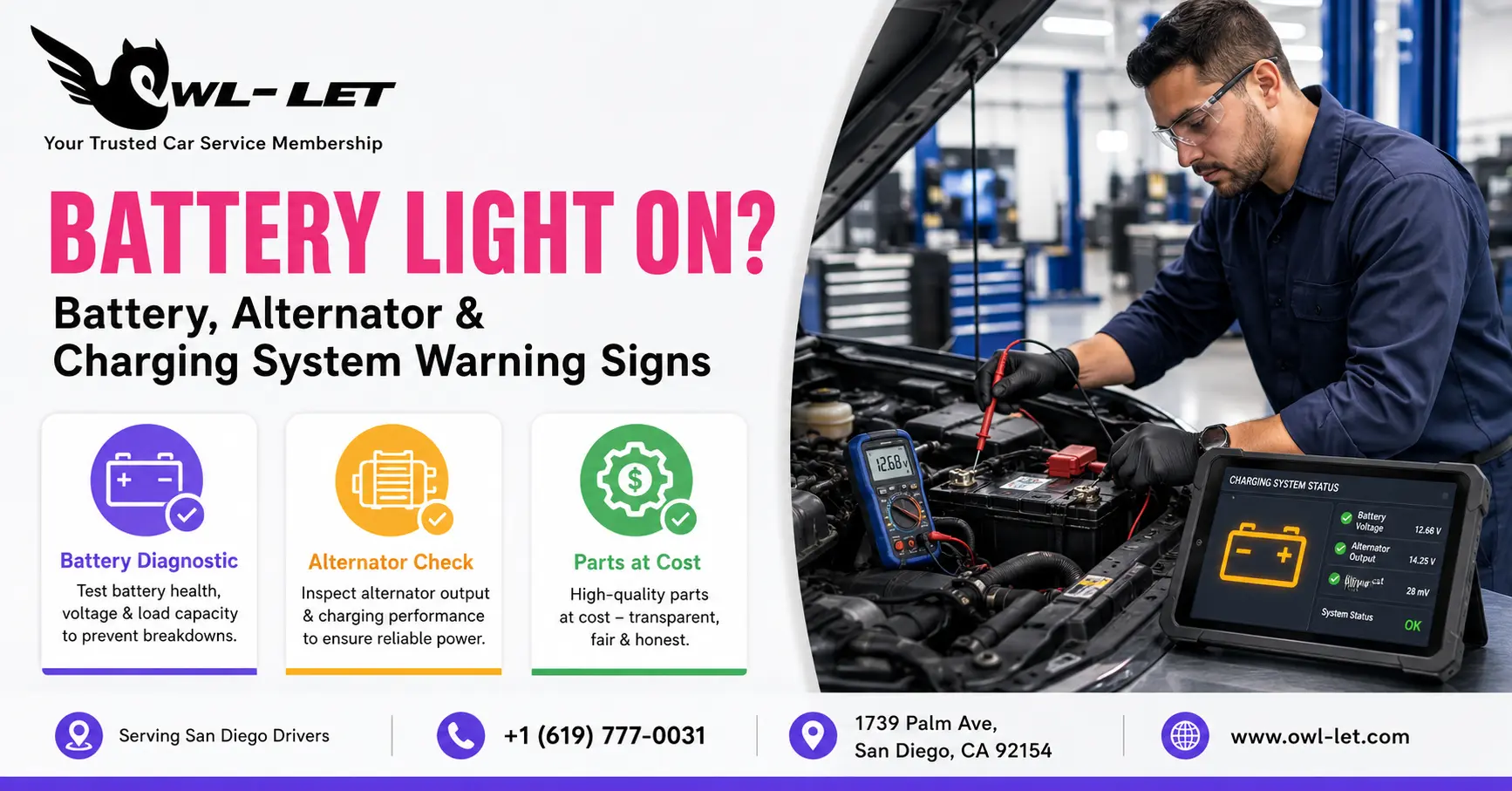
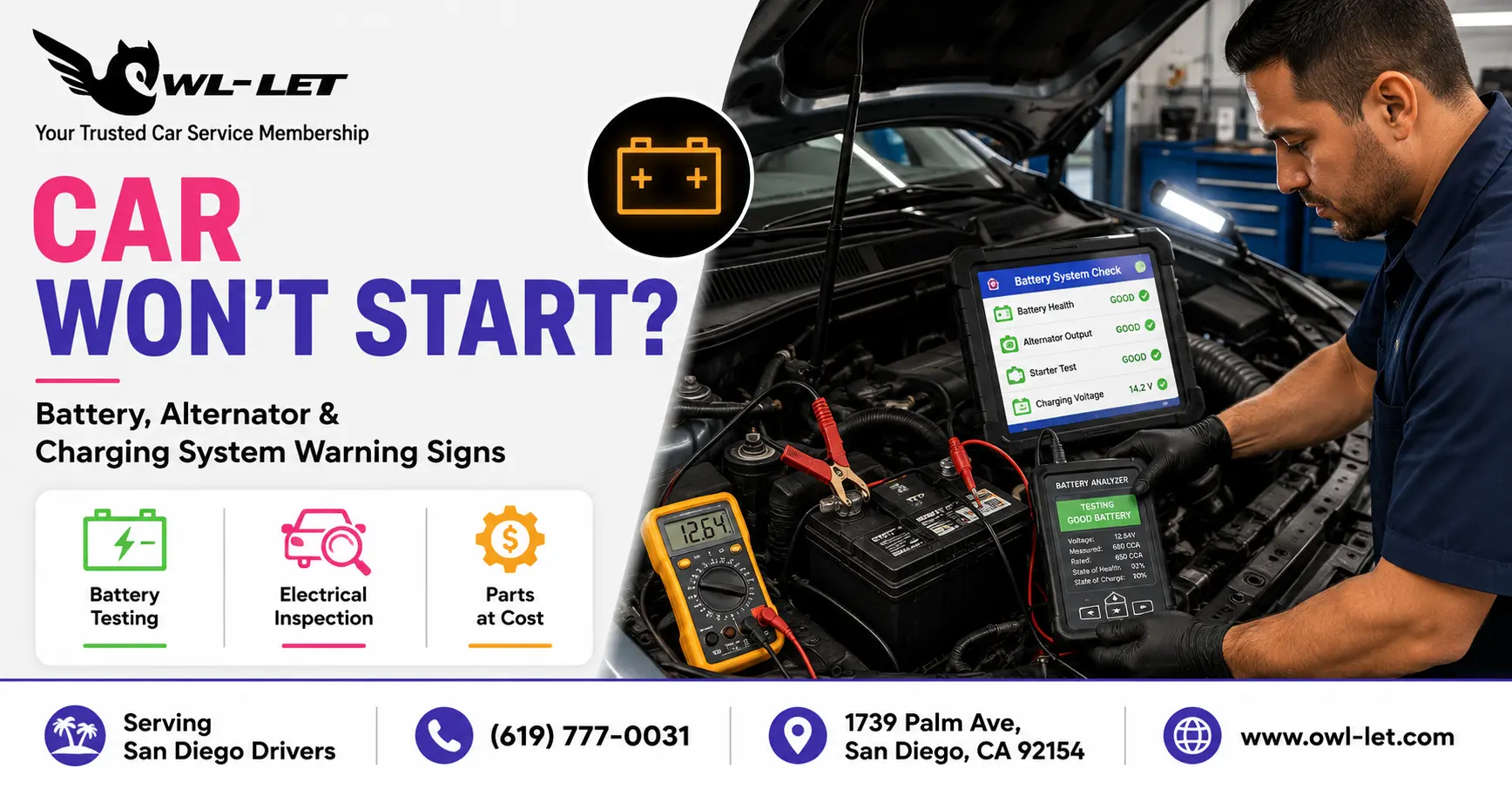
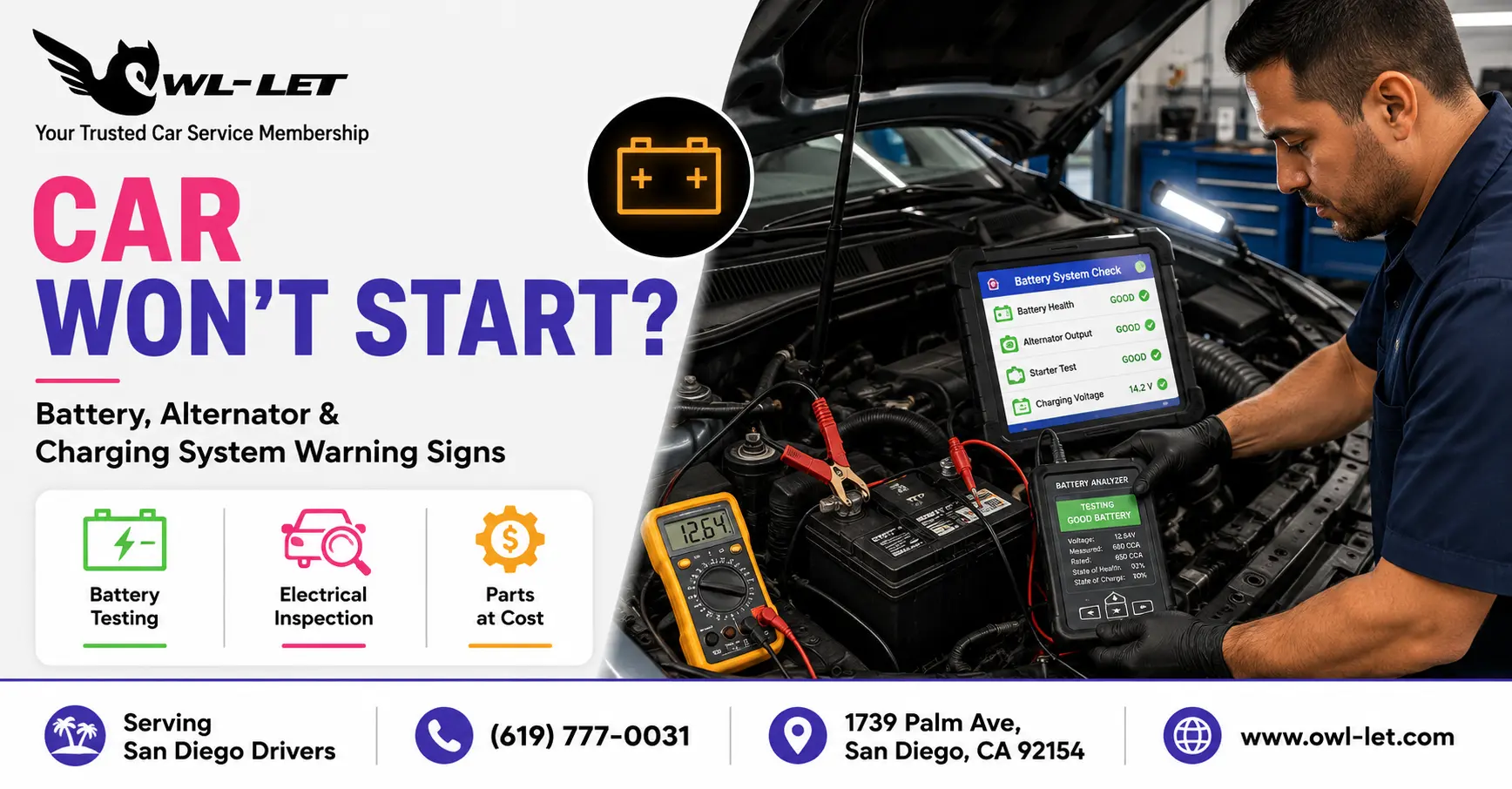
A complete inspection may include:
- Battery load testing
- Charging system testing
- Alternator output measurement
- Starter current draw testing
- Battery terminal inspection
- Cable voltage-drop testing
- Computer system scan
- Electrical system evaluation
This helps identify the true source of the starting problem.
How OWL-LET May Help
OWL-LET provides professional battery diagnostics, charging-system inspections, electrical diagnostics, and automotive repair services for San Diego drivers.
Approved membership benefits include:
- Free diagnostics for eligible members
- Parts at Cost
- Member repair pricing
- Priority booking
- Membership plans starting from $24.99 per month
Recommended services depend on inspection findings and the selected membership plan.
Schedule a Battery Inspection
If your vehicle struggles to start or requires frequent jump starts, schedule a professional inspection before the problem leaves you stranded.
OWL-LET Service Center
1739 Palm Ave
San Diego, CA 92154
Phone
Website
OWL-LET can inspect the battery, alternator, starter, charging system, and electrical connections before recommending repairs.
Repair recommendations depend on diagnostic findings, battery condition, and manufacturer specifications.
Comments 0
No comments yet
Be the first!