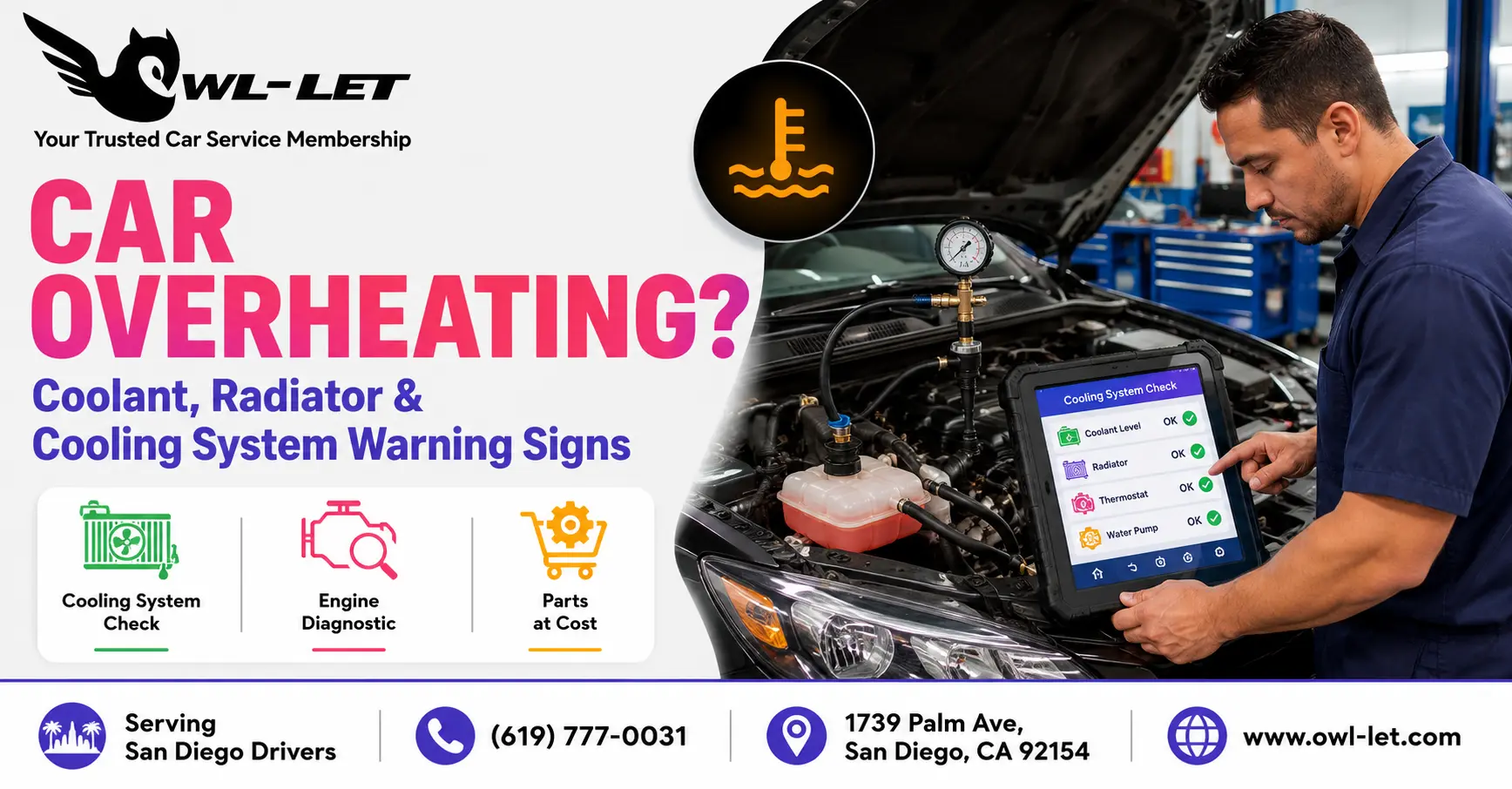
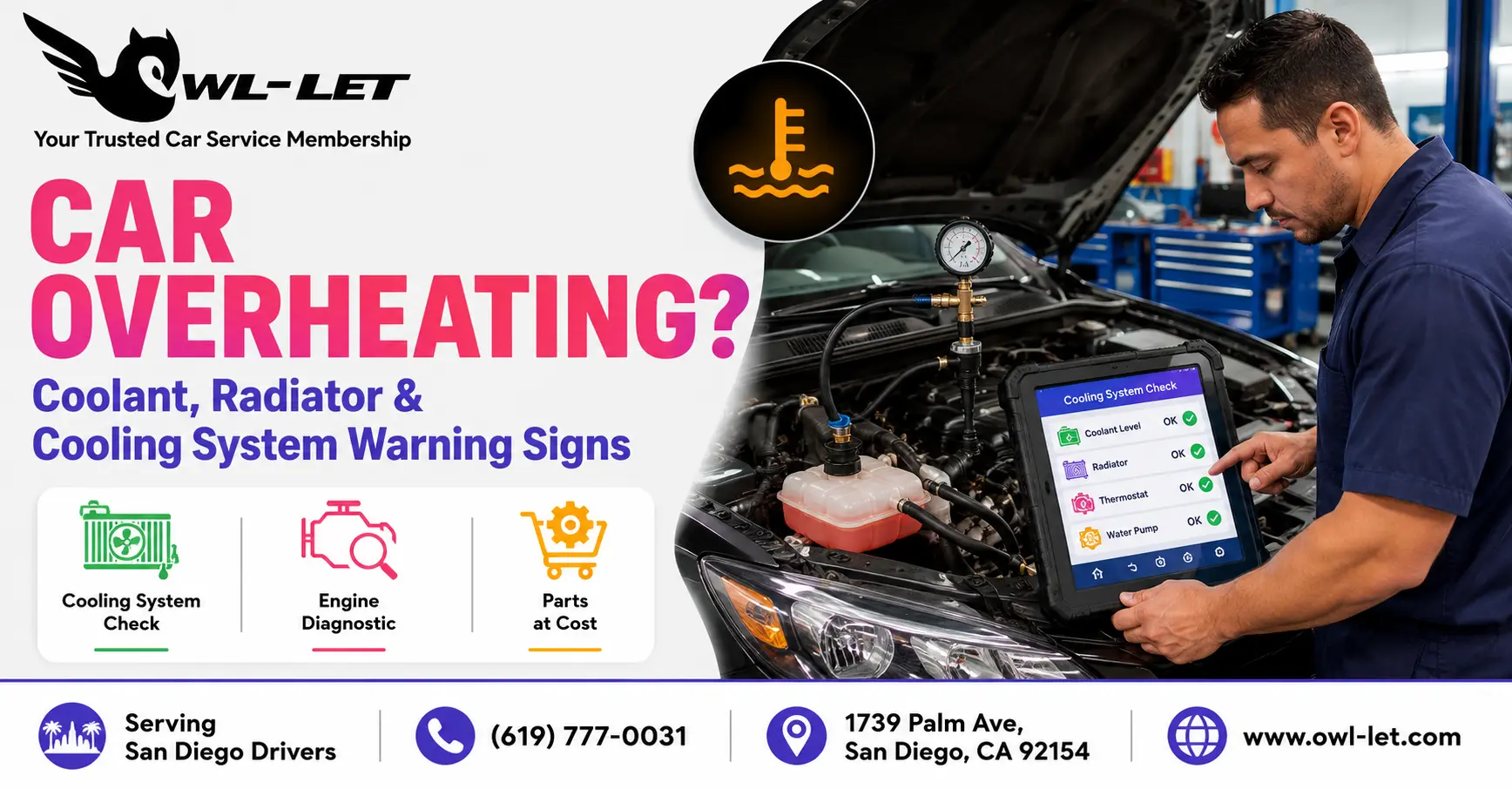
Why Is My Car Overheating?
If your engine temperature gauge suddenly climbs higher than normal or a temperature warning light appears on the dashboard, your vehicle may be experiencing an overheating problem.
Modern engines operate within a specific temperature range. When the cooling system cannot remove excess heat, engine temperatures can rise quickly and increase the risk of expensive repairs.
Ignoring an overheating engine may lead to damaged gaskets, warped cylinder heads, or severe internal engine damage.
Having the cooling system inspected as soon as possible helps identify the cause before the problem becomes more serious.
Common Reasons Your Car Overheats
Low Coolant Level
Coolant absorbs engine heat and transfers it through the radiator.
Low coolant may result from:
- Small coolant leaks
- Evaporation over time
- Loose hose connections
- Damaged radiator
- Failed reservoir cap
If coolant continues to disappear, the leak should be located before simply adding more coolant.
Coolant Leak
Leaks may develop from several cooling-system components, including:
- Radiator
- Radiator hoses
- Heater hoses
- Water pump
- Thermostat housing
- Coolant reservoir
- Hose clamps
Signs of a coolant leak include:
- Sweet odor near the vehicle
- Green, orange, pink, or blue fluid under the vehicle
- Frequent coolant refills
- Steam from the engine compartment
Thermostat Failure
The thermostat regulates coolant flow between the engine and radiator.
If it sticks closed, coolant cannot circulate properly, causing engine temperatures to rise rapidly.
Common symptoms include:
- Temperature gauge rising quickly
- Heat blowing cold inside the cabin
- Intermittent overheating
Radiator Problems
The radiator removes heat from the coolant.
Restricted airflow, internal blockage, damaged cooling fins, or external debris may reduce cooling efficiency.
Radiator issues often become noticeable during:
- Heavy traffic
- Long highway drives
- Hot summer temperatures
- Mountain driving
Water Pump Failure
The water pump circulates coolant throughout the engine.
A worn bearing, leaking seal, damaged impeller, or drive belt issue can reduce coolant flow and lead to overheating.
Possible symptoms include:
- Coolant leaking near the pump
- Whining noises
- Steam from the engine
- Engine temperature increasing while driving
Cooling Fan Problems
Electric cooling fans help move air through the radiator when the vehicle is stopped or moving slowly.
A failed fan motor, relay, fuse, or temperature sensor may prevent proper airflow.
Drivers often notice overheating:
- While idling
- In traffic
- At stoplights
while temperatures return to normal once the vehicle begins moving.
Warning Signs of an Overheating Engine
Watch for:
- Temperature gauge above normal
- High engine temperature warning light
- Steam under the hood
- Sweet coolant smell
- Reduced heater performance
- Coolant leaking underneath the vehicle
- Engine knocking caused by excessive heat
- Reduced engine performance
Is It Safe to Keep Driving?
If the engine begins overheating:
- Turn off the air conditioner.
- Turn the cabin heater to maximum heat if it is safe to do so.
- Pull over when it is safe.
- Shut off the engine if the temperature continues rising.
- Allow the engine to cool before opening the hood.
Do not remove the radiator cap while the engine is hot.
Hot coolant is under pressure and may cause serious burns.
If steam is coming from the engine compartment or the temperature gauge enters the red zone, continuing to drive may result in severe engine damage.
Why Cooling-System Diagnostics Matter
Overheating is often a symptom—not the actual failure.
A professional inspection may include:
- Cooling-system pressure testing
- Coolant level inspection
- Radiator inspection
- Thermostat testing
- Water pump inspection
- Cooling fan operation test
- Hose inspection
- Leak detection
- Temperature sensor testing
- Scan tool diagnostics
This process helps identify whether the vehicle requires a hose repair, coolant service, radiator replacement, thermostat replacement, water pump repair, or another cooling-system service.
How OWL-LET May Help
OWL-LET provides professional cooling-system diagnostics, engine inspections, maintenance, and automotive repair services for San Diego drivers.
Approved membership benefits include:
- Free diagnostics for eligible members
- Parts at Cost
- Member labor pricing
- Priority booking
- Membership plans starting from $24.99 per month
Service recommendations depend on inspection findings and the selected membership plan.
Schedule a Cooling-System Inspection
An overheating engine should never be ignored.
Early diagnosis may help prevent more extensive engine repairs.
OWL-LET Service Center
1739 Palm Ave
San Diego, CA 92154
Phone
Website
OWL-LET can inspect the cooling system, radiator, thermostat, hoses, water pump, fans, and engine components before recommending repairs.
Repair recommendations depend on inspection findings, component condition, and manufacturer specifications.
Comments 0
No comments yet
Be the first!