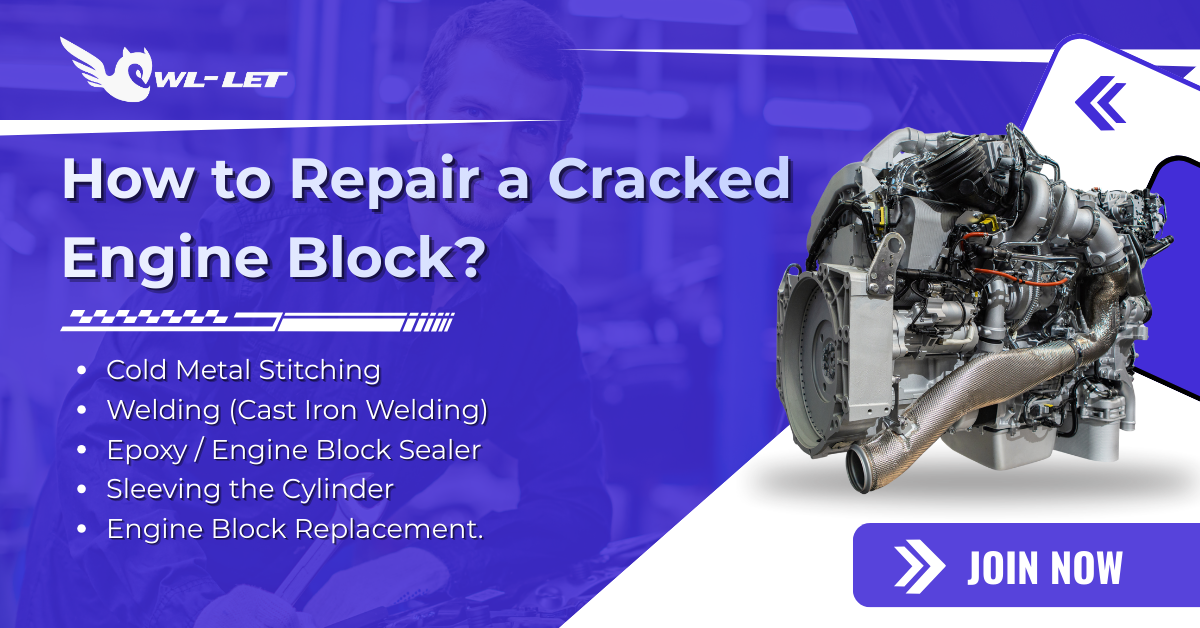
To repair a cracked engine block, you must first diagnose the crack’s severity. For minor external leaks, high-grade ceramic sealants or epoxy putty work well. For structural or internal cracks, metal stitching (cold welding), brazing, or iron-sleeving the cylinder are the most reliable, permanent professional solutions to restore engine integrity.
Key Takeaways: Cracked Engine Block Solutions
|
Method |
Best For |
Durability |
Professional Level |
|
Chemical Sealant |
Minor hairline external cracks |
Temporary/Medium |
DIY Friendly |
|
Epoxy/Cold Weld |
Low-stress external areas |
Medium |
Intermediate |
|
Metal Stitching |
Cast iron structural cracks |
High (Permanent) |
Professional |
|
Brazing/Welding |
Specific cast iron or aluminum |
High |
Expert Only |
|
Cylinder Sleeving |
Internal cylinder wall cracks |
High (Permanent) |
Machine Shop |
Why Is Learning How to Repair a Cracked Engine Block So Critical?
Discovering a crack in your engine block used to be a death sentence for a vehicle. However, as engine technology and metallurgical repair techniques have evolved, knowing how to repair a cracked engine block can save you thousands in replacement costs. Whether it’s caused by overheating, freezing coolant, or extreme mechanical stress, a crack compromises your engine's thermal management and structural rigidity.
What Are the Symptoms of a Cracked Engine Block?
Before diving into the "how-to," you must confirm the diagnosis. A cracked block isn't always visible to the naked eye.
-
External Coolant Leaks: Look for "crusty" residue or puddles directly under the block.
-
Oil and Coolant Mixing: The dreaded "milky milkshake" appearance under your oil cap.
-
Low Engine Compression: Check if the crack has breached the combustion chamber.
-
Excessive White Smoke: Indicating coolant is being burned in the cylinders.
1. How Do You Use Chemical Sealants for Minor Cracks?
If you are looking for a cost-effective, non-invasive way of how to repair a cracked engine block, specialized chemical sealants are the first line of defense. These aren't your standard "stop leak" products; they are high-performance ceramic fibers.
The Process:
-
Flush the System: Ensure all antifreeze is removed, as it interferes with the bonding agent.
-
Apply the Sealant: Mix the ceramic sealant with water and add it to the radiator.
-
Heat Cycle: Run the engine to allow the sealant to circulate and harden within the crack via thermal activation.
Owl-let Insight: This method is best for "weeping" cracks rather than structural fractures.
2. Can Epoxy and Cold Weld Formulas Provide a Permanent Fix?
For external cracks in non-pressurized areas, epoxy resins (like JB Weld or specialized industrial polymers) are highly effective.
-
Surface Prep: You must grind the area down to bare metal using a wire brush or Dremel.
-
Stop-Drilling: Drill tiny holes at both ends of the crack to prevent further spreading—a vital step in how to repair a cracked engine block successfully.
-
Application: Apply the epoxy in layers, ensuring it penetrates the "V" groove you've ground into the crack.
3. What Is Metal Stitching (Cold Repair) and Why Is It Preferred?
Metal stitching is often considered the "Gold Standard" for cast iron blocks. Unlike welding, it involves no heat, which means no risk of further warping or stress fractures.
Why it works:
-
Mechanical Interlock: Specialized "stitching pins" are threaded into the crack.
-
Distribution of Stress: The pins pull the two sides of the crack together, restoring structural integrity.
-
Fluid Tight: Once the pins overlap, they create a liquid-tight seal that can withstand high PSI.
4. Is Welding or Brazing a Viable Option for Engine Repair?
Welding a block is notoriously difficult because cast iron has a high carbon content. If you don't pre-heat and post-cool the metal correctly, it will crack again instantly.
-
TIG Welding: Preferred for aluminum blocks.
-
Braze Welding: Uses a filler rod (usually brass or nickel-based) at a lower temperature than traditional welding, reducing the risk of thermal shock.
5. When Should You Consider Cylinder Sleeving?
If the crack is located on the internal cylinder wall, the only way to fix it "for good" is to install a sleeve.
-
Boring: A machinist bores out the damaged cylinder.
-
Press-Fitting: A new steel or iron sleeve is pressed into the hole.
-
Surfacing: The block is "decked" to ensure the new sleeve is perfectly flush with the head gasket surface.
Conclusion: Choosing the Right Path
Throughout your repair journey, remember that quality materials matter. Whether you're choosing an epoxy or a professional machinist, the Owl-let philosophy is built on "doing it right the first time." Cutting corners on a cracked block usually results in spending twice as much later on.
Comments 0
No comments yet
Be the first!