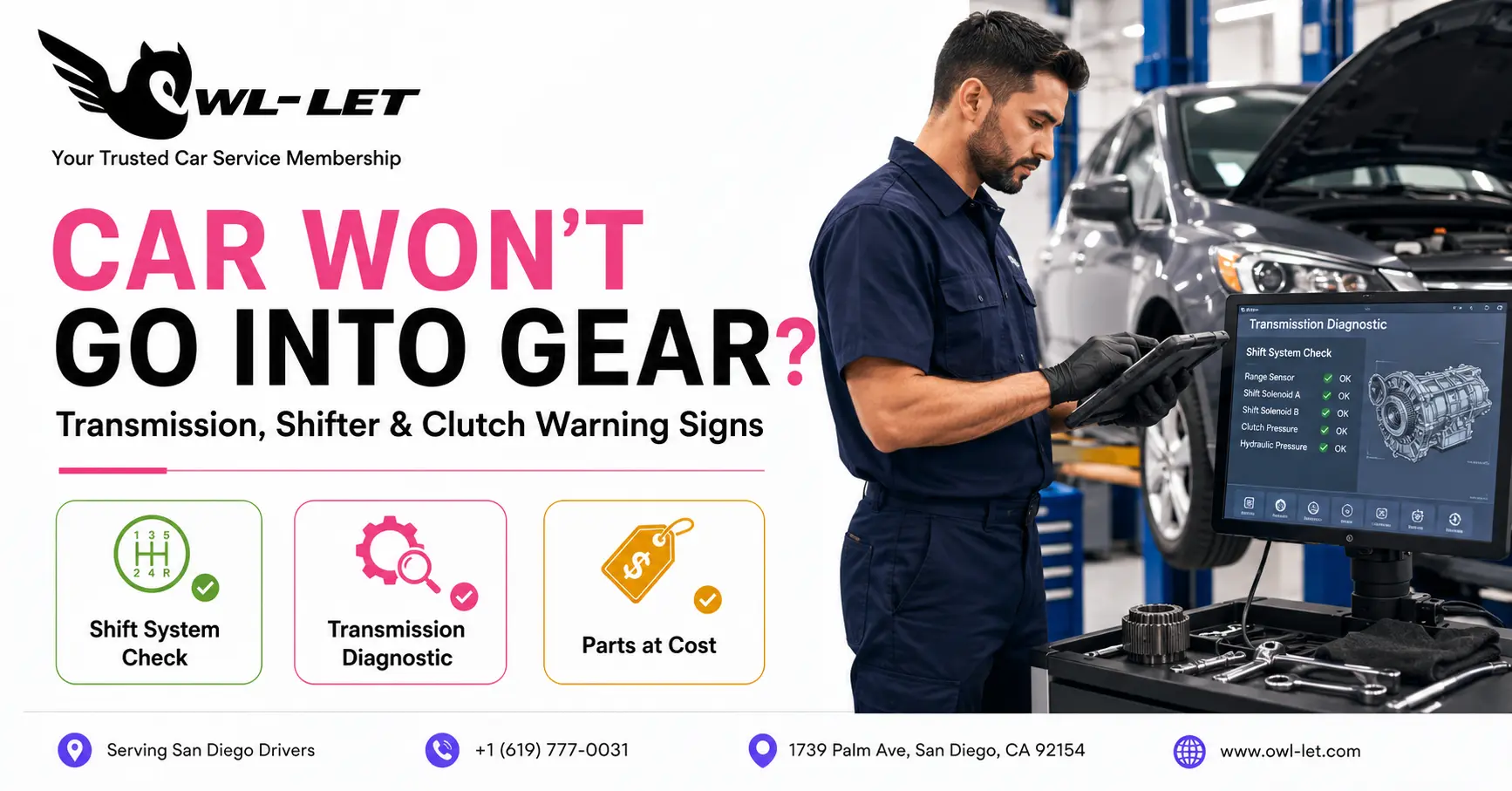
If you’ve noticed your engine revving like a race car while your vehicle barely crawls forward, you are likely wondering how to repair transmission slipping before a small glitch turns into a $4,000 replacement. In my years as a master technician, I’ve seen thousands of drivers panic at the first sign of a "slip," assuming the worst. However, in 2026, with modern diagnostic tools and advanced synthetic fluids, a slipping transmission is often a solvable maintenance issue rather than a death sentence for your car.
The key to repairing a slipping automatic transmission lies in rapid diagnosis. Whether it’s a delay in gear engagement or an unexpected shift into neutral while cruising at highway speeds, ignoring these transmission slipping symptoms causes friction plates to overheat, leading to permanent hardware failure. At Owl-Let, we emphasize that 70% of transmission issues start with neglected fluid chemistry.
Quick Guide: Diagnosing and Fixing Transmission Slip
|
Symptom |
Probable Cause |
Expert Recommended Action |
|
High RPM, No Speed |
Low Fluid / Leaks |
Top up fluid and inspect seals immediately. |
|
Harsh/Delayed Shifts |
Dirty/Burnt Fluid |
Perform a full transmission fluid flush & filter change. |
|
Check Engine Light (CEL) |
Faulty Solenoid |
Scan for codes (e.g., P0700) and replace electronics. |
|
Slipping in 2nd/3rd Gear |
Worn Clutch/Bands |
Internal adjustment or professional rebuild required. |
Why Is My Transmission Slipping?
Before we dive into the "how-to," we must understand the "why." A transmission relies on hydraulic pressure to engage gears. When that pressure drops or the friction material on the internal components wears down, the system "slips."
1. Is Low Transmission Fluid the Culprit?
The most common cause of a slipping gearbox is simply a lack of fluid. Without enough Automatic Transmission Fluid (ATF), the pump cannot generate the pressure needed to hold the clutch packs together.
-
The Fix: Locate your dipstick (if equipped) and check the level. If it’s low, you likely have a transmission leak in the cooler lines, pan gasket, or output seals.
2. Can Burnt or Contaminated Fluid Cause Slipping?
Fluid doesn't just lubricate; it cleans and cools. Over time, heat breaks down the additives. If your fluid looks like dark coffee rather than cherry syrup, it has lost its "viscosity," leading to erratic shifting.
-
The Expert Insight: Many 2026 models use "Lifetime Fluid," but "lifetime" usually means 100,000 miles. Don't wait that long.
How Do I Know if My Transmission Is Slipping?
You can identify a slip if you experience a delay in acceleration, an unprovoked increase in RPMs, or a "searching" feeling where the car can't decide which gear to stay in. Often, this is accompanied by a burning smell or a Check Engine Light showing codes like P0730 (Incorrect Gear Ratio).
Step-by-Step: How to Repair Transmission Slipping at Home
If you're a DIY enthusiast or just want to save on labor, follow this professional-grade protocol to troubleshoot and fix transmission slipping issues.
Step 1: Perform a Fluid and Filter Service
If your fluid is dark but doesn't contain silver metallic flakes (which indicate internal "grenading"), a fluid change is your best bet.
-
Drain the Pan: Remove the drain plug or drop the pan to catch the old fluid.
-
Inspect the Magnet: A small amount of "fuzz" is normal; chunks of metal mean you need a rebuild.
-
Replace the Filter: A clogged filter starves the pump of oil.
-
Refill with OEM Spec: Use only the fluid recommended by your manual (e.g., Mercon V, Dexron VI, or specialized CVT fluids).
Step 2: Address Faulty Shift Solenoids
In modern electronically controlled transmissions, the Transmission Control Module (TCM) uses solenoids (electric valves) to direct fluid. A solenoid stuck open or closed will cause a specific gear to slip.
-
Diagnostic Tip: Use a high-quality OBD-II scanner. If you see a "Solenoid A Performance" code, you may be able to replace the solenoid through the bottom of the pan without pulling the whole transmission.
Step 3: Check for Vacuum or Sensor Issues
In older vehicles, a faulty vacuum modulator can cause slipping. In newer cars, a bad Mass Air Flow (MAF) sensor or Throttle Position Sensor (TPS) can trick the TCM into applying the wrong pressure, causing a "phantom slip."
How Much Does It Cost to Fix a Slipping Transmission?
The cost varies wildly based on the root cause:
-
Fluid Top-off: $20 - $50
-
Fluid & Filter Flush: $150 - $300
-
Solenoid Replacement: $250 - $600
-
Full Rebuild/Replacement: $2,500 - $5,000+
Expert Note: Joining a comprehensive maintenance program, like the Owl-Let car service membership starting at just $24.99 monthly, can help catch these leaks through regular inspections before they require a $3,000 overhaul.
When Is It Time for a Professional Rebuild?
Sometimes, the damage is internal. If your transmission bands are snapped or the clutch plates have lost their friction lining, no amount of new fluid will help.
-
Worn Clutch Packs: Common in manual transmissions and the internal "drums" of automatics.
-
Torque Converter Failure: If you feel a "shudder" (like driving over rumble strips) at 40-60 MPH, the torque converter clutch is likely failing.
How to Prevent Future Transmission Issues?
The best way to repair transmission slipping is to never let it start.
-
Check Fluid Monthly: It takes 60 seconds and saves thousands.
-
Use an Auxiliary Cooler: If you tow trailers or live in a hot climate (like Phoenix or Dubai), heat is your transmission's #1 enemy.
-
Stop Completely Before Shifting: Shifting from Drive to Reverse while still rolling puts massive stress on the internal bands.
As we move further into 2026, the complexity of hybrid and 10-speed transmissions makes professional oversight more critical than ever. Whether you drive a classic or a modern EV-hybrid, maintaining the health of your drivetrain is the most cost-effective way to keep your car on the road.
Comments 0
No comments yet
Be the first!