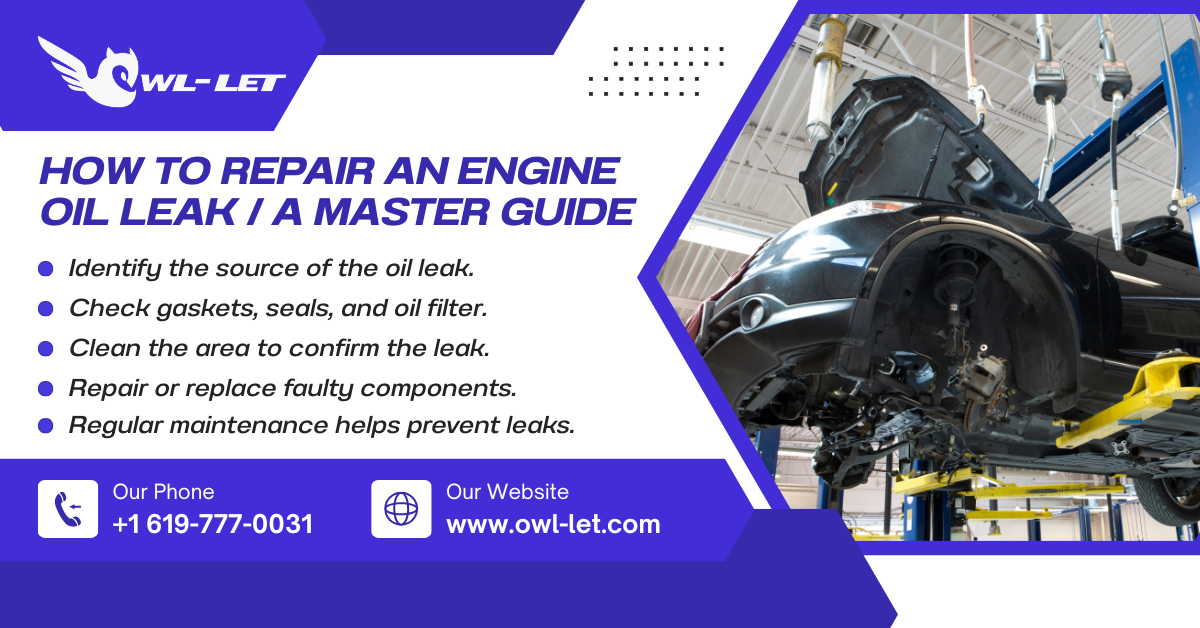
To repair an engine oil leak, you must first identify the source (commonly the valve cover gasket, oil pan, or main seal). Clean the area, tighten loose bolts to spec, or replace the degraded seal using high-quality gaskets and RTV sealant to ensure a long-lasting, leak-free engine.
Key Insights for Fast Repairs
|
Feature |
Details |
|
Common Culprits |
Valve cover gaskets, oil filter housing, oil pan gaskets. |
|
Primary Tools |
Torque wrench, socket set, degreaser, replacement gaskets. |
|
Difficulty Level |
Intermediate (varies by leak location). |
|
Expert Tip |
Always check the PCV valve first; a clog can blow out seals. |
Why Is Finding Out How to Repair Engine Oil Leak Critical for Your Car’s Longevity?
Ignoring a puddle on your driveway is a recipe for mechanical disaster. As a seasoned technician, I’ve seen $20 gaskets turn into $5,000 engine replacements. When you learn how to repair engine oil leak issues early, you aren’t just saving your driveway from stains; you’re maintaining hydraulic pressure and preventing engine overheating.
At Owl-let, we believe in proactive maintenance. An oil leak is rarely just a "mess"—it’s a symptom of internal pressure issues or material fatigue. In this guide, we’ll dive deep into the mechanics of oil seals and the semantic "why" behind engine failure.
How Do You Accurately Identify the Source of an Oil Leak?
Before turning a wrench, you must be a detective. Oil has a pesky habit of traveling downward and backward due to gravity and airflow while driving.
-
The Degrease Method: Use a high-quality engine degreaser to clean the entire block.
-
The UV Dye Test: Add a fluorescent dye to the oil, drive for 15 minutes, and use a UV light to trace the "glow" back to the highest point of origin.
-
The Talcum Powder Trick: After cleaning, spray foot powder on suspected areas. The fresh oil will leave a distinct "trail" in the white powder.
Can You Fix an Oil Leak Without Replacing Parts?
Many DIYers ask if "Stop Leak" additives actually work. In my experience, these are temporary band-aids. They work by swelling rubber seals. While this might stop a tiny weep in an old oil pan gasket, it can also gum up narrow oil passages. If you want a permanent engine oil leak repair, mechanical replacement is the only "Expert-Verified" path.
How to Repair Engine Oil Leak: Step-by-Step Gasket Replacement
1. The Valve Cover Gasket (The Most Common Leak)
Located at the very top of the engine, this is usually the easiest fix.
-
Remove the spark plug wires or coil packs.
-
Unbolt the valve cover in a "criss-cross" pattern to prevent warping.
-
Clean the mating surfaces until they are "surgical grade" shiny.
-
Apply a small bead of RTV silicone at the "T-junctions" where the timing cover meets the head.
2. The Oil Pan Gasket
This requires getting under the vehicle.
-
Drain the oil completely.
-
Drop the pan (ensure no hidden bolts are lurking near the transmission).
-
Inspect the pan for any warping. A bent flange will never seal, even with a new gasket.
Is it Safe to Drive with an Oil Leak?
Technically, if the level is full, the car will run. However, the Oil dripping onto a hot exhaust manifold is a fire hazard. Furthermore, oil degrades rubber bushings and coolant hoses, leading to a cascade of mechanical failures.
Expert Insight: If you smell "burning toast" or see blue smoke from under the hood, your leak is likely hitting the exhaust. Stop driving immediately.
What are the People Also Ask (PAA) Questions Regarding Oil Leaks?
How much does it cost to fix an oil leak at a shop?
Professional costs range from $150 to $1,500. A valve cover is cheap; a rear main seal requires removing the transmission, which is labor-intensive. This is why many savvy drivers prefer the peace of mind offered by specialized Owl-let maintenance coverage.
Can a dirty air filter cause an oil leak?
Indirectly, yes. A clogged PCV (Positive Crankcase Ventilation) system—which is part of the air intake ecosystem—causes pressure to build up inside the engine. This pressure has to go somewhere, and it usually forces oil out through the weakest seal.
Advanced Semantic Diagnostics: Why Seals Fail
To truly master how to repair engine oil leak scenarios, you must understand the chemistry. Most modern seals are made of Viton or Nitrile. Over time, the heat cycles of the engine cause these polymers to lose their elasticity (a process called "heat hardening").
When the seal becomes brittle, it can no longer "hug" the rotating shafts (like the crankshaft or camshaft). This is why using high-quality synthetic oil with seal conditioners—or staying on top of your Owl-let service schedule—is vital for preventing leaks before they start.
Summary: The Professional’s Checklist
-
Check the PCV Valve: Ensure the engine can "breathe."
-
Torque to Spec: Over-tightening a gasket is just as bad as under-tightening.
-
Use High-Quality Gaskets: Avoid "no-name" brands; stick to OEM or reputable aftermarket like Fel-Pro.
Conclusion: Securing Your Engine’s Future
Knowing how to repair engine oil leak issues is a fundamental skill for any vehicle owner. By identifying the leak early, cleaning the surfaces properly, and using the right torque specs, you can extend your car’s life by years.
However, we know that DIY isn't for everyone. If you'd rather spend your weekends doing what you love while experts handle the grease, Owl-let has you covered. Protect your investment with our Owl-let Car Service Membership. For just $24.99 Monthly, you get professional oversight and maintenance plans that catch leaks before they become disasters. Visit www.owl-let.com today to join the flock.
Comments 0
No comments yet
Be the first!