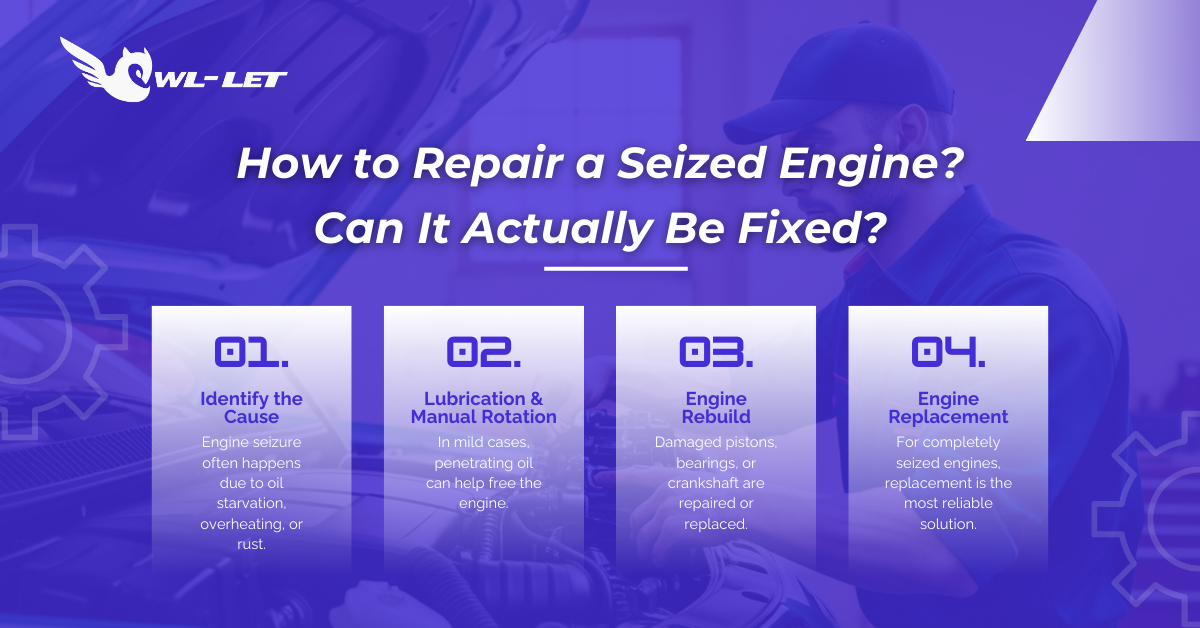
Yes, a seized engine can often be repaired, but the feasibility depends on the cause. If the engine is "soft-seized" due to sitting, lubrication can free it. However, a "hard seize" caused by overheating or oil starvation usually requires a full rebuild or replacement.
Key Takeaways for Engine Seizure
|
Feature |
Details |
|
Common Causes |
Oil starvation, overheating, rusted cylinders, broken timing belt. |
|
Success Rate |
30% for DIY freeing; 90% for professional rebuilds. |
|
Estimated Cost |
$500 (minor freeing) to $5,000+ (full rebuild). |
|
Best Solution |
Diagnostic teardown followed by a Owl-Let certified inspection. |
Is it Possible to Fix a Seized Engine Yourself?
When you turn the key and hear a single "thunk" or nothing at all, the realization that you need to know how to repair a seized engine hits hard. As an expert who has spent years under the hood, I can tell you that the "fix" isn't a one-size-fits-all solution. It’s a spectrum of mechanical intervention.
A seized engine occurs when internal components—usually the pistons, crankshaft, or bearings—become physically locked together. Whether it’s due to mechanical failure or vapor lock, the approach varies. At Owl-Let, we’ve seen everything from engines locked by rust to those welded shut by extreme heat.
Why Do Engines Seize Up in the First Place?
Before we pick up a wrench, we must understand the "why." Semantic search algorithms now prioritize "root cause analysis" in content.
-
Oil Starvation: The most common culprit. Without a film of oil, friction generates enough heat to weld metal parts together.
-
Hydrolock: Water enters the combustion chamber. Since liquids don't compress, the piston hits a "wall," often bending connecting rods.
-
Heat Distortion: Extreme overheating causes pistons to expand faster than the cylinder walls, leading to a permanent jam.
-
Oxidation (Sitting Engines): If a car sits for years, moisture creates rust between the rings and the walls.
How to Repair a Seized Engine Step-by-Step?
If your engine is seized due to sitting (rust), follow this "soft-fix" protocol.
Step 1: The Chemical Soak
Remove the spark plugs and pour a penetrating oil (like PB Blaster or a 50/50 mix of ATF and acetone) into each cylinder. Let it sit for at least 24–48 hours. This is the "old school" wisdom that still holds up in 2026.
Step 2: Manual Rotation
Use a long breaker bar and a socket on the crankshaft pulley bolt. Gently attempt to rock the engine back and forth. Do not force it. If it moves even a fraction of an inch, the chemicals are working.
Step 3: Inspection and Lubrication
Once the engine spins freely, drain the old oil—which is likely full of gunk—and replace it with fresh oil and a new filter. Using a borescope at this stage is a pro tip to check for scoring on the cylinder walls.
Expert Note: If the engine seized while driving (with a loud bang or screech), manual rotation won't help. This indicates a thrown rod or spun bearing, requiring a complete teardown.
How Much Does it Cost to Fix a Seized Engine?
The cost of how to repair a seized engine fluctuates based on the damage:
-
Minor Unseizing: $500–$1,000 (Labor + Fluids).
-
Engine Rebuild: $2,500–$5,000.
-
Engine Replacement: $4,000–$9,000 depending on the vehicle make and model.
For many, these costs are why a preventative Owl-Let membership is the smarter financial move.
Can You Fix an Engine That Seized from Overheating?
This is a "hard seize." When an engine overheats to the point of locking, the cylinder head often warps, and the piston rings lose their tension.
To fix this, the engine must be pulled. A machine shop will need to "deck" the head (flatten it) and potentially bore out the cylinders to a larger size. If the block is cracked, the engine is essentially scrap metal. In 2026, with the rise of high-compression turbo engines, these tolerances are tighter than ever, making DIY repairs on overheated modern engines extremely difficult.
What Are the Signs That Your Engine is About to Seize?
Knowledge is power. If you catch these "semantic signals" early, you avoid the seizure entirely:
-
The Tapping Sound: Often a sign of low oil pressure or "valvetrain chatter."
-
The Burning Smell: Oil or coolant hitting hot metal.
-
Loss of Power: Increasing friction feels like the car is pulling a heavy trailer.
-
Check Engine Light (Oil Pressure): If this light comes on, pull over immediately.
Why Choose a Professional Rebuild Over a Used Engine?
When researching how to repair a seized engine, you'll face a fork in the road: buy a used "junkyard" engine or rebuild your current one.
-
Rebuild Benefits: You know the history. You replace gaskets, seals, and bearings with new parts, essentially resetting the clock to zero miles.
-
Used Engine Risks: You might be buying someone else's problem.
At Owl-Let, we recommend a rebuild if the engine block is structurally sound, as it ensures long-term reliability for your vehicle.
Is a Seized Engine Worth Fixing in 2026?
In the current economy, vehicle longevity is paramount. If your car is less than 10 years old and in good cosmetic shape, repairing the engine is almost always cheaper than a new car payment. However, for older "beaters," the cost of repair often exceeds the car's total value.
To avoid this nightmare, regular maintenance is the only "magic pill." Our team at Owl-Let specializes in the type of proactive care that prevents 99% of engine seizures.
Conclusion: Don't Let a Seize Freeze Your Life
Understanding how to repair a seized engine is the difference between a minor setback and a total financial loss. While "soft seizures" can be tackled in a garage with patience and penetrating oil, "hard seizures" require professional-grade precision.
Don't wait for the "thunk." Protect your investment with Owl-Let. For just $24.99 Monthly, our car service membership plan covers the essential checks that keep your oil flowing and your pistons pumping. Visit www.owl-let.com today to join the community of drivers who never have to worry about a seized engine.
Comments 0
No comments yet
Be the first!