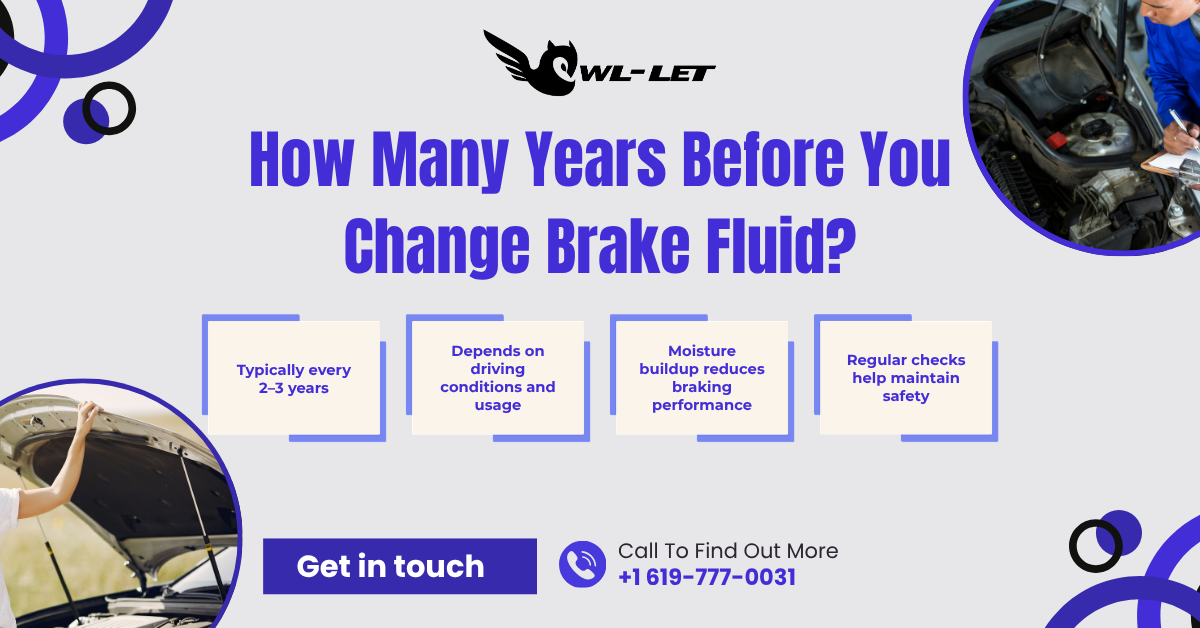
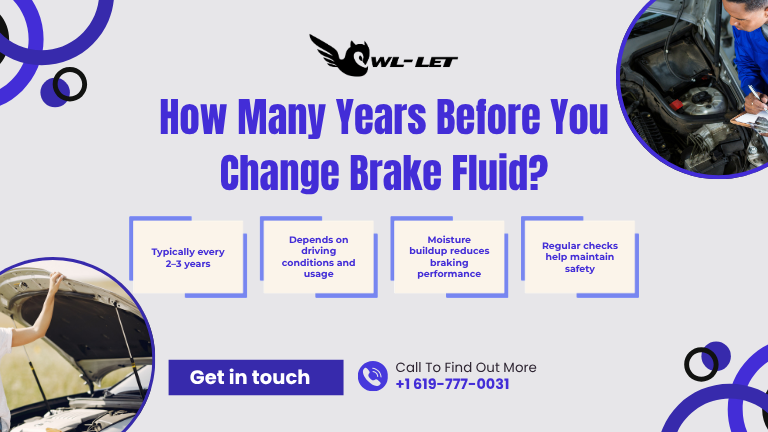
Most automotive experts and manufacturers recommend you change your brake fluid every 2 years, regardless of mileage. Because brake fluid is hygroscopic, it absorbs moisture from the air, which lowers its boiling point and can lead to internal corrosion or brake failure over time.
Key Takeaways: Brake Fluid Maintenance at a Glance
|
Feature |
Recommendation |
|
Primary Interval |
Every 2 Years / 24,000 Miles |
|
Fluid Type |
DOT 3, DOT 4, or DOT 5.1 (Check Reservoir Cap) |
|
Warning Signs |
Spongy pedal, dark fluid, dashboard light |
|
Risk of Neglect |
Brake fade, ABS failure, rusted calipers |
|
Top Pro Tip |
Use a copper strip test or moisture refractometer |
How Many Years Before You Change Brake Fluid a 2 Years Standard?
When asking how many years before you change brake fluid a 2 years interval is the industry benchmark, many drivers wonder why time matters more than distance. Unlike engine oil, which degrades through heat and friction, brake fluid is a chemical battle against invisible humidity.
As a senior specialist in automotive safety, I’ve seen countless braking systems compromised not by "wearing out," but by chemical breakdown. Even if your car sits in a garage, the hydraulic system is not hermetically sealed. Moisture enters through microscopic pores in rubber hoses and the reservoir vent. Once the water content exceeds 3%, your safety is at risk.
Why Do Experts Insist on the 2-Year Rule?
Is Brake Fluid Hygroscopic?
Yes. Most modern vehicles use glycol-based fluids (DOT 3 and DOT 4). These are designed to be hygroscopic—meaning they actively absorb water. While this prevents "pockets" of water from freezing or boiling in your lines, it means the fluid saturates over time. After 2 years, the concentration of water often reaches a point where it significantly degrades performance.
What Happens to the Boiling Point?
Brake fluid operates under immense heat. If you have "wet" fluid (fluid with water), the boiling point drops drastically. Under heavy braking—like driving down a hill or a sudden highway stop—the water in the lines can turn to steam. Since steam is compressible and fluid is not, your pedal will go straight to the floor. This is known as "Brake Fade."
How Can I Tell if My Brake Fluid is Bad?
You don't always need a laboratory to know it's time for a flush. Based on first-hand mechanical audits, look for these three "Silent Killers":
-
The Visual "Tea" Test: Fresh fluid is nearly clear or slightly amber. If your fluid looks like Coca-Cola or dark tea, it is oxidized and full of debris.
-
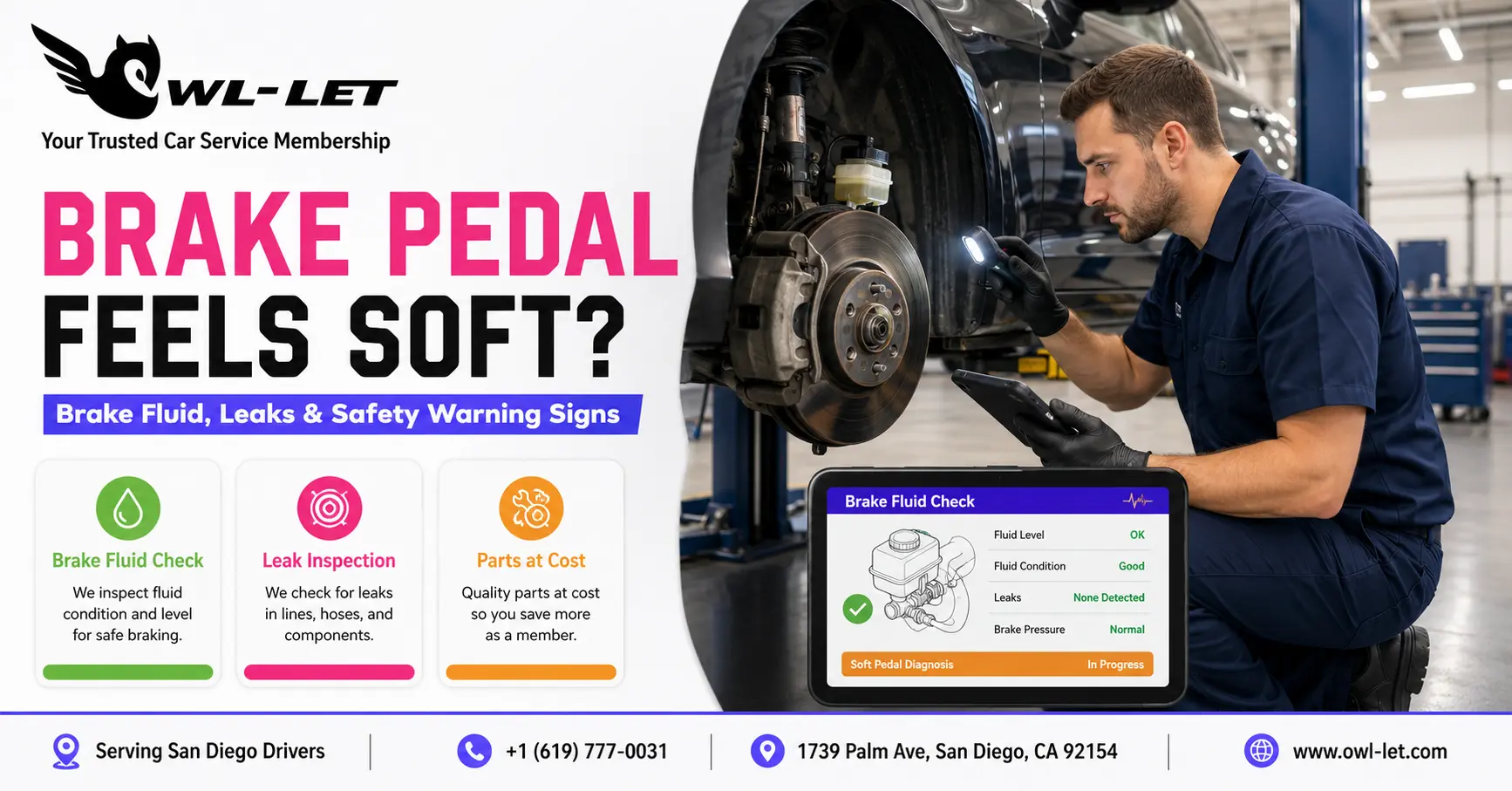
Soft or Spongy Pedal: If you have to "pump" the brakes to get a firm feel, air or moisture-vapor is likely trapped in the lines.
-
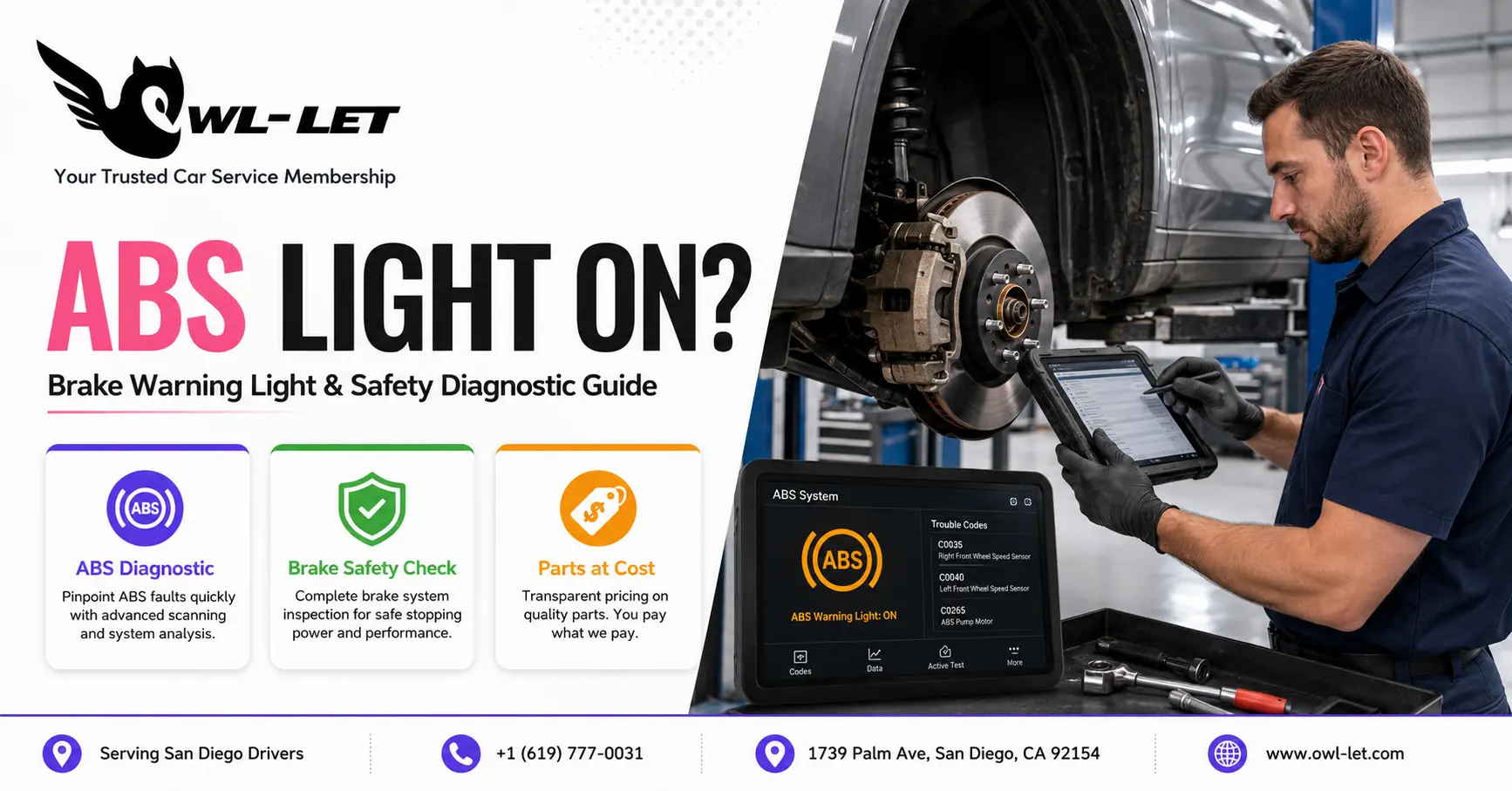
ABS Warning Light: Modern sensors in the Anti-lock Braking System can sometimes detect improper pressure or flow caused by contaminated fluid.
Expert Insight: Always check your fluid levels during your routine Owl-Let inspections. Maintaining a car service membership ensures these small checks don't turn into $2,000 ABS module replacements.
Can I Just Top Up the Fluid Instead of Changing It?
In a word: No. Topping up the reservoir adds fresh fluid to the top, but the contaminated, moisture-heavy fluid remains at the calipers where the heat is most intense. A full brake fluid flush is required to push the old fluid out of the bleed valves, ensuring the entire column of hydraulic pressure is pure and reliable.
The Technical Difference: DOT 3 vs. DOT 4 vs. DOT 5.1
Choosing the right fluid is critical. Mixing the wrong types can lead to seal failure.
-
DOT 3: Common in older or economy vehicles; has the lowest boiling point.
-
DOT 4: Found in most European and modern turbocharged cars (like the Skoda Rapid 1.6 TDI). It has a higher boiling point but absorbs water faster than DOT 3.
-
DOT 5: Silicone-based. Never mix this with DOT 3 or 4. It is typically used for classic cars that sit for long periods.
-
DOT 5.1: A high-performance glycol fluid compatible with DOT 3/4 but with superior heat resistance.
How Does Environment Affect the Change Interval?
While the 2 years rule is a safe baseline, your local climate plays a massive role:
-
High Humidity Areas: If you live in a coastal or tropical region, you might need a change every 18 months.
-
Mountainous Terrain: Frequent heavy braking generates more heat, accelerating the chemical breakdown of the fluid.
-
Arid Climates: You might stretch to 3 years, but a quick copper-strip test is the only way to be sure.
Is It Safe to Drive with 5-Year-Old Brake Fluid?
While the car may stop under normal conditions, you have zero "safety margin." If you need to perform an emergency maneuver, the degraded fluid may fail you. Furthermore, old fluid becomes acidic, eating away at the internal rubber seals of your master cylinder and slave cylinders. Proactive maintenance is always cheaper than reactive repairs.
How to Perform a Brake Fluid Change (DIY vs. Professional)
The "How-To" Process:
-
Clean the Reservoir: Prevent dirt from falling in.
-
Remove Old Fluid: Use a vacuum syringe to pull out the old fluid from the reservoir.
-
Add Fresh Fluid: Fill to the "Max" line.
-
Bleed the Brakes: Starting from the wheel furthest from the master cylinder, pump the brakes (or use a pressure bleeder) until clear fluid emerges from the bleeder screw.
-
Repeat: Do this for all four wheels.
Note: This process can be messy and dangerous if air enters the ABS pump. Many drivers prefer the peace of mind that comes with a professional service.
Conclusion: Why You Shouldn't Delay the 2-Year Flush
Staying on top of how many years before you change brake fluid a 2 years schedule is the single most underrated safety task in vehicle ownership. It preserves your braking power, protects expensive ABS components, and ensures your car is ready for any emergency.
At Owl-Let, we believe that premium car care should be effortless. Why worry about scheduling and high individual repair costs? With an Owl-Let Car Service Membership, you get comprehensive protection and regular maintenance reminders starting at just $24.99 Monthly. Secure your safety and your car's longevity today by visiting www.owl-let.com.
Comments 0
No comments yet
Be the first!